

Author: Wg Cdr A Pichipoo Raja, Senior Fellow, Centre for Aerospace Power and Strategic Studies
Keywords: Kargil Review Committee, Theatre Command, Indian Armed Forces, Jointness
‘Post-truth’ is an adjective defined as ‘relating to or denoting circumstances in which objective facts are less influential in shaping public opinion than appeals to emotion and personal belief’. [1] The debates in India around jointness and theatre commands have largely followed the post-truth trajectory. They are more based on individual experiences, hearsay, personal beliefs and not rooted in facts. This article is aimed at providing objective facts derived from government sources to help the readers form their informed opinions.
Myth 1 – The Kargil Review Committee (KRC) commented adversely on jointness during Operations in the Kargil War
If there is one document that is widely misquoted, that is the KRC Report. Despite the report being declassified, it was only available in print. This may have led people to use Google search, which delivered incorrect secondary sources. The actual terms of reference are reproduced below:
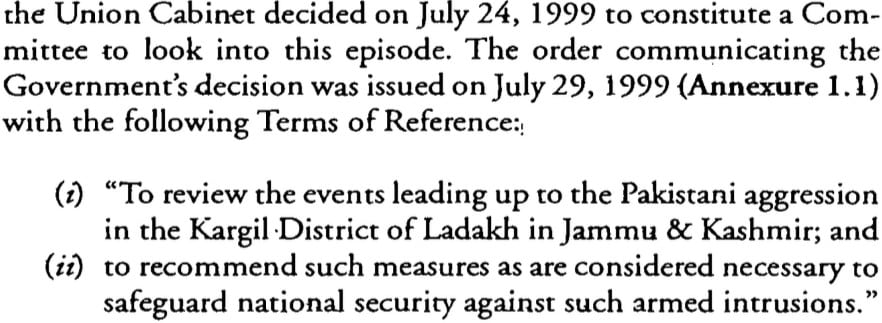
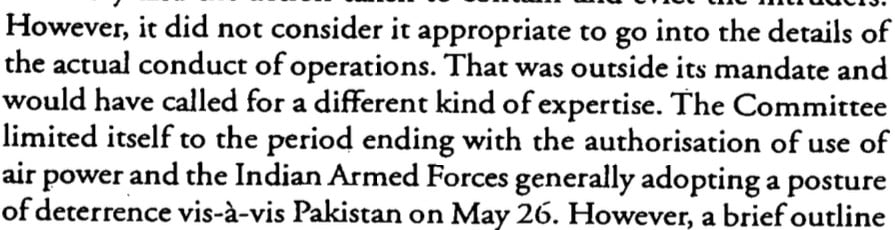
The mandate of KRC excluded the actual conduct of operations during the Kargil War, and the Committee stuck to its mandate. It did not examine events beyond May 26, 1999, when air power was employed.
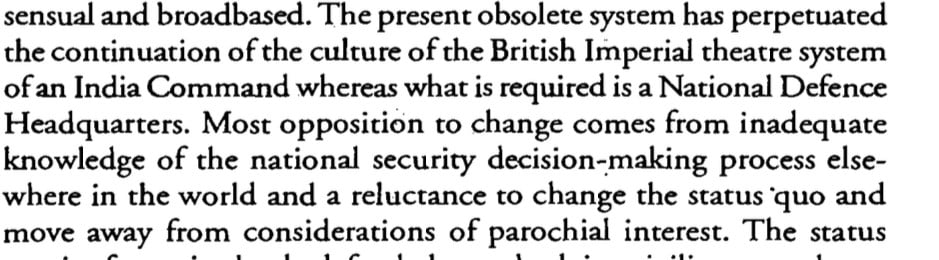
Myth 2- KRC recommended the creation of integrated Theatre Commands
Countless authors have mentioned this. It is factually incorrect and does not appear in the KRC. The recommendations were for a National Defence Headquarters.
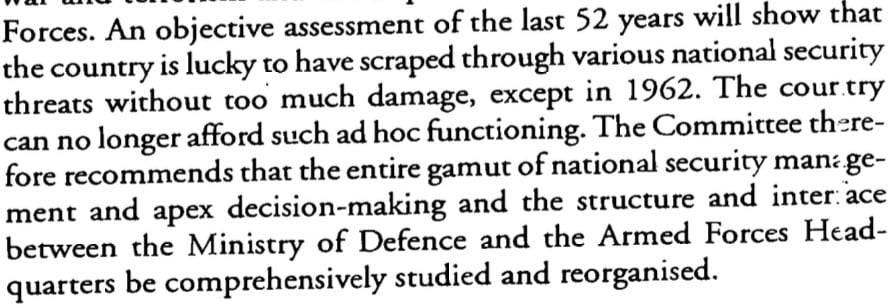
KRC recommended better civil-military integration and did not mention any integration of the three services.
Myth 3- There is a serious problem of jointness in the Indian Armed Forces
There has been no government-led high-level review of military operations since the 1962 Sino-India War. KRC also examined what led to the war, and not how it was fought. Only a thorough, in-depth enquiry into Indian military operations from the operational records by a suitable committee would reveal the prevalence/extent of the issue. In the absence of this, any arguments regarding the lack/abundance of jointness are either anecdotal or hearsay and devoid of factual evidence.
Myth 4- The Goldwater-Nichols Act led to the creation of Theatre Commands in the US
The Theatre Commands in the United States (US) were created in 1946 as a result of the implementation of the Unified Command Plan. [2] The United States Indo-Pacific Command (USINDOPACOM) was the first to be established as a unified command on January 01, 1947. [3] Therefore, any argument that the creation of theatre commands in the US as a direct outcome of the Goldwater-Nichols Act is factually incorrect.
Myth 5- Creation of Theatre Commands automatically leads to jointness
A popular argument is that the creation of theatre commands automatically results in jointness. If the creation of theatre commands leads to jointness, then the US should not have experienced disasters in Vietnam, Operation Eagle Claw, etc. They would not have had any reason to implement the Goldwater-Nichols Act in 1986 to resolve the issues in jointness, as the theatre commands were initially established in 1947. Therefore, this argument lacks empirical support.
Myth 6- In the US, the commands of all the armed forces are co-located. In India, 17 single-service commands of all three services are located in different areas, resulting in a lack of jointness.
This is another popular misconception. The table below shows the location of each Component Command Headquarters (HQ) in the US geographic Combatant Commands (Space Command is not shown).
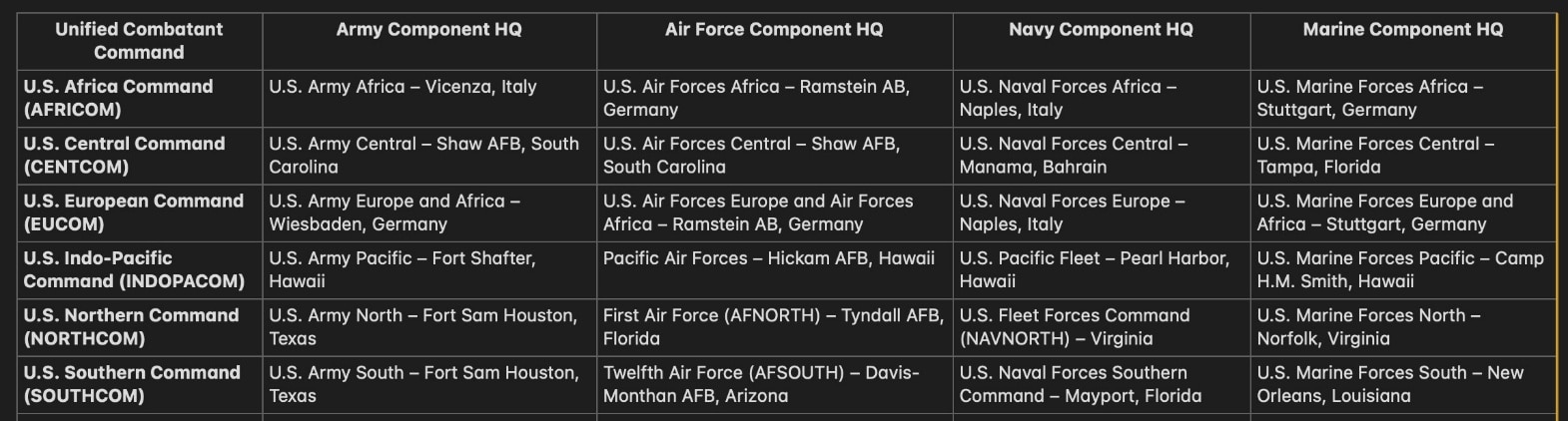
The table clearly shows the dispersed locations, with some even spread across multiple continents. Therefore, this too is post-truth. However, in the past, during Operations, some component commanders were occasionally co-located at a forward headquarters, although not always.
Myth 7 – Most countries have Theatre Commands; therefore, India must too
During the post-World War II era, the world was divided into two camps. The popular choice was between the two. However, India declined both and adopted the Non-Alignment Movement. Thus, India has never fallen for following the crowd, even when it was weak and poor. Many countries have an obligation to align their doctrines and structures due to their commitment to fight as an alliance. India has no reason to follow this approach without careful consideration. It must do what suits best in the national interest.
Myth 8- China created Theatre Commands to bring in jointness in the Armed Forces
The primary aim of the Chinese military is to uphold the leadership of the Communist Party of China (CPC). [5] The threat to CPC leadership also comes from the People’s Liberation Army (PLA), as it serves as an alternate power centre. Following the reforms in 2015, which involved the creation of theatre commands and the Strategic Support Force (PLASSF), among other measures, President Xi also carried out a reduction of 300,000 personnel in the Army. [6] Since the 1970s, the PLA has reduced the size of its forces by 4 million and altered the ratio of its forces. It has reduced the Army while increasing the Navy and Air Force. The Army now accounts for less than 50 per cent of the total armed forces. [7] These reforms are primarily meant to spread the distribution of power that was concentrated in the Army through the erstwhile Military Regions. [8] PLASSF’s growth as a centre of power is also presumed to be one of the reasons that led to Xi disbanding it in 2024. During the announcement of the new Information Support Force creation, Xi’s statement read, ‘ordered to resolutely obey the Party’s command, and make sure it stays absolutely loyal, pure and reliable’. [9]
Today, the primary go-to source for information is Large Language Models (LLMs), such as ChatGPT and videos on social media. LLMs curate data from the internet and produce results. Thus, if the data on the internet is incorrect, the results the LLMs generate are bound to be false as well. There is a renewed rigour in the debate on the creation of theatre commands in the country. As a result, there has been a surge in misleading articles and discussions. These invariably populate the database of LLMs and further reinforce false data. Informed debates are essential for the healthy functioning of democracy. One of the most critical military reforms in India must be based on facts, not post-truths. The issue must be objectively debated beyond the military by civilians as well. This article aims to provide an authentic basis to the citizens for such discussions.
*****
CLICK TO VIEW THE PDF
Notes
[1] “Word of the Year 2016,” Oxford Languages, 2016,https://languages.oup.com/word-of-the-year/2016/. Accessed on October 05, 2025.
[2] Office of the Chairman of the Joint Chiefs of Staff, Government of the United States of America, “The History of the Unified Command Plan, 1946-1993. Report No. ADA313508,” 1995, https://apps.dtic.mil/sti/tr/pdf/ADA313508.pdf. Accessed on October 5, 2025.
[3] Department of Defence, Government of the United States of America, “History of the United States Indo-Pacific Command,” https://www.pacom.mil/About-USINDOPACOM/History/. Accessed on October 05, 2025.
[4] United States Department of War, “Combatant Commands,” Combatant Commands | U.S. Department of War. Accessed on October 5, 2025.
[5] Ministry of National Defence, The People’s Republic of China, “China’s Military Strategy,” 2015 http://eng.mod.gov.cn/xb/Publications/WhitePapers/4887928.html. Accessed on October 5, 2025.
[6] “Full text: Xi’s speech at commemoration of 70th anniversary of war victory,” China Daily, September 3, 2015, < https://www.chinadaily.com.cn/world/2015victoryanniv/2015-09/03/content_21783362.htm>. Accessed on October 5, 2025.
[7] Ministry of National Defence of the People’s Republic of China, “Graphics: China’s military reform in past 5 years,” August 01, 2020, https://eng.mod.gov.cn/xb/ News_213114/TopStories/4869047.html. Accessed on October 07, 2025
[8] Ashish Singh, “The Two Forms of Reform,” Centre for Joint Warfare Studies (CENJOWS). October 6, 2018, 100-copy_The-Two-forms-of-Reform_06-10-2018.pdf. Accessed on October 5, 2025.
[9] “Xi presents flag to PLA’s information support force,” Qiushi, April 20, 2024, https://en.qstheory.cn/2024-04/20/c_981035.htm. Accessed on October 05, 2025.