

Author: Mr Atul Chandra, Research Scholar, Unni Kartha Chair of Excellence
Keywords: IAF, HAL, Bangalore, HTT-40, Basic Trainer
Introduction
The Indian Air Force (IAF) has a proud legacy of undertaking basic flight training in South India. IAF air bases and training establishments located in the region have made it the ‘cradle’ of military flight training in India. Since Independence, the IAF’s requirements for basic trainer aircraft have aided the growth of aeronautical manufacturing in Southern India. Since 1948, a total of three indigenous basic trainer aircraft, the HT-2, HPT-32 and more recently, the HTT-40, have been developed and manufactured in India. While the latter two basic trainers were vitally important in the growth of India’s nascent domestic aeronautical design and development capability, the completion of design and development of the HTT-40 signals the maturity of the nation’s domestic aerospace and defence ecosystem, which is today producing fighter aircraft, trainer aircraft, utility and attack helicopters. The first HTT-40 is now slated to be delivered to the IAF in 2026.
As we strive towards the goal of ‘Atmanirbhar Bharat’ and self-sufficiency in defence production, it is important to note that the IAF, from 1948 till now, continues to drive the growth of India’s aeronautical industry and will continue to do so
This is the final part of a 3-part series on indigenously developed basic trainers for the Indian Air Force
PART III
Milestone Moment
Hindustan Aeronautics Limited (HAL) is to begin deliveries of the indigenously designed and developed Hindustan Turbo Trainer 40 (HTT-40) to the IAF in the first half of 2026. The commencement of deliveries of a new domestic basic trainer will mark an important milestone in India’s history of domestically developed military aircraft. The HTT-40 has been entirely designed, developed, and flight tested by HAL, following in the footsteps of the Hindustan Trainer 2 (HT-2) and the Hindustan Piston Trainer 32 (HPT-32) Deepak. The commencement of HTT-40 deliveries will be a milestone moment for the IAF and India’s aerospace and defence ecosystem, which has come together to once again deliver an indigenous BTA, as in years past with the HT-2 and HPT-32.
Training Need
The induction of the HTT-40 Basic Trainer Aircraft (BTA) will be a much-needed boost to the IAF, which has a longstanding requirement for 181 such aircraft. This need was partially met with the induction of 75 Swiss Pilatus PC-7 Mk II BTAs, introduced into service between February 2013 and November 2015. The HTT-40 will operate alongside the PC-7 MkII in the Stage I basic flying training role.
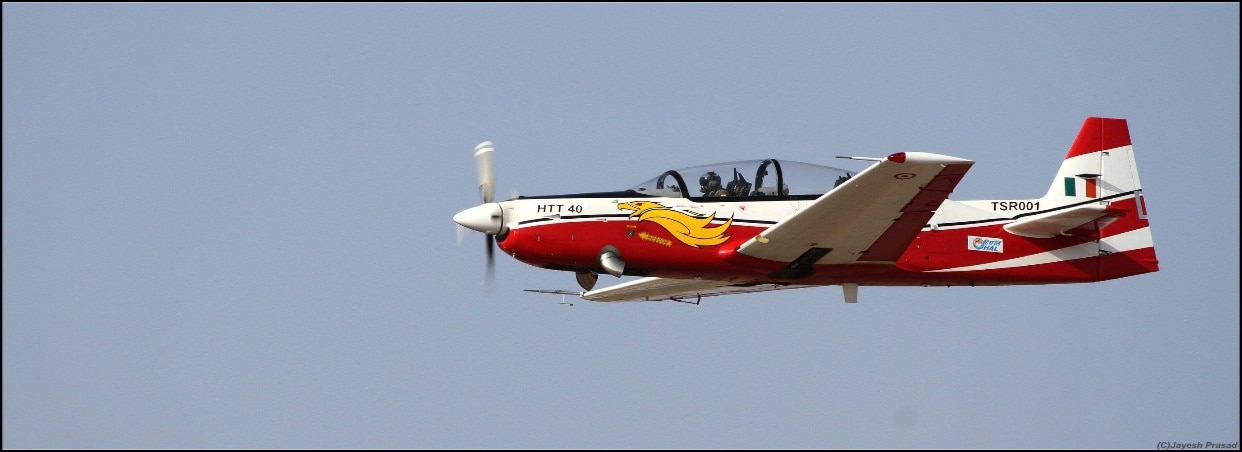
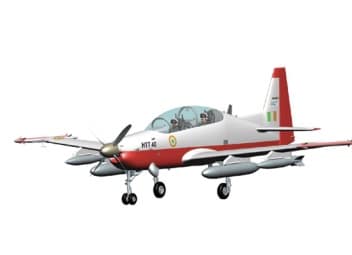
The HTT-40 will be used for basic flight training, aerobatics, instrument flying, close formation flight training, navigation and night flying. HAL also has plans for a future weaponised variant intended for weapons training, Counterinsurgency (COIN) and limited strike missions. This variant will have four pylons for carrying weapons and other stores, and could also be fitted with a Head Up Display (HUD). The tandem-seat turboprop basic trainer is also a fully aerobatic aircraft.
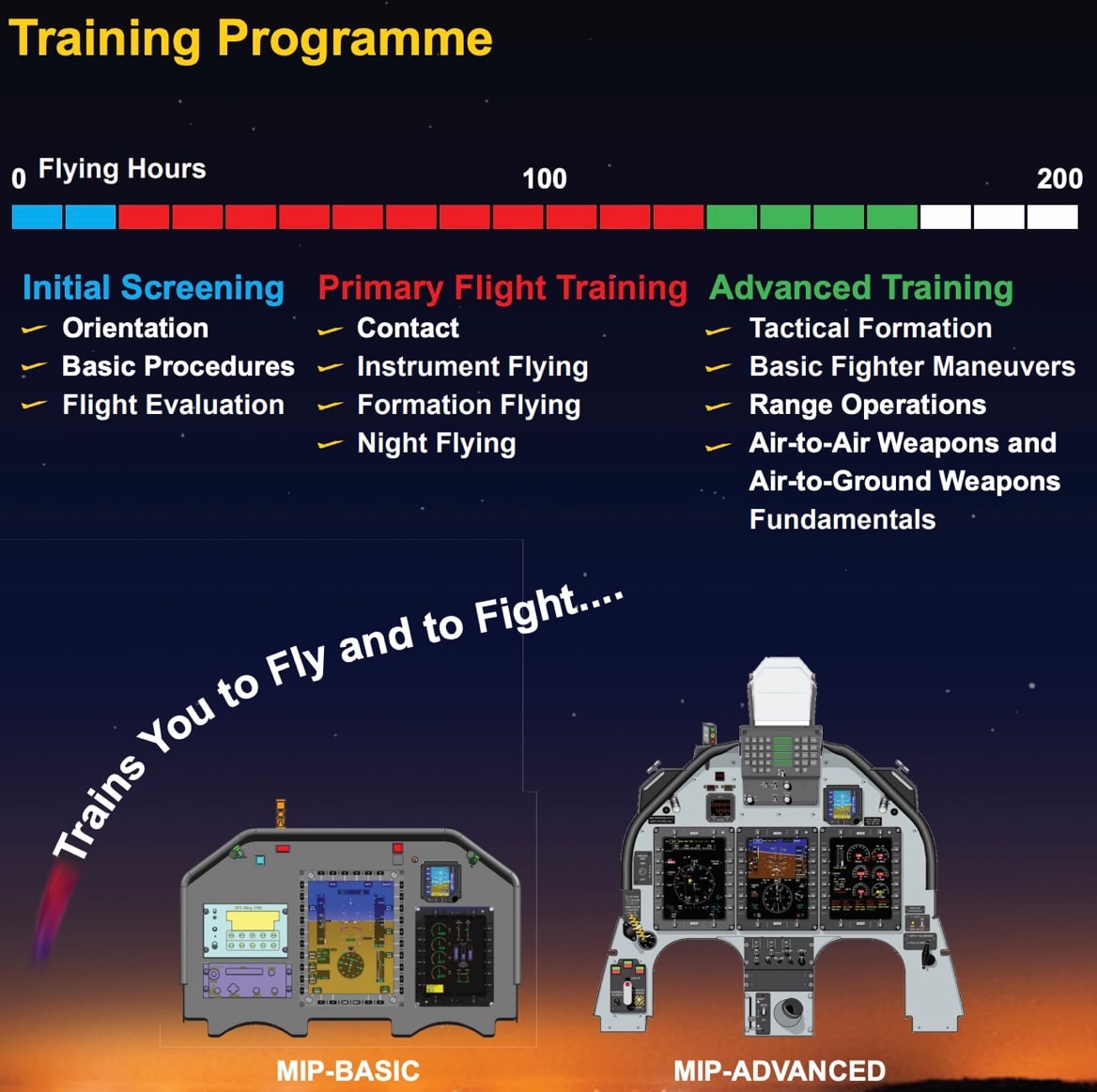
The IAF has played a pioneering role in the use of simulators for training, and HAL will deliver several synthetic training aids for the HTT-40, including a Fixed Base Full mission Simulator (FBFMS), Cockpit Procedure Trainer (CPT) and Avionics Part Task Trainer (APTT). It is expected that 30 per cent of the training on the HTT-40 will be met through synthetic training.
The IAF had earlier acquired two FBFMS, three CPTs and one APTT for its PC-7 MKII fleet.
Origins
In 2009, the Ministry of Defence (MoD) had decided that the IAF’s BTA requirement for 181 aircraft would be met with 75 trainers to be imported and 106 of an indigenously developed type. The IAF opted for the Swiss Pilatus PC-7 MKII in May 2012 to meet its urgent need for Stage 1 BTA. All 75 aircraft ordered were delivered by 2015. An options clause for 38 additional PC-7 MKIIs was cleared by the DAC in March 2015, but orders were never placed.
The IAF originally issued its Preliminary Staff Qualitative Requirement (PSQR) for the HTT-40 in 2009. The Acceptance of Necessity (AoN) for a new indigenously designed and developed BTA was accorded by the Defence Acquisition Council (DAC) in February 2010. At the time, HAL was to have completed the maiden flight of the HTT-40 by February 2013, obtained certification by 2015, and begun deliveries by 2017. HAL began design and development work on the HTT-40 in earnest from August 2013, when it decided to proceed with the programme using internal funding. Company funds worth INR 177 crore were sanctioned by HAL to undertake the Preliminary Design Phase (PDP) and Detailed Design Phase (DDP) activities of the HTT-40 at the Aircraft Research & Design Centre (AERDC) in Bengaluru.
The first HTT-40 prototype (PT-1) made its maiden flight in Bengaluru on May 31, 2016, and the trainer’s first public flight took place in Bengaluru on June 17, 2016, in the presence of then Defence Minister, the late Dr Manohar Parrikar. During his visit, he made the first official announcement that additional HTT-40s would be procured and that further import of basic trainer aircraft would be capped.[1] At the time, he had stated that the total number of BTAs required would increase from 181 to 210. The second HTT-40 prototype (PT-2) took to the air in June 2022. To reduce the effort required during User Evaluation Trials (UET), a team of test pilots from ASTE were deputed for User Assisted Technical Trials (UATT). Pilots from the IAF’s Aircraft and Systems Testing Establishment (ASTE) also flew sorties for assessing cockpit ergonomics, performance and handling, including stall, prior to the commencement of UETs.[2]
Certification from the Centre for Military Airworthiness and Certification (CEMILAC) was obtained in February 2025.
The delays in the HTT-40 programme can be attributed to several reasons, including the excessive weight of the prototype aircraft, obsolescence of the Engine Electronic Controller (EEC) on the Honeywell TPE331-12B turboprop engine powering the aircraft, and COVID-19.[3] HAL had issued a Request for Proposal (RFP) for a turboprop engine for the HTT-40 in June 2012 and selected the TPE331-12B turboprop engine in June 2015.[4]
HAL HTT-40 Original Delivery Schedule
| Delivery schedule of Aircraft in months |
2017 | 2018 | 2019 | 2020 | 2021 | 2022 | 2023 | 2024 | Total |
| Number of Aircraft to be delivered |
2 | 8 | 11 | 15 | 15 | 15 | 20 | 20 | 106 |
| Delivery schedule of Engines in months |
T0+51 | T0+63 | T0+78 | T0+90 | T0+102 | T0+114 | T0+126 | T0+138 | Total |
| Number of Engines to be delivered |
5 | 11 | 16 | 16 | 16 | 20 | 20 | 20 | 124 |
| Remarks | Direct Purchase (Phase-0) |
SKD (Phase-1) |
CKD (Phase-2) | Indigenous Manufacture (IM) (Phase-3) |
|||||
| Comments | T0=January 2012 | ||||||||
HAL finally awarded Honeywell a contract worth over USD100 million in July 2021 for 88 TPE331-12B engines/kits along with maintenance and support services. The engines will be assembled under license from Honeywell at HAL’s Engine Division in Bengaluru and maintenance infrastructure for the engine will also be created in India.
HAL had initially proposed to the IAF that initial Limited Series Production aircraft to be delivered would be powered by CAT-B engines, which were originally with the UK Royal Air Force (RAF). These engines were available to HAL after completion of full major overhaul with life restored back to 100 per cent (10,000 hours). [5] They were later to be replaced by brand-new engines and the CAT-B engines would be retained as spares.
The two flying prototypes of the HTT-40 are powered by CAT-B engines.
One of the other important but protracted phases in the development of the HTT-40 was spin trials. Six-turn spin (RHS and LHS) capability was successfully demonstrated towards the end of 2019, followed by eight-turn spin capability in 2020. HAL also benefited from consultations with Office National d’Etudes et de Recherches Aérospatiales (ONERA) of France, which suggested the incorporation of a ventral fin to aid spin trials. ONERA had been contracted by HAL to undertake rotary balance wind tunnel tests for HTT-40 spin trials.[6]
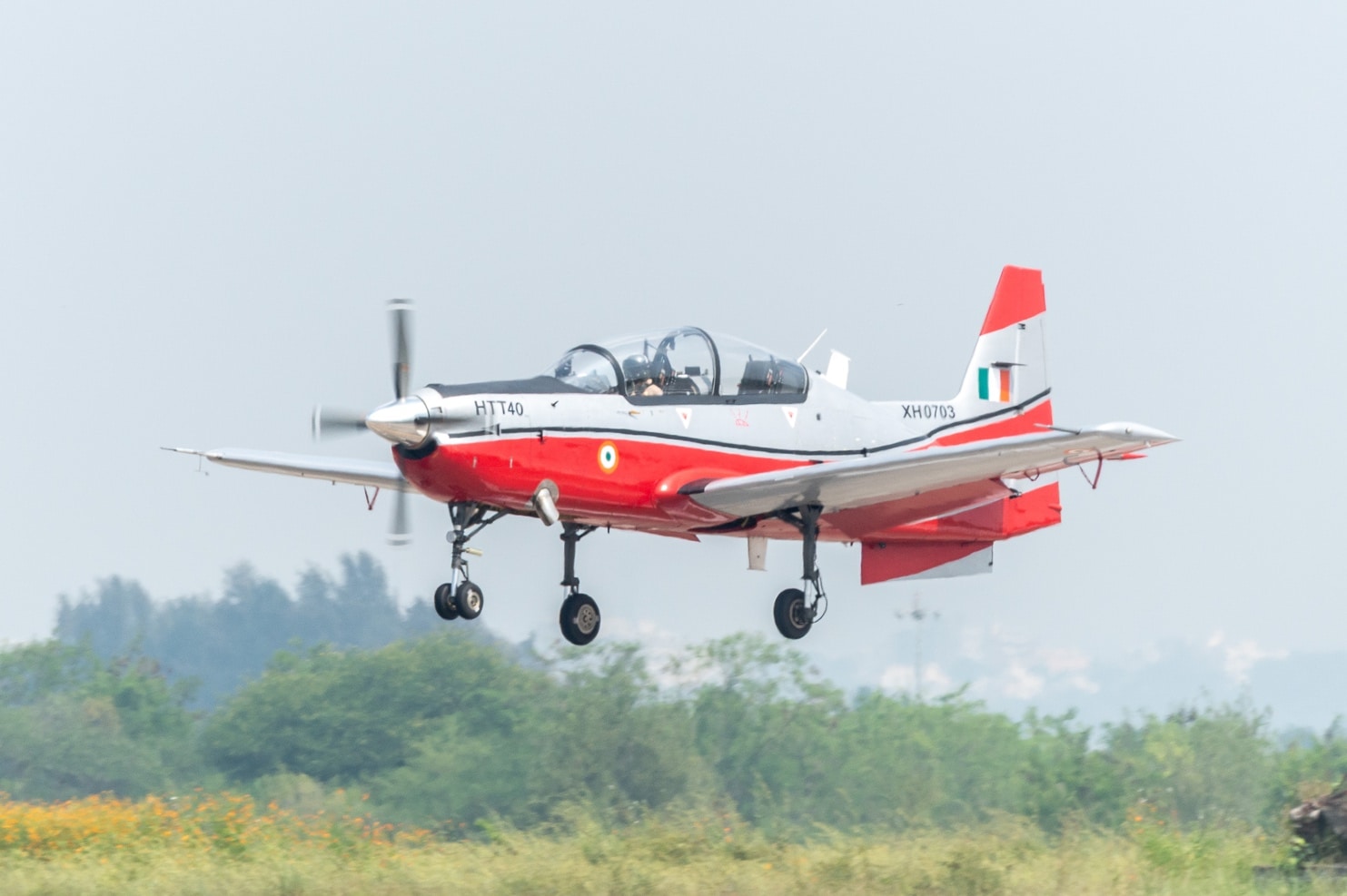
According to a former HAL official involved in the design and development of the HTT-40, the flying characteristics of the HTT-40 are comparable to the Kiran jet trainer. He stated that HAL test pilots were happy with the HTT-40’s docile handling qualities, with the stall behaviour and maneuvrability being good. There is a high level of commonality between equipment fitted on the HTT-40 and what is used on LCA ‘Tejas’, HJT-36 IJT, ALH, LUH and Dornier Do-228. The Landing Gear and Cockpit Canopy were designed and fabricated by HAL.
Delivering on a Promise
The Defence Acquisition Council (DAC), led by Defence Minister Rajnath Singh, approved[7] the procurement of 106 HTT-40 aircraft on August 11, 2020. At that time, the Ministry of Defence (MoD) had stated that post certification of the HTT-40, 70 aircraft would be procured initially from HAL, with a balance of 36 aircraft to be procured after the trainer was operationalised by the IAF. HAL announced in February 2021 at the Aero India airshow that it had received a Request for Proposal (RFP) from the IAF for 70 HTT-40 trainers with provision for 38 additional aircraft.[8]
The RFP was issued five years after the maiden flight of the first HTT-40 prototype in May 2016. HAL was awarded the contract for 70 HTT-40s in October 2022, worth approximately INR 6,828 Crore.[9] The HTT-40 will be manufactured at two production lines established by Hindustan Aeronautics at its Aircraft Division, Bengaluru and Aircraft Manufacturing Division, Nasik, with the bulk of production to be undertaken at the latter facility. HAL has stated plans to attain a peak production rate of 20 HTT-40s per annum.
The second HTT-40 production line at HAL’s Nashik facility was formally inaugurated by Defence Minister Rajnath Singh on October 17, 2025. The assembly complex houses structural assembly shops for the manufacture of HTT-40 fuselages, wings and control surfaces.[x]
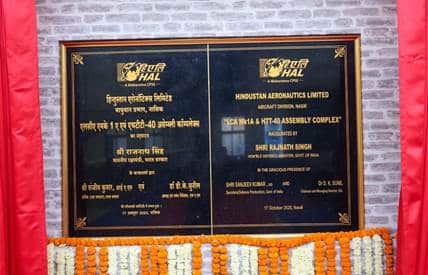
While deliveries of the HTT-40 were planned to begin in September 2025, the IAF is now likely to receive its first aircraft in 2026. Deliveries of all 70 aircraft are to be completed by HAL by March 2030.
Training Impact
The IAF has one of the largest requirements in the Indo-Pacific region for trained pilots, navigators and weapon systems officers. Over two decades ago, the air force had planned to train 220 pilots annually during 2001-05; however, as per information provided by the Ministry of Defence (MoD) to the Parliamentary Standing Committee, there was a shortfall ranging from 15 to 31 per cent. A decade later, in February 2015, the IAF assessed that it had a shortage of 486 pilots. At that time, the air force had proposed to increase the number of trainees from 260 to 350 pilots every year by 2017.
A 2024 Report of the Comptroller and Auditor General of India on Training of Pilots in Indian Air Force presented in Parliament in December 2024 stated that “between the period 2016 to 2021, against the planned initial intake of 222 trainees annually, the initial annual intake ranged between 158 and 204 trainees. Also, the annual intake after wastage ranged between 124 and 167. As a result, the shortage of pilots rose from 486 to 596, which was expected to be filled up between January 2021 and January 2030,” the CAG report informed.
The IAF has a pressing need to have its requirement for 181 basic trainers fulfilled, but this has been impacted by the delay in deliveries of the HTT-40. The IAF’s Stage I requirement will only be fully met when induction of all 108 HTT-40s is complete, joining the present fleet of 74 PC-7 MK IIs.
New Age Trainer
The HTT-40 is fitted with a state-of-the-art glass cockpit and modern avionics and can attain a maximum speed of 450 kilometres per hour, along with a maximum service ceiling of six kilometres. The HTT-40 is powered by a single Honeywell TPE331-12B turboprop engine fitted with a four-blade lightweight Hartzell aluminium propeller. TPE 331-5 turboprop engines have been produced at HAL since 1988, and its engine division is also an authorised service centre for TPE331-5 to –12 series engines.
Each aircraft features two Martin-Baker Mk16 Zero-Zero ejection seats. There are over 1,000 Martin-Baker Seats already in service in the IAF and Indian Navy. The aircraft also features indigenously developed avionics for radio communication, standby communication, VOR-ILS, TACAN, Radio Altimeter, Identification Friend or Foe (IFF) and Integrated Standby Instrument System (ISIS).
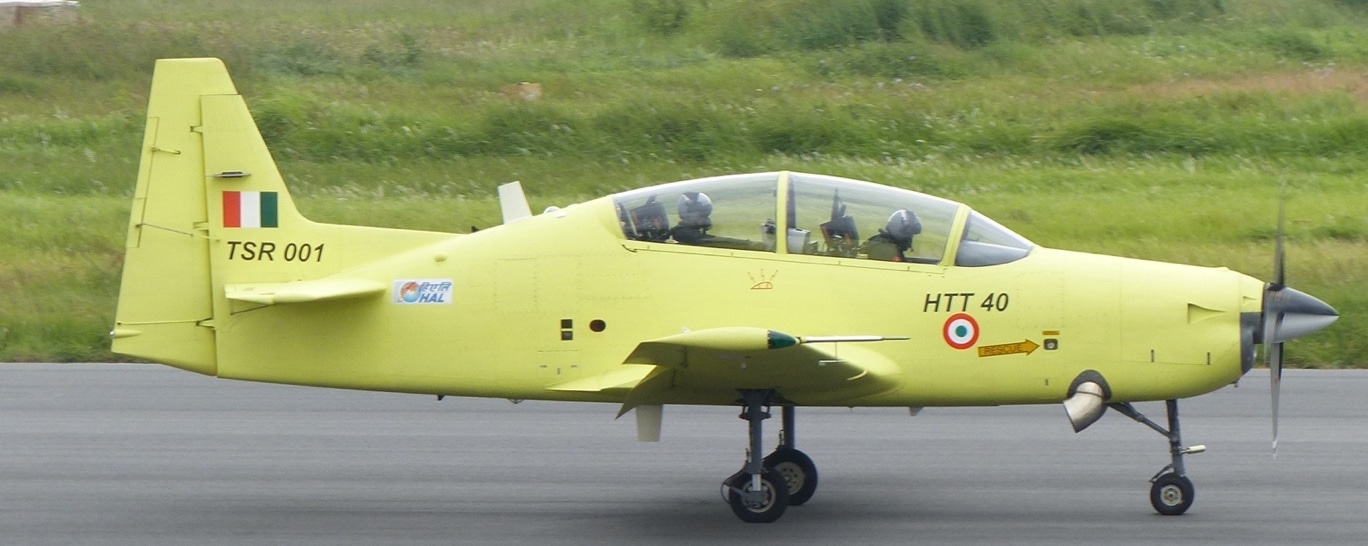
The HTT-40 has a glide ratio of 12:1 and a maximum load factor +6/-3 G. HAL quotes a Maximum Take-Off Weight (MTOW) of 3,040 kg with 460 kg of internal fuel. However, the normal training weight of the aircraft will be 2,800 kg. The time to climb to three km is quoted at 7.05 minutes, while the service ceiling is six km. The aircraft will have a maximum range of just over1,000 km and a maximum endurance of four hours.
The HTT-40 is capable of hot-refuelling, which allows the aircraft to be refuelled with the engine running. It is also capable of undertaking a running change, where, with the engine running, the propellers can be put into reverse, changing the blade angle. This results in no rotor downwash, allowing the canopy to be opened and the next cadet to strap into the aircraft. The HTT-40 flight test crew have rated cockpit visibility, crew comfort and the Environmental Control System as excellent. During conducted hot weather trials at Nashik, the cockpit temperature was maintained at a comfortable 25 °C as against an outside air temperature of 47 °C.
The HTT-40 features a largely all-metal construction and makes limited use of composites. HAL has put in extensive effort to ensure that the aircraft is easily maintainable, with the aim of achieving a high daily sortie rate along with high flight line availability. The indigenously developed BTAs are expected to fly 300 hours annually and will have a Total Technical Life (TTL) of 10,000 hours/30 years. HAL aims to deliver a 1200-hour Time Between Overhaul (TBO).[11]
Development of indigenous military platforms has substantially spun off to the local industry. The HTT-40 is expected to have an indigenous content of 56 per cent for the initial aircraft produced, and this will progressively increase to over 60 per cent over the course of the programme through indigenisation of major components and subsystems. The HTT-40 programme could eventually provide direct employment to approximately 1,500 personnel, along with indirect employment for up to 3,000 people spread over more than 100 MSMEs.
Training Day
Basic Flight Training is the bedrock of IAF training for its pilots and aircrew, and the induction of the HTT-40 into service will provide a much-needed boost in BTA numbers for the IAF. The IAF is rapidly inducting new fighter aircraft, transport aircraft and helicopters, and the availability of sufficient numbers of trained pilots and aircrew is vitally important.
The HTT-40 marks the return of an indigenously developed BTA into the air force, and this is very welcome indeed. Hindustan Aeronautics will need to ensure that it delivers the promised aircraft on time, with high standards of quality, and is well supported in terms of maintenance and spare parts. The imminent induction of the HTT-40 into IAF service marks a new chapter for India’s military aviation and self-reliance and continues the legacy of the HT-2 and HPT-32.
*****
CLICK TO VIEW PDF
Notes:
[1] Atul Chandra, “https://www.flightglobal.com/india-taps-locally-made-htt-40-as-next-basic-trainer/120919.article”, Flight Global, June 21, 2016. Accessed on December 20, 2025.
[2] Mr R Madhavan, HAL CMD in Q&A with author, 10-29-2020.
[3] Mr. Prashant Singh Bhadoria, Project Manager for HTT 40 in Q&A with author 11-30-2020
[4] Show News, https://aviationweek.com/shownews/paris-airshow/honeywell-provide-engines-hal-made-indian-training-aircraft, Aviation Week, June 17, 2015, Accessed on December 20, 2025.
[5] Mr. Prashant Singh Bhadoria, Project Manager for HTT 40 in Q&A with author 11-30-2020
[6] Atul Chandra, “India’s Homegrown Trainer” Air Forces Monthly January 2021, p.85
[7] Press information Bureau, Government of India, “DAC approves procurement proposals worth Rs 8,722.38 crore, including 106 Basic Trainer Aircraft for IAF,” August 11, 2020, https://www.pib.gov.in/PressReleaseIframePage.aspx?PRID=1645092®=3&lang=2. Accessed on December 20, 2025.
[8] Press Information Bureau, Government of India, “ HAL receives Request for Proposal for 70 HTT-40 Basic Trainer Aircraft from Indian Air Force at Aero India 2021,” February 04, 2021, https://www.pib.gov.in/Pressreleaseshare.aspx?PRID=1695163®=3&lang=2. Accessed on December 20, 2025.
[9] Press Information Bureau, Government of India. “Union Cabinet approves procurement of 70 HTT-40 Basic Trainer Aircraft from HAL for Indian Air Force at a cost of over Rs 6,800 crore,” March 01, 2023, https://www.pib.gov.in/PressReleasePage.aspx?PRID=1903445®=3&lang=2. Accessed on September 1, 2025.
[10] Press Information Bureau, Government of India, “Flight of self-reliance: Raksha Mantri inaugurates 3rd Production Line of LCA Mk1A & 2nd Production Line of HTT-40 at HAL Nashik,” October 17, 2025, https://www.pib.gov.in/PressReleasePage.aspx?PRID=2180339®=3&lang=1. Accessed on October 17, 2025.
[11] CAPSS research visit to HAL, August 2025.


 has a proud legacy of undertaking basic flight training in South India. IAF air bases and training establishments)