Author: Ms Priyanka Yadav, Research Associate, Centre for Aerospace Power and Strategic Studies
Keywords: South Korea, China-South Korea Relations, US-South Korea alliance, THAAD
Introduction
For South Korean President Lee Jae-Myung, the new year began with a busy week, marked by a four-day trip to China from January 4 to 7, 2026. This meeting took place in the backdrop of an invitation from Chinese President Xi Jinping to Lee, on the sidelines of the Asia-Pacific Economic Cooperation (APEC) summit in Gyeongju, South Korea, held in November 2025.[1] This marked the first official visit by a South Korean President since 2019, following the conservative Yoon Suk-Yeol’s administration’s swift fall with the imposition of martial law in December 2024.[2]
The previous conservative government largely maintained a hostile approach towards China and North Korea while deepening the United States (US)-South Korea alliance, including President Yoon’s participation in the North Atlantic Treaty Organisation (NATO) summits.[3] These series of events culminated in worsening relations between China and South Korea.
Strengthening Economic Ties with China
Lee Jae-Myung, since coming into power, has invariably highlighted the importance of engaging with China while maintaining a robust alliance with the US. This was evident with the accompaniment of around 200 business leaders during his visit to China.[4] This also included a summit-level meeting with Xi, participation in the Business Forum, and meeting the Korean nationals working in China. Meetings with high-level officials, including Chairman of the National People’s Congress Zhao Leji and Premier of China Li Qiang, were also part of his visit’s agenda.[5] During Lee’s time in China, South Korea and China signed 15 agreements spanning technology, intellectual property, and Artificial Intelligence (AI).
Lee’s visit to China sent a clear signal of practical cooperation with the aim of bilateral relations with “full-scale restoration.”[6] This meeting’s significance can also be gauged by the strategic opportunities it offered both China and South Korea. China can mediate to ease tensions with North Korea, while South Korea’s balanced relations with Japan can help improve China’s plummeting relations with Japan. China’s relationship with Japan soured amid the Japanese Prime Minister Sanae Takaichi’s hardline remarks on military assistance to Taiwan in the event of an attack from China.[7] On the other hand, Seoul gave a clear message of no potential involvement in case of Taiwan’s contingency and maintained the ‘One China’ policy as cleverly mentioned by Lee during his interview with Chinese state broadcaster CCTV, right ahead of his visit.[8]
Highlighting the need to maintain closer ties with neighbours, Xi reiterated, “Friends grow closer with each meeting, and neighbours grow closer with each visit,” Lee also echoed similar sentiments by stating, “As friends and neighbours, South Korea and China must interact more frequently and communicate diligently.”[9] These statements signalled the importance of respecting each other’s core national interests.
Choosing a Pathway in Turbulent Times
Assessing the turbulent realities of the current international order, Xi Jinping also called on President Lee to join China in making the ‘right strategic choices’ in a world that is ‘becoming more complex and turbulent’,[10] especially with respect to China’s tensions with Japan. To strengthen people-to-people ties and address anti-Chinese sentiments in Korea, Lee also suggested “panda diplomacy”[11] by requesting a pair of giant pandas for a zoo in Gwangju. Xi referred to an old proverb to Lee during the summit, “Three feet of ice doesn’t melt at once, and fruit will drop on its own when ripe,” hinting at the contentious the ban on tourism and K-pop since South Korea’s deployment of Terminal High Altitude Area Defense (THAAD) in 2016,[12] but also assured that the intent of China remains open for dialogue.
Addressing North Korea
The tensions between the inter-Korean relations have increased significantly since China’s omission of ‘denuclearisation of the Korean peninsula’ from its defence white paper on arms control were released in November last year.[13] This was also notable during the summit, when both leaders pledged efforts “to reduce tensions and build peace on the Korean peninsula” without directly referring to denuclearisation. It is important to note that ahead of Lee’s visit to China, North Korea fired a ballistic missile. Highlighting such continuous nuclear threats emanating from North Korea, the South Korean President discussed with President Xi the need to maintain peace and stability on the Korean peninsula, as well as ways to re-engage with North Korea.
A Look at Seoul-Tokyo Summit Talks
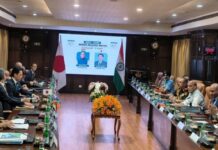
Lee’s subsequent visit to Japan after China on January 13, 2026 underscored the significance of maintaining trust with Japan to sustain a robust alliance between the US and South Korea, sensitively addressing historical grievances, and prioritising Tokyo’s role in peace and regional stability. The Korean President’s visit was marked by a much more informal approach from both leaders, including them joining an impromptu drum session, playing songs from Netflix’s show “K-pop Demon Hunters” and South Korean Boy band, BTS, emphasising the importance of cultural power.[14] Before his travel to Japan, Lee maintained a balance between South Korea’s two neighbours, stating in a televised NHK interview that “relations with Japan are just as important as relations with China,” which was conceived as a welcome gesture in Japan.[15] Both leaders also refrained from directly mentioning Taiwan, hinting at a return to normalcy from the Japanese side, at least in the short term. The two leaders also showed signs of engagement with a warm reception, with Lee travelling to Nara, Prime Minister Sanae Takaichi’s hometown and political base, while PM Takaichi paid a personal greeting at Lee’s hotel. However, other contentious issues remain in Korea-Japan ties, like Seoul’s 2013 ban on fishing imports from eight Japanese prefectures, including Fukushima over radiation concerns following the 2011 Fukushima nuclear disaster. However, with strengthening relations, Seoul is hopeful of Tokyo joining the Comprehensive and Progressive Agreement for Trans-Pacific Partnership (CPTPP).
Though talks concerning North Korea were sidelined in Beijing, in Nara, both Lee and Takaichi reaffirmed their commitment to ‘complete denuclearisation’ and reinstated it as a key part of their close cooperation with Washington. Responding to Lee’s outreach to China and Japan, Kim Yo-Jong, North Korea’s Supreme Leader Kim Jong-Un’s influential sister, characterised it as an attempt at ‘solicitation diplomacy abroad’ and mocked the renewed dialogue efforts as ‘wild dreams.’[16] Even though these visits and Lee’s dedicated diplomatic outreach offer a normal starting point for South Korea’s side, still achieving normalcy in ties remains a distant reality.
President Lee’s visit to China might not yield great results immediately in terms of mutually beneficial exchanges, but it has established a pathway for maintaining political messaging, securing national interests, and pursuing economic benefits.
Parting Thoughts
President Lee’s subsequent visits to China and Japan hold significance against the backdrop of numerous events unfolding at a rapid pace in other parts of the world, especially the US’s capture of Venezuela’s President Nicolás Maduro and President Donald Trump’s renewed focus on the western hemisphere. With Trump’s way of dealing with the world leaders becoming increasingly turbulent and unpredictable, Lee’s earlier visit to the US was considered a success, as he was able to secure Washington’s permission to build its first nuclear-powered conventionally armed submarine in exchange for USD 350 billion investment in the US’s decaying shipbuilding sector. [17] The first year of Lee’s tenure was marked by policies securing national interests and by maintaining the US-South Korea alliance. The consecutive visits to China and Japan hint at Lee’s policy of prioritising regional stability.
Lee’s visit to China was not intended to achieve a breakthrough in Korea-China relations, but rather to set the tone for more economic engagement while keeping in check the threats emanating from North Korea. It has always been a challenge for the South Korean leadership to balance its foreign policy trajectory between its economic partner, China, and its security ally, the US. For Lee’s foreign policy, managing Trump while restoring relations with China and engaging Japan in a ‘shuttle diplomacy’ will be challenging, and it remains to be seen whether what has been said can be put into practice.
*****
CLICK TO VIEW THE PDF
Notes:
[1] Mitch Shin, “Lee and Xi Agree to Strengthen China-South Korea Relations,” The Diplomat, November 03, 2025, https://thediplomat.com/2025/11/lee-and-xi-agree-to-strengthen-china-south-korea-relations/. Accessed on December 10, 2025.
[2] Andy Lim, Seiyeon Ji, and Victor Cha, “Yoon Declares Martial Law in South Korea,” Center for Strategic and International Studies, December 03, 2024, https://www.csis.org/analysis/yoon-declares-martial-law-south-korea. Accessed on December 11, 2025.
[3] Sandip Kumar Mishra, “South Korea’s Pragmatic Funambulism: Lee Jae Myung Visits China,” India’s World January 13, 2026, https://indiasworld.in/south-koreas-pragmatic-funambulism-lee-jae-myung-visits-china/. Accessed on January 13, 2026.
[4] Fan Anqi and Chi Jingyi, “ROK president arrives in Beijing with 200 business delegates, hails full restoration of bilateral ties ‘the greatest achievement’,” Global Times, January 05, 2026, https://www.globaltimes.cn/page/202601/1352267.shtml. Accessed on January 13, 2026.
[5] “China and South Korea Sign 15 Cooperation Documents; Lee Jae-myung to Meet Li Qiang and Zhao Leji Today,” United Daily News, January 06, 2026, https://uniteddaily.my/en/0d133b26-d9c9-42da-83ab-a631c43bb859. Accessed on January 13, 2026.
[6] Anqi and Jingyi, n. 4.
[7] “China takes spat with Japan over Taiwan to UN, cites right of ‘self-defence’ against armed intervention,” The Hindu, November 22, 2025, https://www.thehindu.com/news/international/china-takes-spat-with-japan-over-taiwan-to-un-cites-right-of-self-defence-against-armed-intervention/article70310603.ece. Accessed on January 15, 2026.
[8] David D. Lee, “Can China and South Korea reset complex ties after Xi-Lee summit?,” Al Jazeera, January 06, 2026, https://www.aljazeera.com/news/2026/1/6/can-china-and-south-korea-reset-complex-ties-after-xi-lee-summit. Accessed on January 18, 2026.
[9] Ibid.
[10]Sandip Kumar Mishra, “South Korea’s Pragmatic Funambulism: Lee Jae Myung Visits China,” India’s World, January 13, 2026, https://indiasworld.in/south-koreas-pragmatic-funambulism-lee-jae-myung-visits-china/. Accessed on January 13, 2026.
[11] Seo Ji-Eun, “Lee’s summits in China, Japan a delicate exercise in ‘managed stability’,” Korea JoonAng Daily, January 15, 2026, https://koreajoongangdaily.joins.com/news/2026-01-15/national/diplomacy/Lees-summits-in-China-Japan-a-delicate-exercise-in-managed-stability/2500551. Accessed on January 16, 2026.
[12] Michael D. Swaine, “Chinese Views on South Korea’s Deployment of Terminal High Altitude Area Defense (THAAD),” Carnegie Endowment for International Peace, February 02, 2017, https://carnegieendowment.org/posts/2017/02/chinese-views-on-south-koreas-deployment-of-terminal-high-altitude-area-defense-thaad?lang=en. Accessed on January 16, 2026.
[13] Jinwan Park, “China’s Quiet Retreat From North Korean Denuclearization,” Foreign Policy, January 09, 2026, https://foreignpolicy.com/2026/01/09/china-north-korea-denuclearization-xi-jinping-lee-kim/. January 15, 2026.
[14] Ji-Eun, n. 11.
[15] Kim Eun-jung, “(2nd LD) Lee stresses ties with Japan as vital as China, urges cooperation while squarely facing history,” Yonhap News Agency, January 12, 2026, https://en.yna.co.kr/view/AEN20260112010652315. Accessed on January 16, 2026.
[16] “North Korea’s Kim Yo Jong says South’s hopes for better relations are an illusion,” The Hindu, January 14, 2026, https://www.thehindu.com/news/international/north-koreas-kim-yo-jong-says-souths-hopes-for-better-relations-are-an-illusion/article70507904.ece. Accessed on January 15, 2026.
[17] Josh Wingrove & Soo-Hyang Choi, “U.S. and South Korea discuss jointly building nuclear-powered submarines,” The Japan Times, November 14, 2025, https://www.japantimes.co.jp/news/2025/11/14/asia-pacific/politics/us-south-korea-nuclear-submarines/. Accessed on January 15, 2026.