
Author: Wg Cdr A Pichipoo Raja, Senior Fellow, CAPSS
Keywords: Siachen, Op Meghdoot, Air Substitution, Affordable Air Power
“The country must not fall into the trap of Siachenisation of the Kargil heights and similar unheld gaps in the higher Himalaya along the entire length of the Northern border. The proper response would be a declaratory policy that deliberates infringement of the sanctity of the LOC and wanton cross-border terrorism in furtherance of proxy war will meet with prompt retaliation in a manner, time and place of India’s choosing.”
– Para 14.33, Kargil Review Committee Report
The global conflict landscape in 2026 is one of long-drawn wars. The Russia-Ukraine War is in its fifth year. Sudan and Israel are in their fourth year of conflict. Iran, Israel and the US are nine months into the war. Against this backdrop, India’s Operation Sindoor stands out. It achieved the politico-military aims and ended the conflict in eighty-eight hours. While this is a remarkable achievement, India also has hidden, long-drawn military operations. Operation Meghdoot, which started on February 13, 1984, is still in progress despite no bullet being fired since 2003. The topic of ending Operation Meghdoot has been debated extensively but not implemented. This paper argues that this is now possible in the era of affordable aerospace power. Using air power instead of ground troops in difficult terrain is a century-old tried-and-tested method of exercising territorial control.
Perennial costs of Siachen
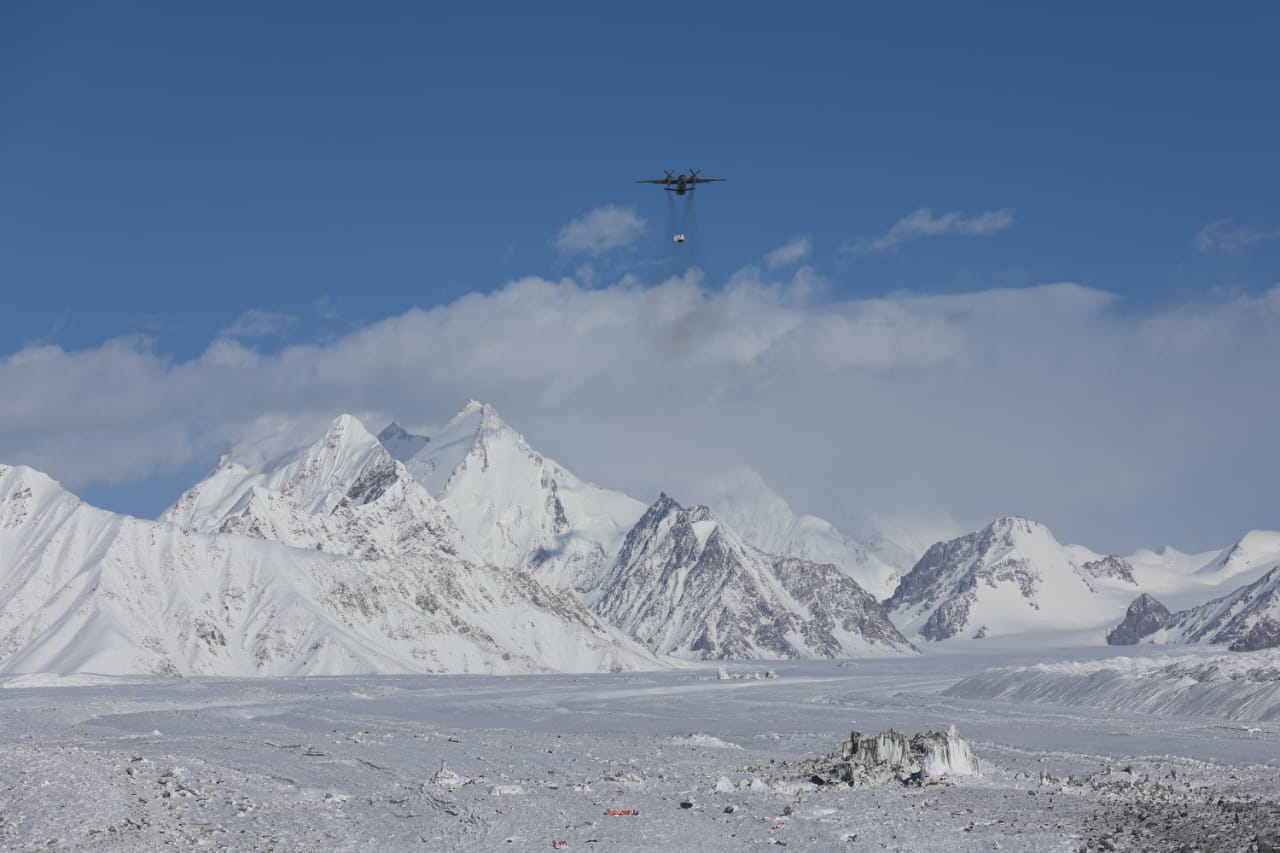
Siachen recorded 869 fatalities in the armed forces between 1984 and 2018. This does not include thousands who are permanently injured or disabled. Most of these fatalities are due to the extreme climate and terrain hazards. The February 03, 2016 avalanche at Sonam Post captured the Indian public’s attention for some time. The valiant rescue of Lance Naik Hanumanthappa and his unfortunate passing away a few days later once again brought to the fore the debate about reducing troops at Siachen. But it faded away soon. The government of India has not released any data on the operation’s financial costs, making any financial assessment difficult. But it must be huge, considering that the entire force is sustained logistically sustained only by air.
What is preventing cessation of Op Meghdoot?
The most common answer to this question is in one word – Pakistan. Thirteen rounds of talks have happened between India and Pakistan on Siachen. In 2017, on the question of reduction of troops in Siachen, the government replied in Parliament that it is dependent on Pakistan’s cessation of terrorism in India. General Naravane, the former Army Chief in 2022, stated that acceptance of the currently held positions by each side in a written agreement is a minimum requirement for troop reduction. This was also the position of his predecessor, General Bipin Rawat. A roundtable discussion titled ‘Demilitarisation of Siachen’ held at the Observer Research Foundation (ORF) on May 04, 2005 provides insight into the common arguments on this topic. It was chaired by General VP Malik (Retd) and attended by veterans, diplomats and academia. The arguments against troop reductions were:
-
- One cannot trust Pakistan. There can be intrusions like Kargil.
- Difficulty in re-occupying vacated posts following a Kargil-like attempt by Pakistan.
- No troop reductions without formal agreement between both sides on the currently held positions.
No fresh argument has emerged since then.
Why these arguments are not relevant anymore
The argument that if India vacates and Pakistan occupies, emerges from a poor assessment of Indian military capability. Since 1947, it has always been Pakistan that initiated wars with India, temporarily occupied territory but was subsequently forced to retreat. Therefore, reversing initial positions is routine. Even in Siachen, Naib Subedar Bana Singh was awarded Param Vir Chakra for leading an assault and capturing the Pakistani post of Quaid at no loss of Indian lives. It was in 1987-three years after the launch of Op Meghdoot.
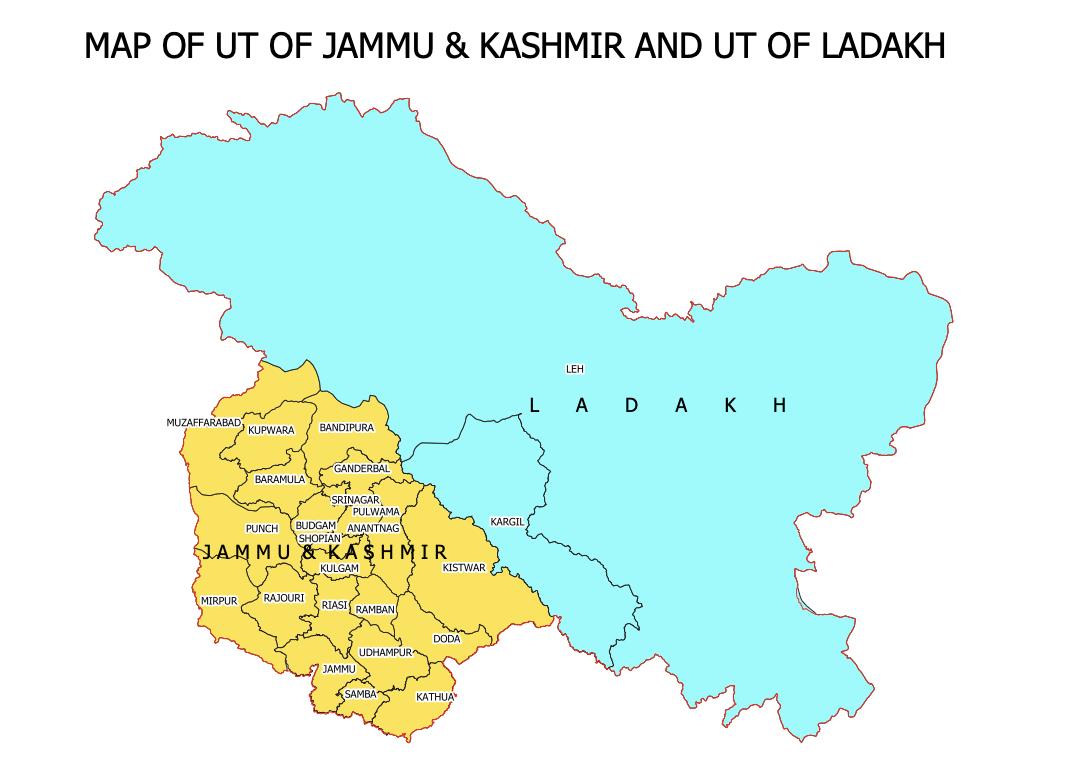
The idea of entering into an agreement possibly emerges from previous experiences of the Ceasefire Line of 1949 and the Shimla Agreement of 1971. However, Pakistan has repeatedly violated all the previous agreements, and there is no reason to believe that any future agreement won’t be violated. Further, since the abrogation of Article 370 in 2019, the government has issued maps of the freshly formed Union Territories of Ladakh and Jammu Kashmir, which include the entire Siachen. Therefore, henceforth any suggestion of formally recognising the illegal Pakistani presence in Siachen along the Actual Ground Position Line (AGPL) conflicts with the current Indian government stance.
Air Substitution in Siachen
History often provides answers to the present. During the severe financial crisis following the First World War, the British had to find innovative ways to control the huge empire. The deployment of ground forces in the deserts of West Asia proved to be expensive. Logistics was a nightmare. One of the methods they invented was the use of air power through either ‘Air Control’ or ‘Air Substitution.[1]’ Air Control is when the Air Ministry of Britain was assigned the responsibility for the defence of a particular region and all forces were placed under its command. Air Substitution was when aircraft replaced other forms of military force in imperial defence. Using aircraft instead of ground troops to control a territory, and using bombers instead of coastal guns, are examples of air substitution.
It all started with the 1919 uprising in Somaliland led by a local ruler known as ‘Mad Mullah’. To restore control in Somaliland, the British Army proposed an additional four battalions of troops, three squadrons of aircraft, and a four-month timeline, with costs running into the millions. The Cabinet rejected the land campaign as too expensive. Meanwhile, Winston Churchill, as the Secretary of State for War and Air, sensed an opportunity. Along with Trenchard, the Chief of the Royal Air Force, they proposed an operation with only eight aircraft and no additional troops. Incidentally, the Army signed on to this plan. The Army strongly believed the operation was bound to fail and could therefore permanently settle the debate over the use of air power in territorial control. However, the outcome was different. Unit Z was formed, consisting of eight aircraft. The aircraft were shipped to the port of Berbera in Somalia. An airstrip was prepared under the pretext of oil exploration. An independent air offensive was launched from this base on January 21, 1920. It lasted for five days. The results were outstanding. Subsequently, a ground offensive was launched. Within a total time of three weeks, the campaign was won at a total cost of about 1,50,000 pounds, where air power alone cost less than 70,000 pounds.[2] Air Control was now battle-tested, which subsequently led to the birth of Air substitution.
During the same time, the British were also spending heavily to defend Iraq (erstwhile Mesopotamia). Budget and troop cuts were inevitable due to the dire economic situation. The Army advised retreating and reducing the area under control corresponding to the number of troops that could be deployed. Some politicians suggested complete withdrawal from Iraq. Churchill advanced the idea of air substitution. He proposed using eight squadrons of aircraft and a very small garrison of just two British and two Indian battalions along with three armoured companies. The economics of this proposal appealed to the politicians, and the plan was quickly approved. British expenditure in Iraq totalled GBP 23.36 million in the fiscal year 1921-22. In 1922-23, following the implementation of air substitution, the expenditure fell dramatically to GBP 7.81 million and continued to decline. By 1926-27, it was less than GBP 3.90 million.[3] Thus, air substitution proved a useful and innovative policy choice.
It worked in the past in deserts. Will it work now in Siachen?
Both deserts and glaciers offer a natural advantage to air power employment. There is no place to hide. (The Defence Minister had stated in Parliament that due to the difficult terrain, hardened structures cannot be built and troops stay in prefabricated shelters/tents). There is massive logistics needed to sustain, which is vulnerable. In 1919, air power was the cheaper form of warfare. Aircraft were made of cheap materials like wood and canvas, using automotive engines, while ships, tanks and submarines were expensive. Today, once again, the era of cheap air power is back in the form of drones, balloons and small satellites. Rocket reusability has driven down launch costs per kg by 95 per cent and is going down further. Electronics is packing in more and more compute per unit volume. This makes satellites smaller, lighter and more affordable.
India’s Space-Based Surveillance-3 (SBS-3) programme is set to deploy a constellation of 52 spy satellites. Acceptance of Necessity (AoN) was accorded by Defence Acquisition Council (DAC) on February 12, 2026, for an airship-based pseudo-satellite for persistent surveillance. The Defence Research and Development Organisation (DRDO) conducted successful flight trials of a High Altitude Platform (HAPS) on October 06, 2026. Plenty of drones in both variety and functionality are already available with the armed forces. Thus, persistent surveillance over Siachen is both possible and affordable. Persistent surveillance doesn’t mean 24×7. It means at a frequency that is appropriate to the terrain. Diversity of sensors (Electro-Optical, Thermal, Synthetic Aperture Radar, etc.) and diversity in location of sensors like air, near-space and space ensure that spells of bad weather don’t impact the surveillance.
In the worst-case scenario, assuming everything has failed and the enemy still attempts an advance, owing to the massive terrain difficulties, the rate of advance is extremely slow. Should such a contingency arise, India’s capability to respond has evolved significantly. Precision targeting is now widespread. Air lift capability has increased manifold, with aircraft like C-130, Chinook, Cheetal, Mi-17 V5, and ALH operating routinely in the glacier. India has immense institutional knowledge of operating in the glacier. It spans across diverse domains like speciality medicine, logistics, ground tactics, flying, etc. This needs to be documented and preserved for posterity.
In terms of cost, any realistic assessment is only possible with access to official records. Presently, there is significant air effort being spent towards air logistics using transport aircraft and helicopters. As an approximate comparison, even if this manned air logistics effort is replaced by air effort towards surveillance by unmanned platforms and space, it could possibly be cheaper. While originally air substitution was exercising control of an area by the Royal Air Force (RAF), this article in no way argues for the Indian Air Force (IAF) exercising control over Siachen. Even today, Op Meghdoot is a joint operation. Air substitution in Siachen could follow the same precedent.
Conclusion
The arguments that prevented troop reduction from Siachen were made when India wasn’t strong enough, and Indian aerial/space surveillance capability was poor. Memories of the Kargil War continue to haunt decision-makers. However, it is over 27 years since Kargil. India is no longer the India of 1999. Today, India is a leading economic, military and space power. It is possibly the only country to have struck the length and breadth of a nuclear state with precision. It reached Mars and is the first country to land on the Moon’s South Pole. As India grows in strength, its conduct needs to demonstrate self-confidence. Yet, old habits die hard, and old arguments persist well beyond their expiry date. This is a good time to review this long-ongoing battle. Once tried on a pilot basis and proved to be successful in Siachen, this can be tested in other sectors as well. This will reduce troop numbers and could yield significanct savings for the exchequer. In the age of affordable space and unmanned systems, this is an effective use of technology. Air substitution is a proven option, and modern affordable aerospace power makes it a compelling choice. And India certainly doesn’t need Pakistan’s cooperation to implement this.
*****
(Disclaimer: The views and opinions expressed in this article are those of the author and do not necessarily reflect the position of the Centre for Aerospace Power and Strategic Studies [CAPSS])
Notes:-
[1] David E. Omissi, Air power and Colonial Control: the Royal Air Force, 1919-1939 (Manchester: Manchester University Press, 1990), p. xv
[2] Ibid., pp. 14–15.
[3] Ibid. p. 37.