Author: Gp Capt VP Naik VM, Senior Fellow, Centre for Aerospace Power and Strategic Studies
Keywords: Fighter Pilots, Aircraft, Professionalism, Indigenisation, Courage
Fighter pilot is an attitude. It is cockiness. It is aggressiveness. It is self-confidence. It is a streak of rebelliousness and it is competitiveness. But there’s something else- there’s a spark. There’s a desire to be good. To do well, in the eyes of your peers and in your own mind.
Robin Olds
Introduction
If you are hearing about this now, probably you have all gathered to remember me, not as your friend, colleague or acquaintance, not as a name on an old squadron photograph, but as an individual who once lived, laughed, cried, made mistakes, learnt, and flew. That is why I choose to speak to you frankly, honestly and with humility and dignity that a lifetime in uniform has taught me.
Let me take you back in time and tell you something interesting. I was not born a fighter pilot. Like everyone else, I was born into a loving family, with my feet firmly planted on the ground and my eyes looking upwards, vaguely aware of the distant sky. I had the exact same childhood as all of you had, and I had my share of successes and failures as I grew from a child to an adult. It was during this journey that the distant skies beckoned; perhaps it was the sound of aircraft flying overhead or movies like Top Gun that inspired me. Perhaps inspiring stories from World War II or tales from the Kargil War got me hooked, or perhaps it was just a simple book like Jonathan Livingston Seagull, by Richard Bach, that channelised my dreams. Something changed in me, and the sky became less of a medium and more of a destination. I wanted to fly!
Like all of you, I had bright sparks in my eyes as I went after my dream. There was no arrogance or overconfidence; there was just pure passion, desire, and determination. The journey was long, arduous and dangerous, because let’s face it, humans aren’t naturally designed to fly and do not possess any aerodynamic characteristics. There were days when I almost gave up. Academic rigour and the physical strain both challenged my mind and body, yet I bashed on regardless. I learned to endure pain and think on my feet under duress because these attributes were essential to being a pilot. I learned to have faith in my mentors and instructors because they were not only teaching me how to fly, they were teaching me how to survive. Through it all, I persevered, because somewhere down the line, I realised I was meant to fly!
My first tryst with fighter flying was a humbling experience. Strapping into a single cockpit, the assuring hum of the engines and the sheer power of propulsion were very terrifying yet mystically mesmerising. It also drove home an important lesson of life as a fighter pilot, where life-altering decisions need to be made in microseconds, where mistakes can make craters and where the line between triumphant return and silent obscurity is razor thin. Flying is not just about getting airborne and landing back safely. It is the thrill and challenge that accompany every moment that I am in the sky. It is the metaphorical freedom that brings a smile on one’s face, and it is a swan song that rides on one’s lips if things don’t quite go down well. Up in the sky, it is in these moments when an eerie silence prevails, allowing deep thought, making us realise that the sky is infinite. It is something sacred and safe. It is also something challenging and unforgiving. I understood my shortcomings and limitations as well as the unforgiving nature of flying.
Flying fighters is not just about the thrill; it is about self-discipline, self-confidence and above all, a mastery born out of repetition and practice. It is this mastery that is both supreme yet very humbling. You develop a respect for the machine, and the machine becomes a partner. The machine will take you where you want to go and do what you want it to do, provided you learn to respect both your own limitations and the machine’s. The skies become your second home, and the aircraft your life partner in that home. However, the skies have no favourites and do not necessarily care about reputation and past performance. Each day is new and each sortie is novel. The skies only care for discipline, precision, preparation, and mutual respect.
Over the years, the machines changed, and so did I. I became better not only at reacting to situations but also at anticipating them. My perceptions of life also changed, and I no longer took life for granted. The arrogance and overconfidence of youth matured into humility and assured self-confidence. I lost many friends and colleagues to the hazards of flying, and that made me appreciate the fragility of life. More importantly, their passing made me a better pilot. I learnt from their mistakes and mine. I learnt that an aircraft was, after all, a machine, a mechanical invention, which, like all mechanical inventions, could fail. One leaking valve, one misjudged angle, and one moment of indecision could end everything. This knowledge made me better, sharper and also, if I may add, a kind of perfectionist.
Through it all, I matured, I learnt to live life by laughing loudly, crying intensely, loving passionately and forgiving easily. I developed empathy not just for my juniors but also towards mankind in general. I cherished the small joys of life and began to value relationships. As the popular saying goes, there are either old pilots or bold pilots, but no old and bold pilots. Courage is not the absence of fear, and fear is omnipresent. It is this fear that manifests as mutual respect between the man and the machine, the pilot and his aircraft, the ship and its crew. That sense of respect stayed with me every time I walked towards my aircraft; it made me do my checks more diligently and strapped up with me in the cockpit. The fear transformed into quiet confidence when the engines roared to life and whispered to me whenever something went wrong. It is that fear that kept me alive all these years, and I always said a quiet ‘Thank You’ after every sortie.
Military flying is not just about the enemy. It is about professionalism, patriotism, pragmatism, and most importantly, passion. We fight because we fight for our country and our people. We fight for strangers who will never know us but who rely on us to save them. We fight for the larger cause. It is this cause and calling that makes me get up every day and take to the skies with the same intensity and professionalism day in and day out. This is what makes me a responsible citizen, a better colleague, a good mentor and a good fighter pilot.
My entire life revolved around aircraft and the squadron. The squadrons are not just a workplace; they are family. Forged by a shared sense of purpose, common ethos and work culture and a tightly knit environment, the squadron has always been my ‘go-to’ place. From grueling briefings to trying debriefs, from parties to picnics, and from birthdays and anniversaries to funeral parades, the squadron stands with you through thick and thin. The camaraderie tends to numb that ever prevalent, silent fear and assures you with that feel-good R/T call, “your tail is clear.”
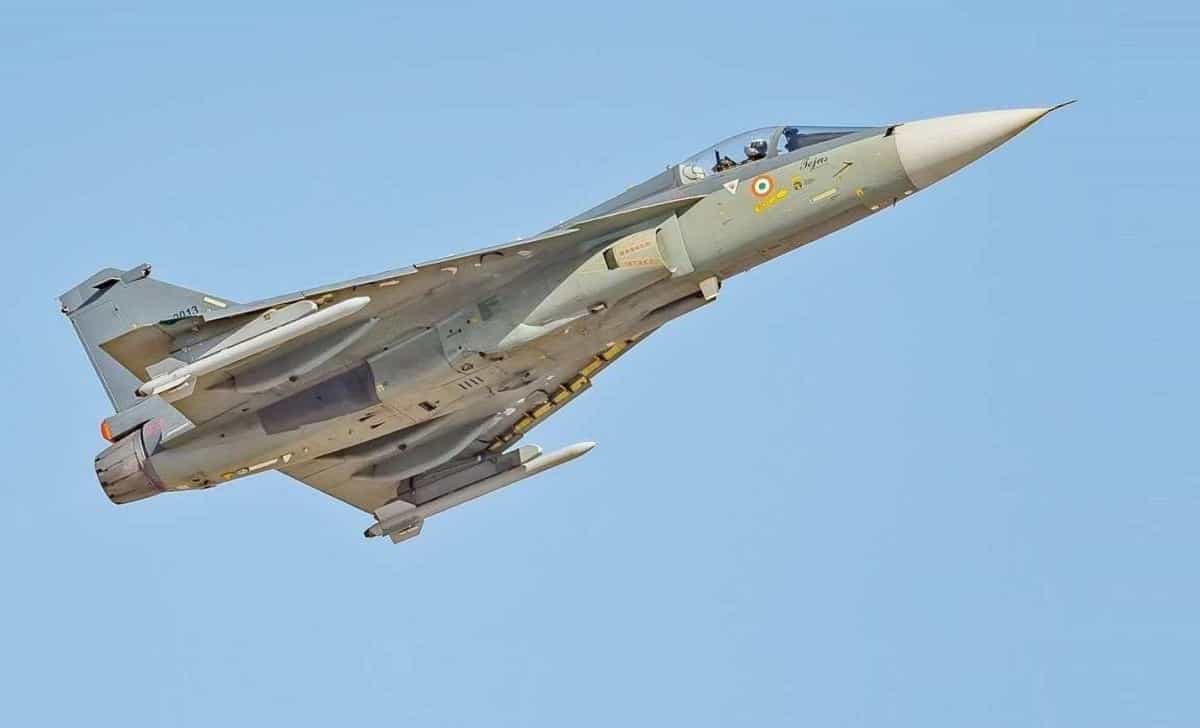
That, in a nutshell, has been my life. A life full of action, adrenaline and professionalism. A dream turned into reality, and a man who became a fighter pilot. Over the years, I flew many aircraft and achieved many milestones. I became a valued member of the fighter pilot clan and was very fortunate to have been chosen to fly the first indigenous fighter aircraft developed by my country. The aircraft was the pride of the nation, a technological marvel and a pilot’s dream. The aircraft was a testimony to the nation’s quest for self-reliance, and I was proud to have been selected to fly it. I soon qualified in all roles of the aircraft and was also chosen to demonstrate the capability of the aircraft to the whole world in air shows across the globe. The aircraft was the cynosure of all eyes whenever it took to the skies. With an enviable safety record, way better than most other aircraft in the world, the aircraft was a joy to fly and jaw-dropping to watch. As a harbinger of indigenisation, the aircraft represented technological achievement as well as confidence in my nation’s manufacturing capacity. I could not have asked for a better machine to take to the skies.
On that fateful day, when I flew my last sortie, nothing was different. I prepared like I always did, I ate what I always ate, I attended the morning briefing like I always did, I wore the same flying clothing that I wore yesterday, and I strapped in with the same confidence, respect and calmness that I have always done for the many years that I have been a fighter pilot. I did everything the way it was meant to be done, and yet something happened. There are some things beyond one’s control. Murphy’s law states that anything that can go wrong will go wrong. I have lived by it my entire life and been well prepared, but that, ladies and gentlemen, is life. My journey ended suddenly, violently and with many unanswered questions, but I did not for one moment fear this ending because all fighter pilots make peace with this fact of life long before their name shows up as part of statistics.
What is hard to understand is the frenzy created by social media platforms, news channels and various online forums to arrive at conclusions before the official court of inquiry has even started investigating into the accident. My message to all the self-proclaimed aviation experts is that You do not know what went wrong. You weren’t there when it happened. Then why are you judging what happened and how?
Remember me not for what went wrong. Remember me for what I did right. Remember me with pride and not with sorrow. Remember me for my spirit and enthusiasm, and remember me not just as a peaked cap atop a coffin but as a human who dared to dream big and ‘Touch the Sky with Glory’. I am truly where I always belonged.
*****