

Author: Mr Atul Chandra, Research Scholar, Unni Kartha Chair of Excellence
Keywords: IAF, HAL, Bangalore, HTT-40, Basic Trainer
Introduction
The Indian Air Force (IAF) and its air bases in South India have a distinguished legacy of service to the nation and undertaking flight training. IAF air bases and training establishments located in the region have made it the ‘cradle’ of military flight training in India. Since Independence, the IAF’s requirements for training pilots for its helicopter and transport aircraft fleet have grown exponentially. Air Force Station Yelahanka is a unique station within the IAF, which not only has the responsibility of being the hub for transport and helicopter training but is also the home base for Aero India, which is one of the largest air shows in the world. AFS Yelahanka has a long and distinguished legacy that is the envy of many air forces worldwide. Yelahanka’s weather is ideal for year-round training with training days rarely being lost due to rain or poor visibility and an airspace that is well-managed and uncluttered. AFS Yelahanka is the jewel in the IAF’s crown for training of transport and helicopter personnel.
Setting the Foundations
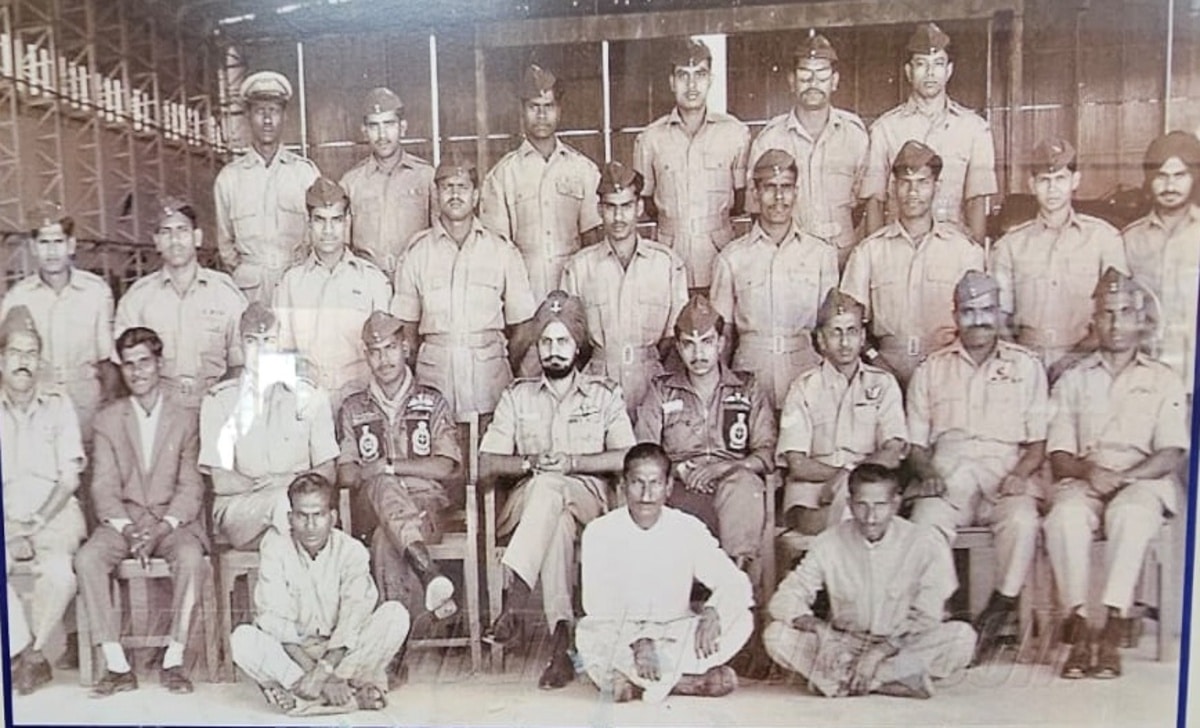
Yelahanka’s history as an IAF air base stretches back over 80 years. It has its origins in the Second World War, when Prisoners of War (POW) were interned at various camps in India from 1941 to 1946. Bangalore was one of the locations where these POWs were kept in eight camps at Jakkur, Hebbal and Jalahalli. The POWs, who numbered over 20,000 were tasked with constructing three airfields in Bangalore at Jalahalli, Jakkur and Yelahanka.[1]
Today only the airfields in Yelahanka and Jakkur are operational. Jakkur is home to the Government Flying Training School (GFTS) which is one of the oldest flying schools in India.[2] The GFTS was started by the erstwhile Maharaja of Mysore’s Government and inaugurated by India’s first Prime Minister Jawaharlal Nehru on December 28, 1948.[3]
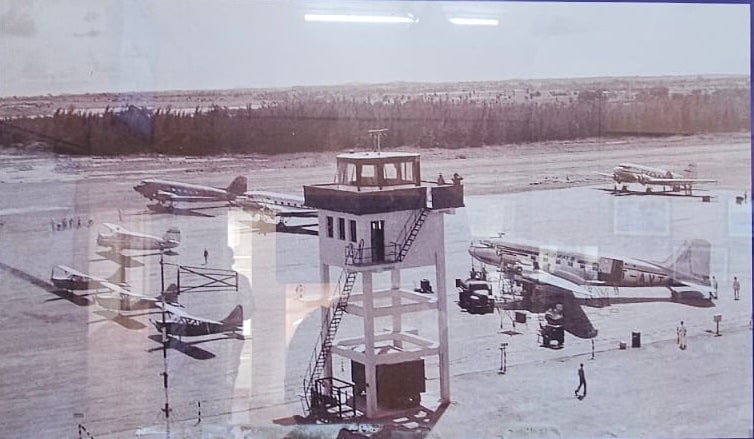
One of the first units located at RAF Station Yelahanka was the Royal Air Force’s (RAF) No. 225 Group Communication Flight. It was formed on July 1, 1942, at Jakkur and moved to Yelahanka on January 10, 1944.[4] Several other RAF Squadrons were based in Yelahanka. No. 1672 (Mosquito) Conversion Unit, which operated between February – June 1944 and again from October 1944 – August 1945. No. 60 Squadron operated the Bristol Blenheim and later the Hawker Hurricane IIC between May – September 1943. No. 211 Squadron operated the Mosquito between June – July 1945. No. 684 Squadron, which operated in the photo reconnaissance role flew Mosquitoes and the Bristol Beaufighter between 1943-1946. No. 30 Squadron flew the Hawker Hurricane IIC and the Republic P-47 Thunderbolt between April – September 1944. No. 1302 (Meteorological) Flight flew at Yelahanka from July 1943 till it was disbanded in July 1946. No. 4 Squadron Royal Indian Air Force (Oorials) operated at Yelahanka with their Spitfire Mk VIIIs from December 1943 to February 1944 and again from April 1944 to March 1946.[5]
Credit: IAF
On May 1, 1946, No. 225 Group Communication Flight moved to HAL Airfield, Bangalore and in June 1946, it was rechristened as No. 2 (Indian) Group Communication Flight. It was the last flying element to be transferred out of Yelahanka. The airfield later fell into disuse. On August 15, 1947, No. 2 (Indian) Group Communication Flight’s nomenclature was changed to No. 2 (Training) Group Flight. As on the day of India’s independence, No.2 (Indian) Group RAF was located at Bangalore, with Air Cmde CD Adams as Air Officer Commanding (AOC) responsible for Ground Training.[6]
The IAF reorganized Air HQ in 1948, and on July 22, 1949, No. 2 (Training) Group was renamed as Training Command. HQ Training Command occupied the buildings of HQ No.2 (Training) Group RIAF at Bangalore High Grounds. Air Cmde RHD Singh was the first AOC and Gp Capt R Atmaram was the first Senior Air Staff Officer (SASO) of Training Command.
The IAF’s Technical Training College (TTC) was established at Jalahalli in 1949 in collaboration with Air Service Training Ltd, Hamble, UK. Prior to the establishment of TTC, the IAF’s direct entry officers of the Technical Branch were trained in the UK Gp Capt MJ Kriplani took over as the first Indian Commandant of the TTC in July 1956. The TTC was renamed as Air Force Technical College (AFTC) in 1957.
In 1950, No. 2 (Training) Group Flight was renamed Transport Communication and Coordination Flight (TCCF) and remained at HAL airfield. It moved back to Yelahanka on June 4, 1964,[7] where the flight was established as a lodger unit of Transport Training Wing (TTW).
All flying establishments of the IAF were transferred to Training Command on 15 September 1954, making it responsible for the entire training in the IAF. HQ Training Command moved from High Grounds, Bangalore to Hebbal on May 31, 1958.
The President of India sanctioned upgradation of the rank of the post of Air Officer Commanding (AOC), Training Command on 08 April 1960 and re-designated the post as Air Officer Commanding in Chief (AOC-in-C). The permanent establishment of HQ Training Command at Hebbal was finally completed in 1968.
A New Beginning
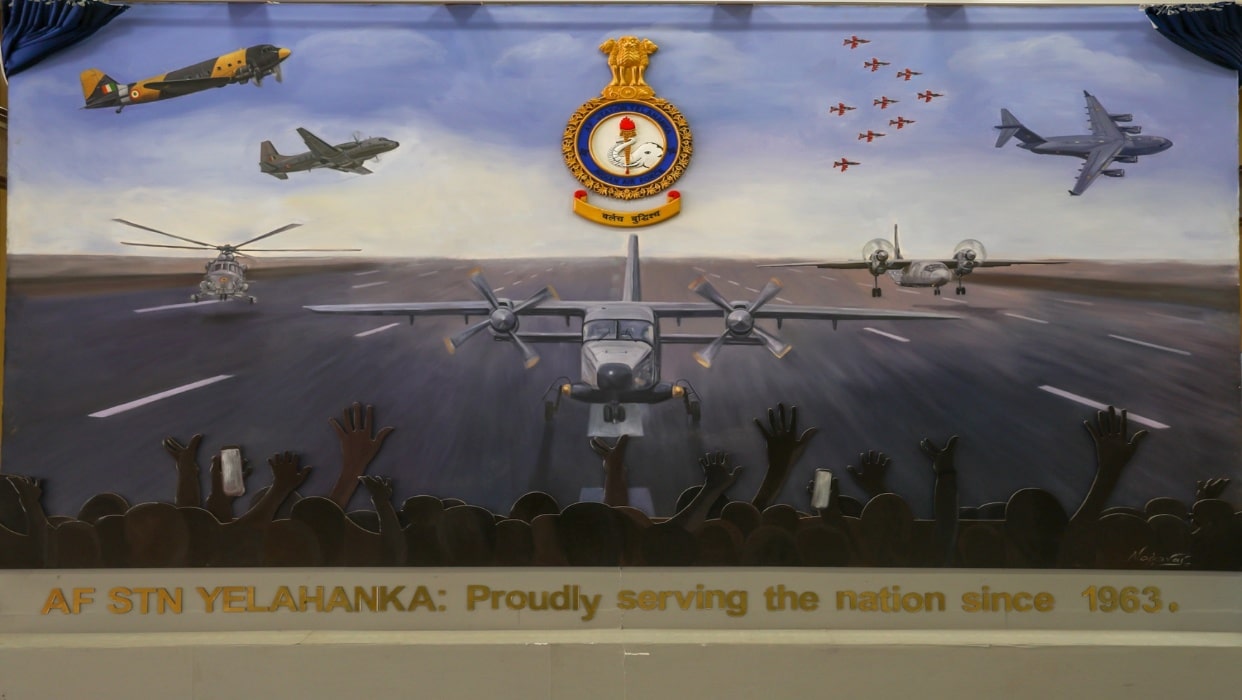
Air Force Station Yelahanka was raised on August 1, 1963, following the 1962 Sino-India conflict. It was realised after the conflict that the IAF needed to expand its transport aircraft fleet. This resulted in the establishment of the Fixed Wing Training Faculty (FWTF) that has produced all of the transport pilots serving the IAF today. The FWTF is entrusted with the onerous task of conversion training of Transport Pilots and Navigators of IAF and other sister services. It also undertakes operational and RTR commitments assigned by HQ TC and Air HQ.
The FWTF has its roots in a conversion and training Squadron formed at Agra in 1948 which was relocated to Begumpet in 1957 and re-named as the Transport Training Wing (TTW). In 1963, after the Sino-India conflict and due to the necessity of expanding transport training in the IAF, the unit was divided into No 1 TTW at Begumpet and No 2 TTW at Yelahanka. No.2 TTW was established at Yelahanka, and the then deserted airfield was recommissioned in August 1963 under the command of Gp Capt PL Dhawan. He was one of the founding members of No.12 Squadron, the IAF’s first transport Squadron. He was awarded the Vir Chakra for his contributions in the Indo-Pak War of 1947-48 and was conferred with Bar to the Vir Chakra after the 1962 Sino-Indian War. The Wing’s first batch of pilots were commissioned into service on December 31, 1963, and the 2nd batch was commissioned on April 18, 1964.
In 1975, the Head Quarters Training Command Communications Flight (HQ TCCF) was established at AFS Yelahanka with HS-748 ‘Avro’ aircraft to undertake communication duties of dignitaries of all the three Services. The first HS-748 was inducted at AFS Yelahanka on July 10, 1974, and the full complement of aircraft were received by March 1975.[8]
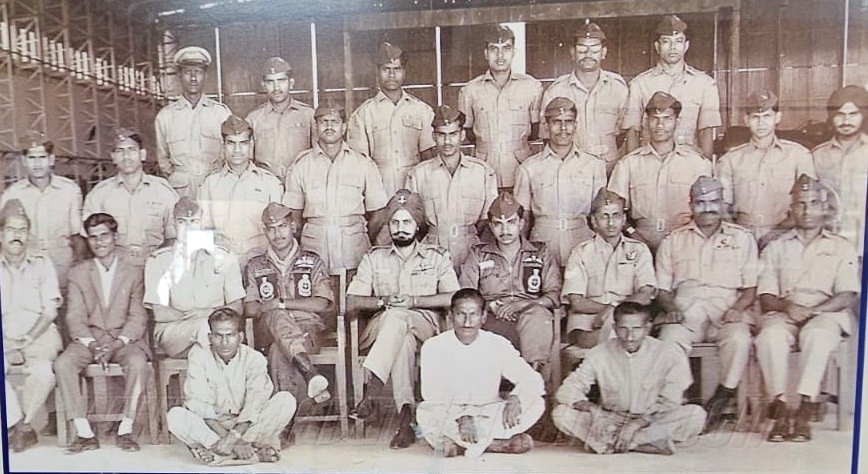
HQ TCCF remains operational today, making it one of the IAF’s longest-serving units, since it traces its origins to the RAF’s No. 225 Group Communication Flight. HQ TTCF AF presently operates two HS-748 aircraft being exclusively used for communication duties for military generals and other equivalent dignitaries. The unit has undertaken extensive communication duties for service and civil dignitaries over the last eight decades of its existence. The unit has an excellent flight safety record and has had no accidents to date.
Credit: IAF
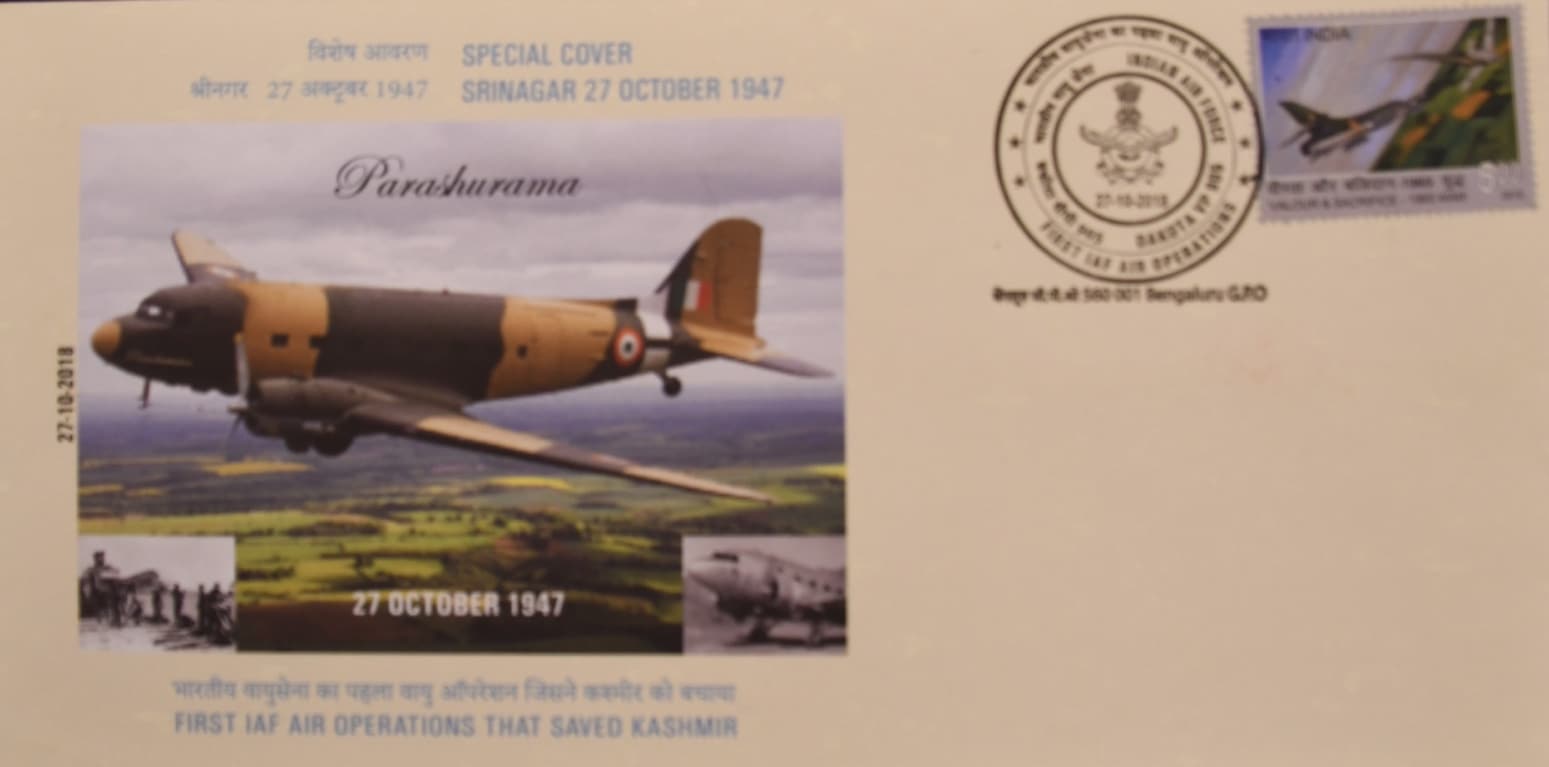
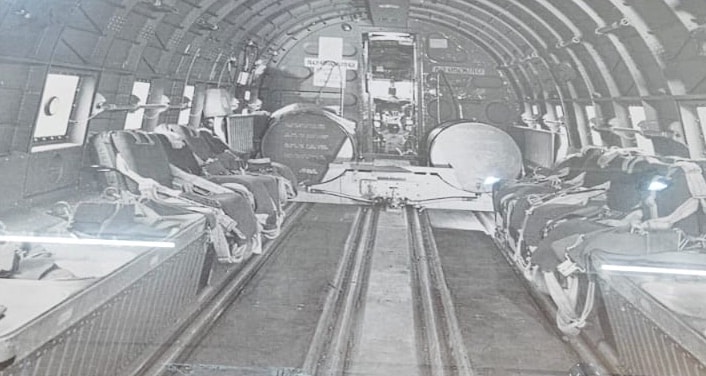
The Dakota was inducted at Yelahanka in 1963 for transport pilot training as part of No.2 TTW. The Dakota performed this role till January 1975. In 1964, a Dakota from AFS Yelahanka was tasked with scattering the ashes of Pandit Jawaharlal Nehru.[9] Dakotas from AFS Yelahanka were also used in the 1965 war to ferry troops and supplies.
The DC-3 could accommodate 21 passengers and two crew members. No.1 TTW merged with No. 2 TTW on January 1, 1968, to form a single TTW at Yelahanka. Initial conversion courses were conducted on Dakota Mk III and Mk IV. From 1972 – 1974 training was imparted to air force cadets from Iraq, Zambia, Nigeria, Bangladesh and Nepal. In January 1975, HS 748 aircraft replaced the Dakota, and the course was renamed Transport Conversion Course (TCC).[10]
Duty with Valour
AFS Yelahanka was the nucleus of transport support operations south of Nagpur during the 1971 War with Pakistan. Before the hostilities began TTW took on the transport role. No.1 Air Delivery Flight was formed at Kanpur with personnel from TTW and flew 481 sorties, totaling 2,249 hours from 30 October 1971 to 03 January 1972. 25 tonnes of cargo was airlifted. [11]
In the Eastern Theatre a six aircraft detachment from AFS Yelahanka undertook paradrop operations near Dhaka. The six aircraft flew 100 hours towards paradrop operations, dropping 114 troops and three tonnes of equipment.
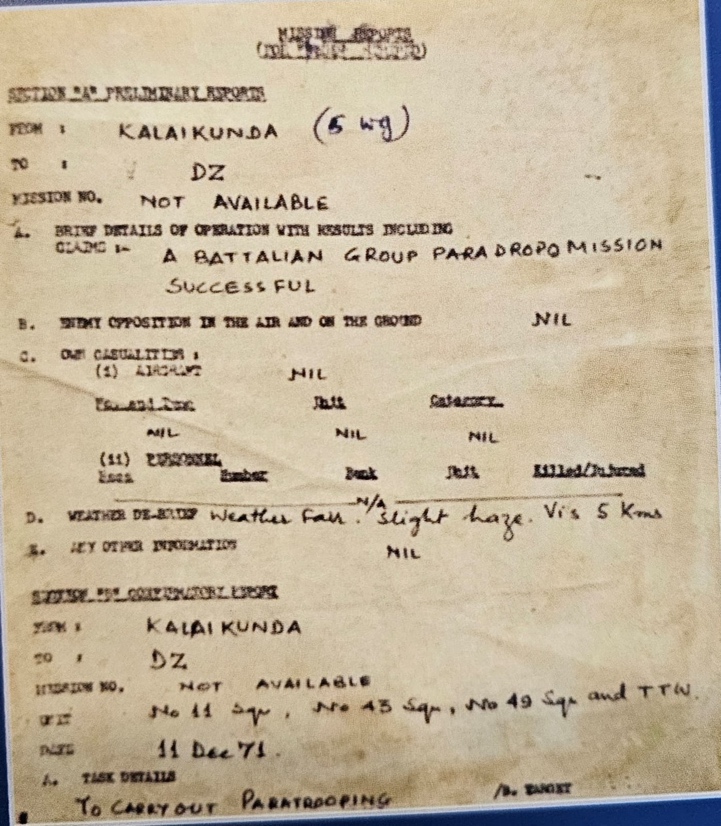
Airlift of refugees was also undertaken by these aircraft with a total of 151 hours flown and 52 tonnes of load, personnel and battle casualties carried. The aircraft from TTW and crew of this base were part of the task force assembled at Bihta for the historical Tangail Drop. The other IAF Squadrons that participated in the Tangail Drop were No.11, No.43 and No.49. From November 8 to 16, 1971, the wing’s aircraft flew 71 sorties over 198 hours from Hakimpet, transporting 27,095 tonnes of cargo. A detachment at Tambaram conducted reconnaissance flights along the Eastern Coast.
An element of two aircraft from TTW also formed the maritime component of the HQ Maritime Air Operations at Bombay. The two aircraft flew a total of 40 sorties, accumulating 237 hours from December 4 – 23, 1971.
Training Revamp
Today there are three technical flights at AFS Yelahanka which operate the Antonov An-32, Dornier Do-228 and Mil Mi-17. The An-32 and Mi-17 were inducted at AFS Yelahanka in 1986 and 1982 respectively, while the Do-228 was inducted for training in 1996.
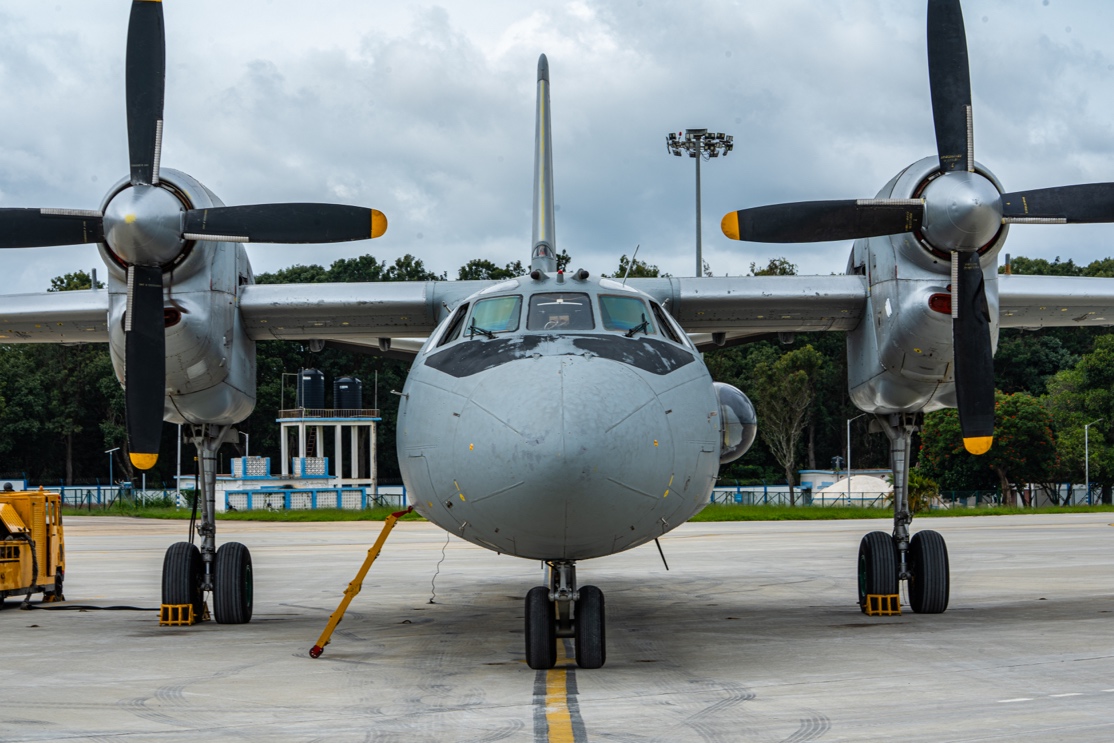
The An-32 was inducted into the IAF in 1984 and inducted shortly thereafter in June 1986 at AFS Yelahanka. The station was placed on operational alert during Exercise Brasstacks with its An-32 and HS-748s, flying a total of 152 sorties totaling 263 hours. 1608 personnel and 13,345 kg of load were airlifted by these aircraft. During Op Pawan the station supported detachments belonging to No.7 Sqn, PTS and 12 Sqn. The station also maintained a detachment at AFS Tambaram for relief operations.
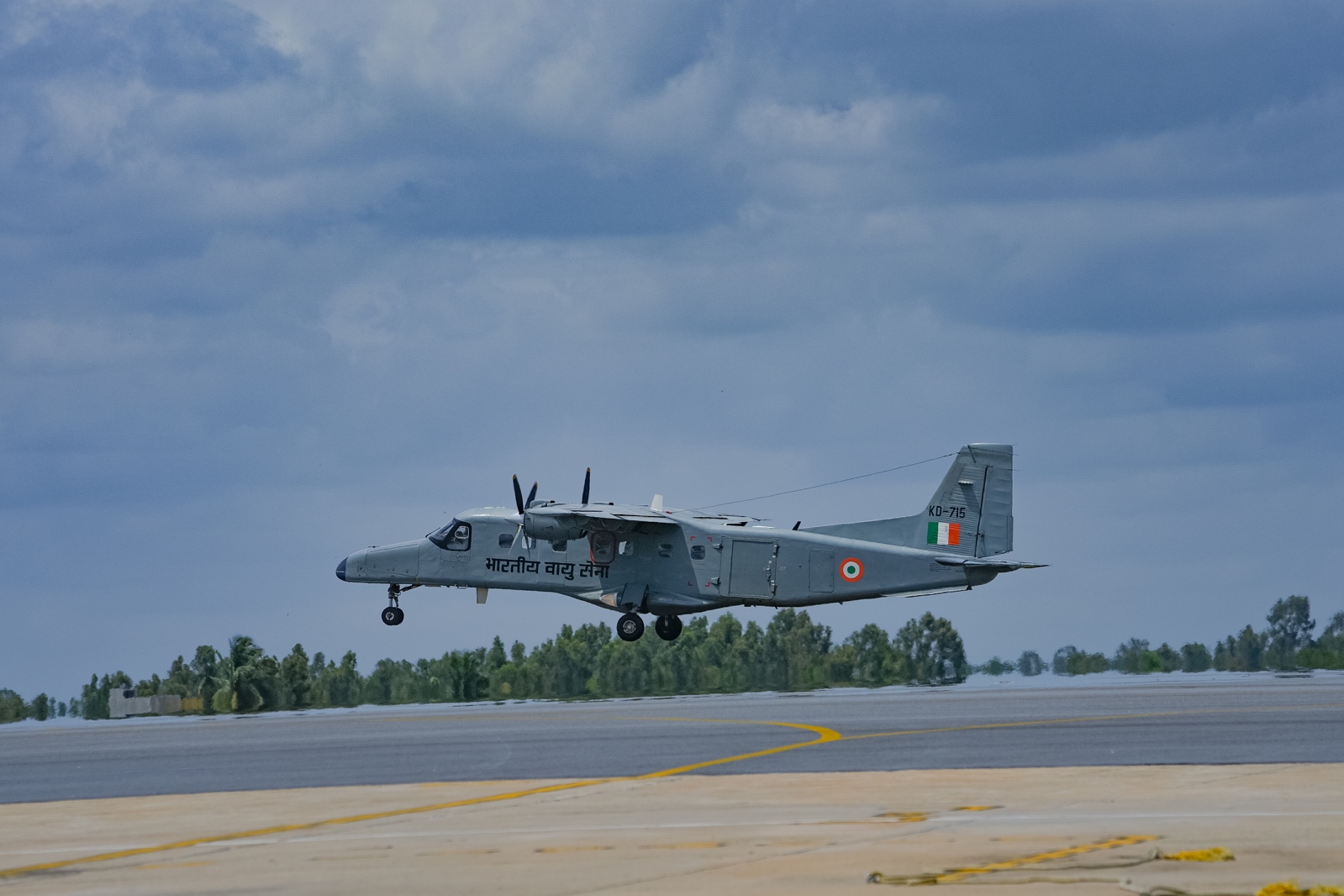
The Dornier Do-228 (built under license by HAL) was inducted at AFS Yelahanka in 1996. The establishment was subsequently renamed as the Fixed Wing Training Faculty (FWTF). Today, the training in FWTF is conducted in two stages — Stage II (T) and Stage III (T). The induction of the latest Glass Cockpit variant of the Do-228 at Yelahanka commenced in Oct 2023. Stage II (T) training is conducted as an integrated module comprising the Full Motion Full Mission Simulator and KD series aircraft. Stage III (T) training is conducted on the HM series of Do-228 aircraft.
AFS Yelahanka is also home to No. 112 Helicopter Unit (112 HU), the ‘Thoroughbreds’ which presently operate the Russian-origin Mil Mi-17 medium lift helicopters in the training role. 112 HU is christened as the Alma Mater of Heli-Lift and was honoured with the President’s Standard in March 2014.
112 HU was raised on August 1, 1963, at Jorhat with Bell 47 G helicopters. It was one of the first helicopter units in the Northeast. It was reequipped with Chetak (SA-316) helicopters on November 7, 1966, and moved to Bagdogra. The unit’s first Cheetah (SA-315) helicopters entered service in 1973. 112 HU moved to AFS Yelahanka in July 1982 and was re-equipped with Mi-8 ‘Pratap’ helicopters that same year. The first Pratap Pilot Conversion Course, to convert pilots from Chetak helicopters to Mi-8s was undertaken in July 1984. The training pattern was later modified and called Helicopter Conversion Course (HCC) which was the precursor to today’s Stage III (H) pilot training. 112 HU commenced the ab-initio Flt Eng Course for twin-engine Russian helicopters in Aug 1984 and Flt Gunners Course in Jul 1988.
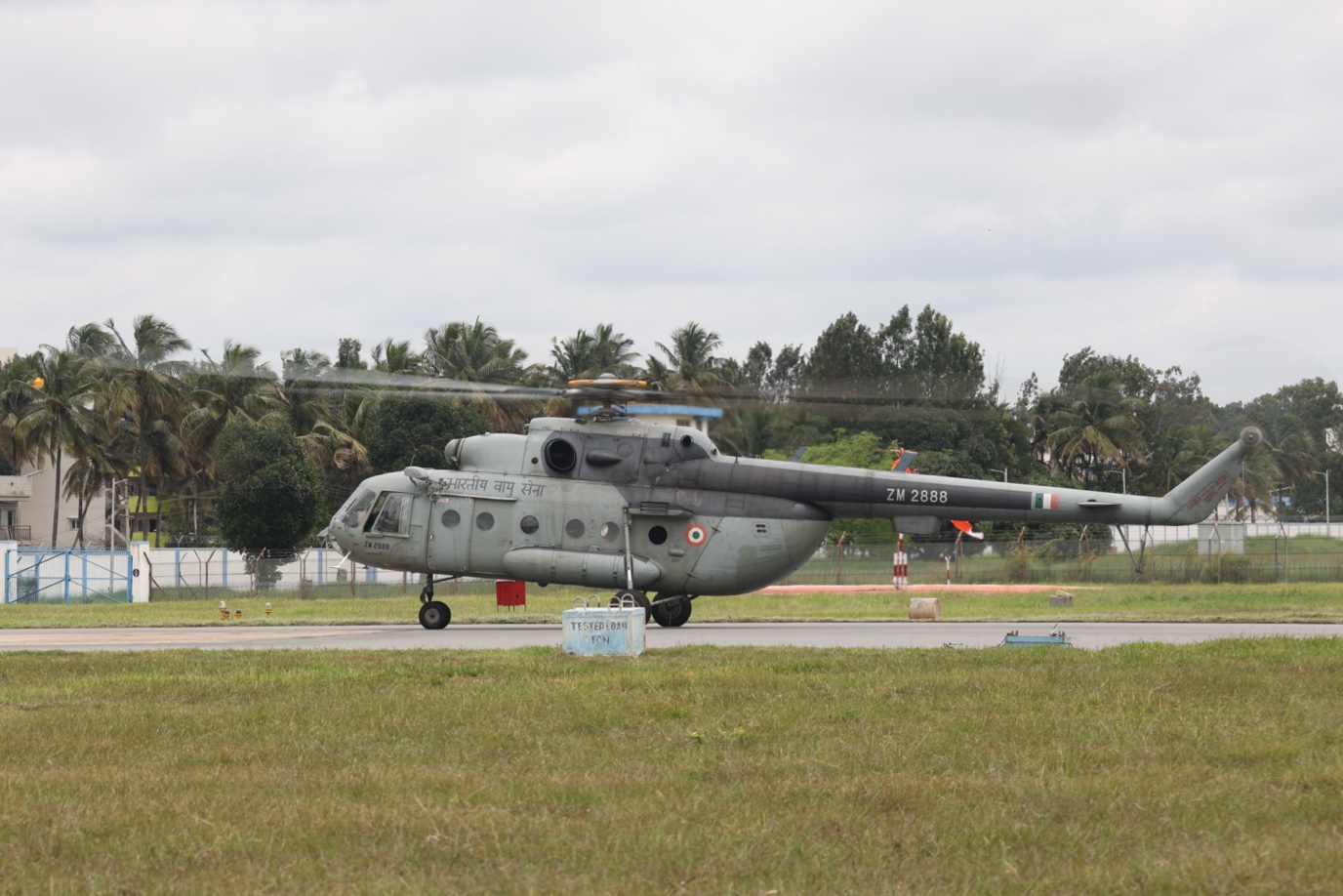
The newer Mi-17 medium lift helicopters were inducted into 112 HU in February 2016. The Thoroughbreds bid farewell to their Mi-8s on December 2017 at AFS Yelahanka. The Mi-8s were instrumental in training IAF’s twin-engine helicopter pilots for more than four decades but by the time of their retirement were at the end of their life and demanded a high amount of maintenance.
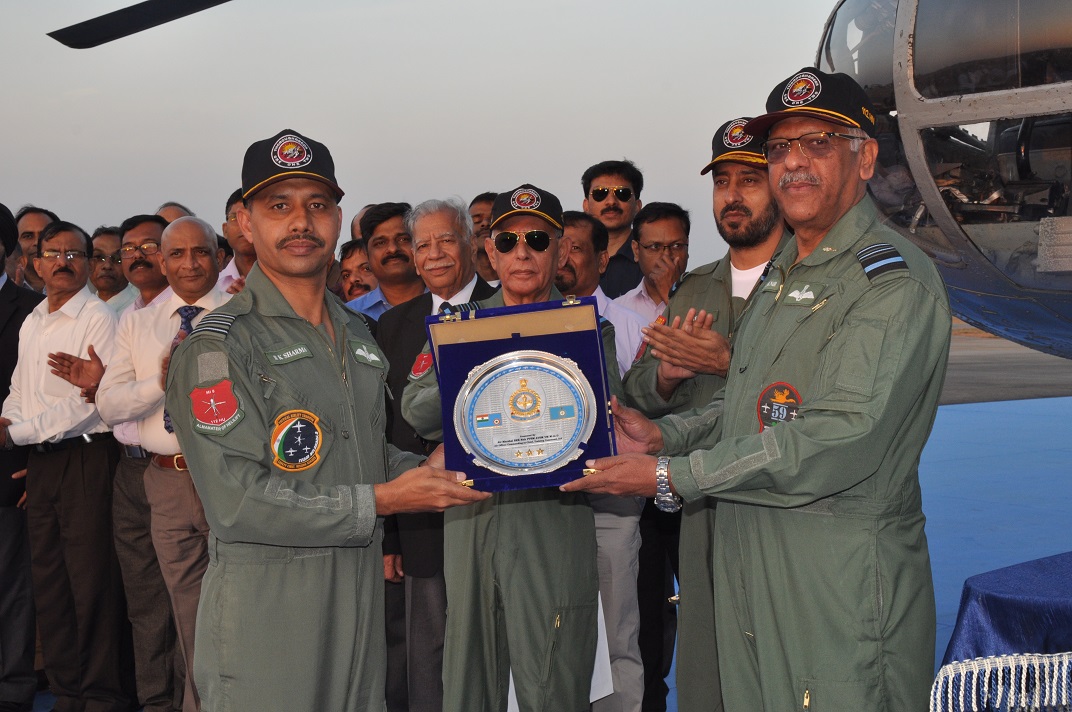
Less than a handful of Mi-8s were operational by the time of their retirement from IAF service. As the Mi-8 neared its retirement, the IAF transferred its remaining Mi-8s to Yelahanka. In total, the IAF operated 10 HUs with the Mi-8. The last Mi-8 of the IAF received a special send off with Air Chief Marshal (Retd) FH Major at the controls of the helicopter on its final flight. ACM Major was the first helicopter pilot in the IAF to rise to the rank of Chief of the Air Staff (March 31, 2007 – May 31, 2009). On his final flight on the Mi-8, ACM FH Major had accumulated over 4,900 flight hours on the Mi-8.
The first Mi-8s arrived at docks in Bombay in 1971 and were formally inducted into service in 1972. The Mi-8 helicopters were a quantum leap ahead of the piston powered Mi-4 helicopters then operational with the IAF. Between 1971 and 1990, 107 Mi-8 helicopters were inducted into the IAF; 83 Mi-8 helicopters between 1971 and 1980 and a second batch of 17 Mi-8 helicopters were added between 1981 and 1990.
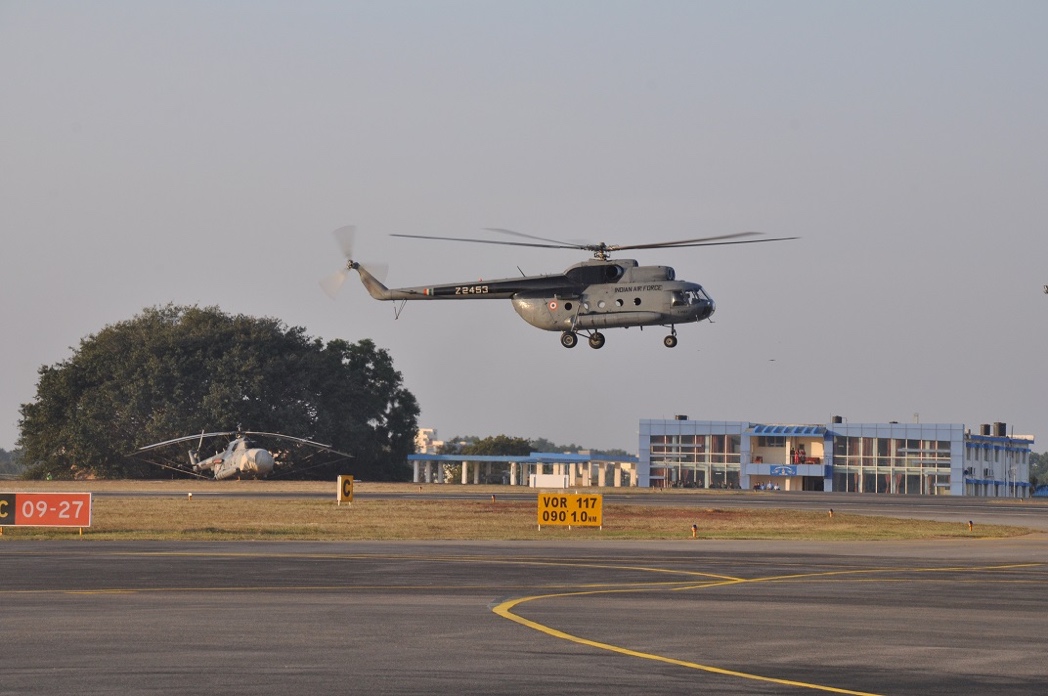
Since 2018, the medium lift helicopter training has been undertaken only on Mi-17. The Mi-17 features an AC-based electrical system as compared to Mi-8’s DC electrical system, which led to fewer snags and more reliable systems. The Mi-17s also have a more powerful engine and as compared to the Mi-8, does not face the issue of main rotor RPM dropping when operating at higher power regimes, thereby reducing sluggishness of controls.
Considering the sheer magnitude of the large number of aircraft that need to be maintained to generate a high sortie rate, the technical flights at AFS Yelahanka are often referred to as ‘Mini-BRDs’. Maintaining the legacy platforms is certainly demanding as the primary challenges lie in ensuring the availability of spares for aging systems, adapting older designs to modern operational requirements, and upgrading avionics to match current safety and efficiency standards.
Through Indigenisation of critical components, close coordination with HAL and OEMs, and rigorous preventive maintenance schedules, the engineering personnel at AFS Yelahanka have consistently kept these aircraft mission-ready, with the fleet remaining reliable workhorses for transport, training, and liaison duties.
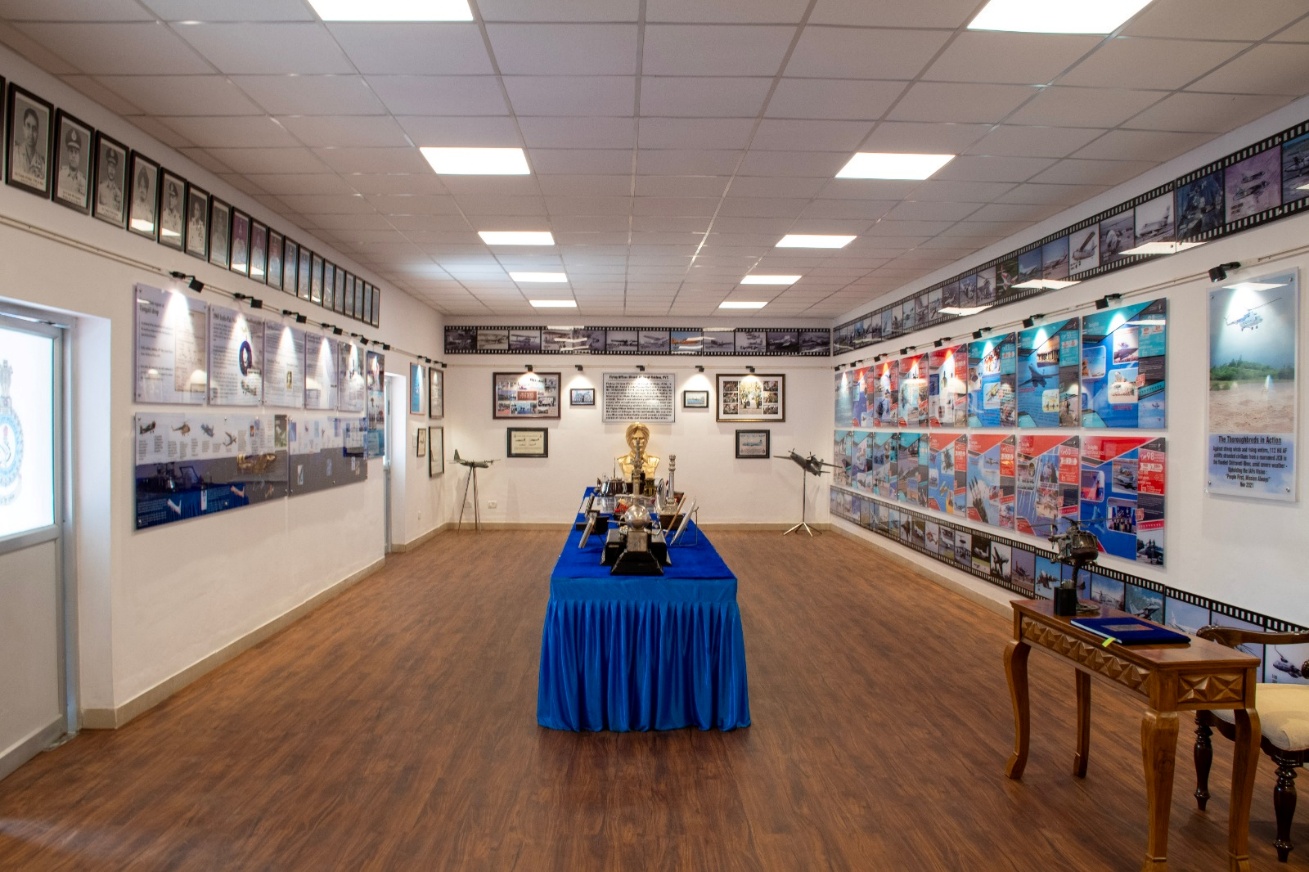
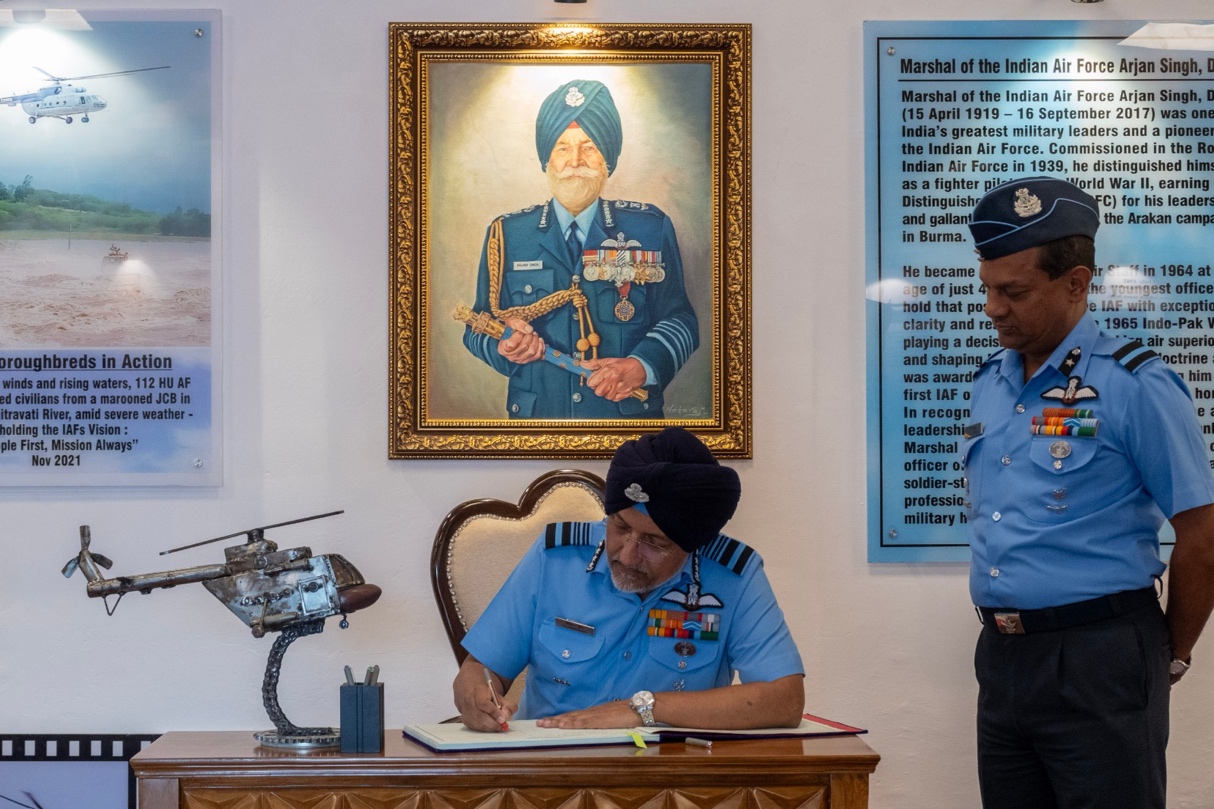
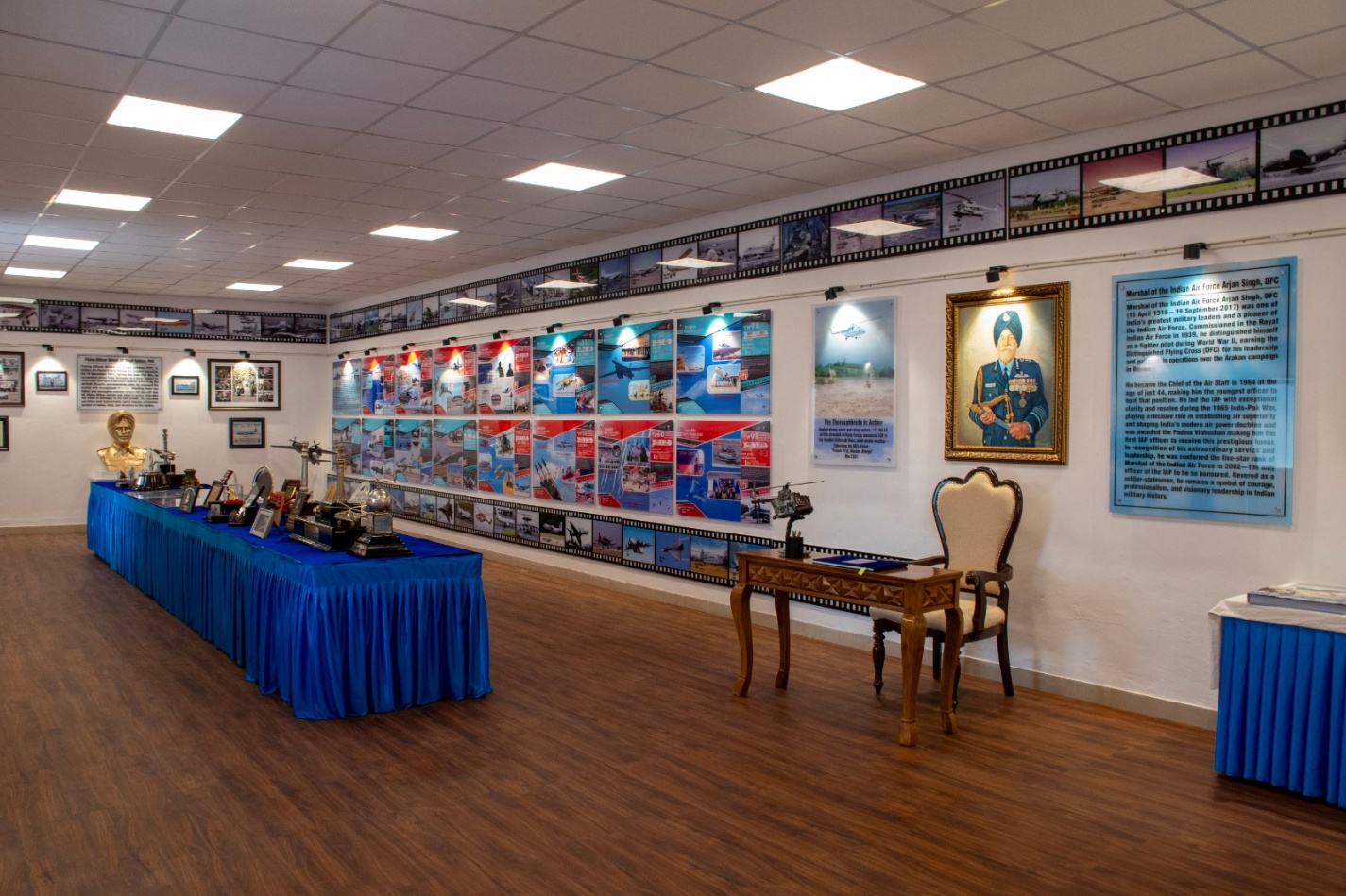
In a tribute the aviator’s and their flying machines, past and present at AFS Yelahanka, ‘Vayu Path – The Aviation Gallery of Yelahanka” was inaugurated on December 22, 2025, by then Air-Officer-Commanding-in-Chief, Training Command, Air Marshal Tejinder Singh.
Credit: IAF
Credit: IAF
Credit: IAF.
*****
CLICK TO VIEW PDF
Notes:
[1] CAPSS research visit to AFS Yelahanka, October 2025.
[2] DYES Karnataka Govt, “https://dyes.karnataka.gov.in/7/The%20Government%20Flying%20Training%20School/en. Accessed on 15 October, 2025.
[3] Naveen Menezes, “https://www.deccanherald.com/india/karnataka/bengaluru/experts-question-govt-s-move-to-relocate-jakkur-flying-school-to-mysuru-3832166, Deccan Herald, December 16, 2025. Accessed on December 20, 2025.
[4] Anchit Gupta, “The Flying Wheelchair – Communication Flights in India”, https://iafhistory.in/2024/11/26/the-flying-wheelchair-communication-flights-in-india/, accessed on 20 October 2025.
[5] CAPSS research visit to AFS Yelahanka, October 2025.
[6] IAF NIC IN, https://indianairforce.nic.in/commands, accessed on 15 October
[7] Anchit Gupta, “The Flying Wheelchair – Communication Flights in India”, https://iafhistory.in/2024/11/26/the-flying-wheelchair-communication-flights-in-india/, accessed on 20 October 2025.
[8] CAPSS research visit to AFS Yelahanka, October 2025.
[9] ibid
[10] ibid
[11] ibid

 and its air bases in South India have a distinguished legacy of service to the nation and undertaking flight)