
Author: Dr Martand Jha, Research Fellow, Centre for Air Power Studies
Keywords: Axiom-4, Shubhanshu Shukla, Indian Space Research Organisation (ISRO)
Outer space is a serious business, and it is also an expensive one. It is, therefore, better to reschedule than to regret it later. The Axiom-4 mission has a new launch date after withstanding five reschedules since its original launch date of May 29, 2025. The primary reason is the cost of the human lives involved. This is true for all space missions. The Axiom-4 mission is special because it marks the return of human spaceflight not only to India but also to Hungary and Poland. [1]
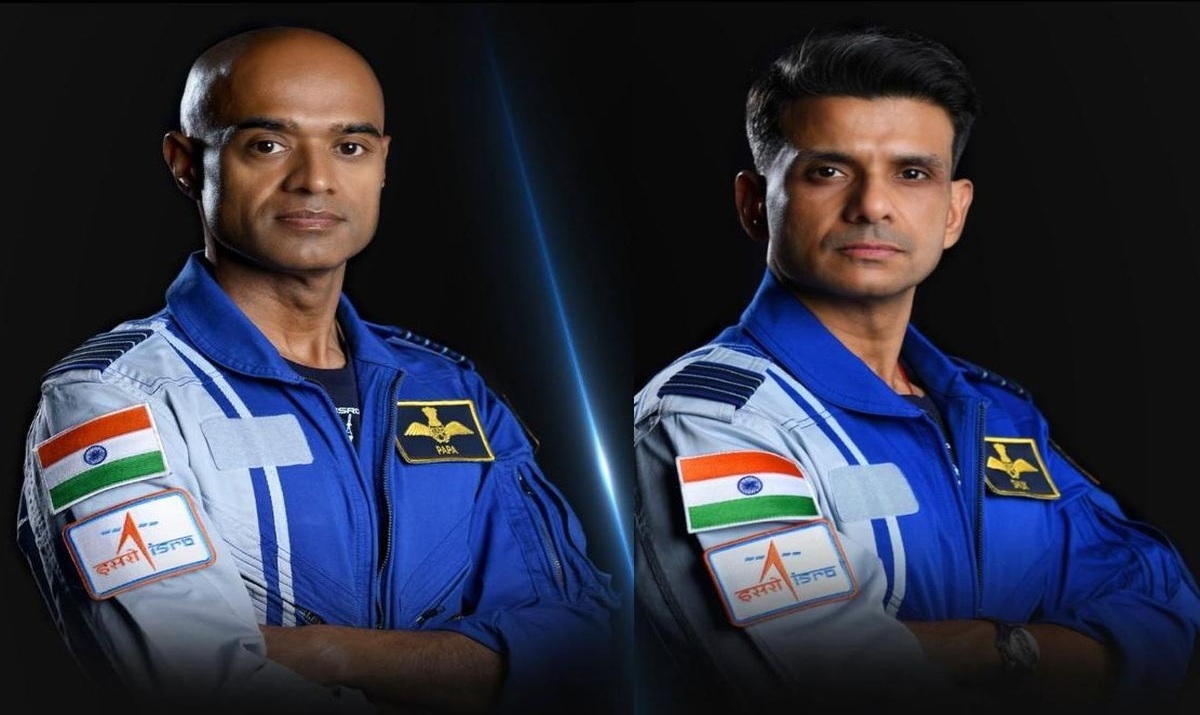
The primary crew for this mission includes Mission Commander Peggy Whitson from Axiom Space, Mission Pilot Shubhanshu Shukla from India and two mission specialists, namely Sławosz Uznański-Wiśniewski and Tibor Kapu from Poland and Hungary, respectively. For India, this mission is a precursor to the Mission Gaganyaan– which is India’s inaugural human spaceflight mission. That is why; apart from Shubhashu Shukla, Group Captain Prashanth Nair is also part of the same mission as a Pilot in the backup crew. [2] In 2027, when India plans to launch its Mission Gaganyaan from Sriharikota, the lessons learnt from the Axiom-4 Mission and the practical experience of being in outer space will hopefully come in handy. [3]
This is precisely why the Indian Space Research Organisation (ISRO) has paid a substantial amount of INR 550 crores to Axiom Space Inc. to secure a seat on this mission. The scheduled duration for this mission is up to 14 days. [4] During this time, the Axiom-4 would be docked to the International Space Station (ISS). Shubhanshu Shukla would be the first individual to represent India inside the ISS. Therefore, he is also called ISRO’s first ‘Gaganyatri’-since this mission comes as a precursor to the Mission Gaganyaan. After onboarding the International Space Station (ISS), the Indian astronaut is expected to conduct several microgravity research experiments.
As per the information enlisted on ISRO’s official website, “The field of microgravity research with potential applications in diverse areas such as human health, physical/ life sciences, material research, novel pharmaceutical development and biotechnology offers significant opportunities to the national scientific community. ISRO has shortlisted seven microgravity research experiments proposed by Indian Principal Investigators (PIs) from various national R&D laboratories/ academic institutions for implementation on the International Space Station (ISS) during the upcoming Axiom-4 mission with ISRO’s Gaganyatri”.
As mentioned above, these experiments would entail multiple collaborations between the ISRO and India’s various scientific institutions. This includes a list of elite institutions like the Indian Institute of Science, International Centre for Genetic Engineering & Biotechnology (ICGEB), National Institute of Plant Genome Research (NIPGR), University of Agricultural Sciences, Dharwad, Indian Institute of Technology, Dharwad, Institute of Stem Cell Science and Regenerative Medicine (InStem), Indian Institute of Space Science and Technology (IIST), Department of Space and College of Agriculture, Vellayani, Kerala Agricultural University. [5]
A total of seven experiments are to be conducted during this mission. These experiments range from gauging the impact of microgravity radiation on edible microalgae to sprouting salad seeds in space- which is relevant to the crew’s nutrition. The Indian Institute of Science is collaborating with ISRO on two experiments as part of this mission; one focuses on the survival, revival, reproduction, and transcriptome of the eutardigrade Paramacrobiotus sp. BLR strain in space, while the other involves analysing human interaction with electronic displays in microgravity.
A few other experiments scheduled for this mission include assessing the effect of metabolic supplements on muscle regeneration under microgravity, analysing the comparative growth and proteomics responses of cyanobacteria on urea and nitrate in microgravity, and evaluating the impact of microgravity on growth and yield parameters in food crop seeds. These experiments would provide India with an opportunity to utilise the research facilities available on the International Space Station. However, prior to conducting these experiments in outer space, they have undergone rigorous evaluations and reviews on the ground before the scheduled launch of the mission. [6]
The primary objective behind conducting these research experiments is to gain some concrete experience in nurturing a microgravity research ecosystem in India. This would further facilitate the induction of advanced microgravity experiments across various disciplines in the Indian Space Program. However, everything depends on whether the mission is successfully launched on June 22, considering that the launch date has been moved multiple times from the original date, i.e., May 29, 2025.
India is hoping to achieve the desired results from the Axiom-4 mission, as this would provide a valuable template for Mission Gaganyaan. Although this mission is viewed in connection with India’s future preparedness for its manned mission to outer space, but every mission is unique on its own and, therefore, should be seen in that light. What India achieves through Axiom-4 can only be discussed at length when this mission concludes.
******
CLICK TO VIEW THE PDF
Notes
[1] Lingamgunta Nirmitha Rao, “Why was Axiom-4 launch with Indian astronaut Shubhanshu Shukla postponed?,” Hindustan Times, June 10, 2025, https://www.hindustantimes.com/india-news/why-was-the-axiom-4-mission-with-indian-astronaut-shubhanshu-shukla-delayed-101749519395432.html#google_vignette. Accessed on June 12, 2025.
[2] Press Information Bureau, Government of India, “Indian Astronaut Group Captain Shubhanshu Shukla to conduct exclusive Food & Nutrition Experiments Onboard International Space Station (ISS), Announces Union Minister Dr. Jitendra Singh, ” May 31, 2025, https://www.pib.gov.in/PressReleasePage.aspx?PRID=2133020. Accessed on June 17, 2025.
[3] Jacob Koshy, “Gaganyaan mission moved to ‘first quarter of 2027’, says ISRO chief, “The Hindu, May 06, 2025, https://www.thehindu.com/news/national/gaganyaan-mission-slated-for-first-quarter-of-2027-isro-chief-narayanan/article69544954.ece. Accessed on June 11, 2025.
[4] “Axiom 4 Mission Explained- ISRO’s Rs 550 crore mission to send Shubhanshu Shukla to the ISS,” Deccan Herald, June 09, 2025, https://www.deccanherald.com/india/axiom-4-mission-explained-isros-rs-550-crore-mission-to-send-shubhanshu-shukla-to-the-iss-3578120. Accessed on June 12, 2025.
[5] Indian Space Research Organisation, Department of Space, India, “Indian Microgravity Research Portfolio in upcoming Axiom-4 Mission,” April 28, 2025, https://www.isro.gov.in/Indian_microgravity_research_Axiom4_mission.html. Accessed on June 14, 2025.
[6] “Axiom-4 mission: ISRO coordinating with Axiom Space to refresh time-sensitive experimental specimens The Hindu, June 16, 2025, https://www.thehindu.com/sci-tech/science/axiom-4-mission-isro-coordinating-with-axiom-space-to-refresh-time-sensitive-experimental-specimens/article69701001.ece. Accessed on June 16, 2025.