Author: Dr Sreshtha Chakraborty, Research Fellow, Centre for Aerospace Power and Strategic Studies
Keywords: West Asia, Gulf, Strategic ceasefire, Strait of Hormuz, Peace Negotiation
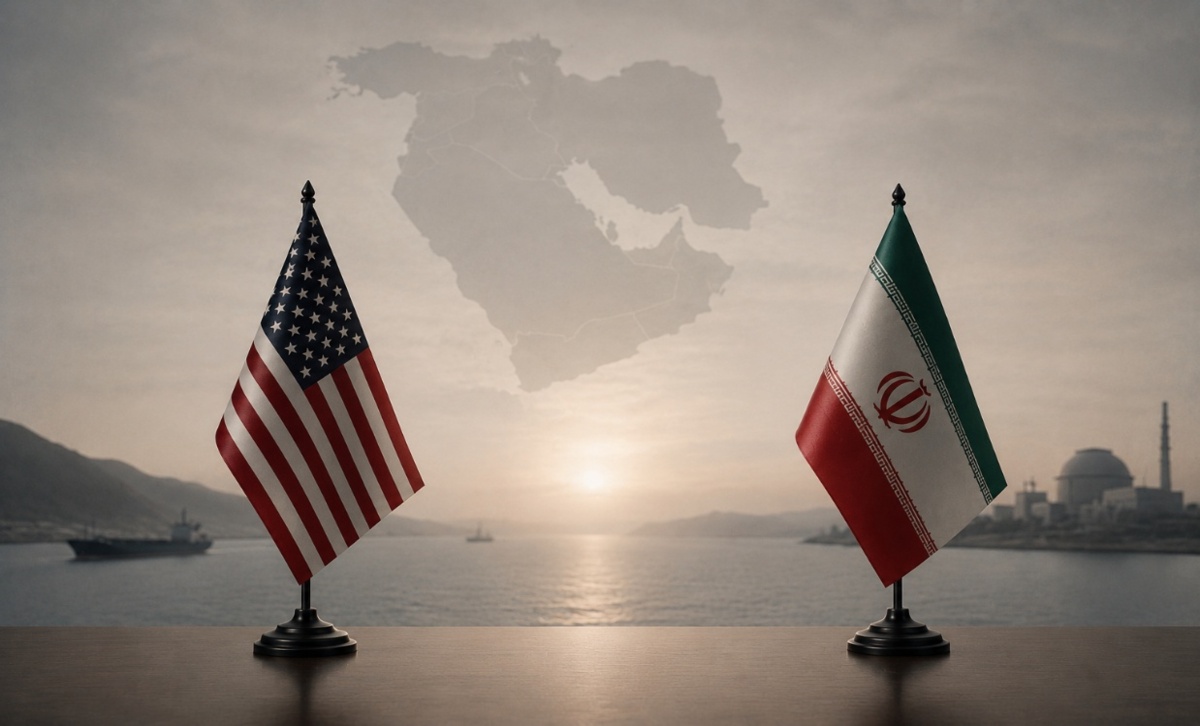
Diplomacy is rarely undermined solely by what unfolds at the negotiating table. More often, the conditions for failure are embedded in the process long before negotiators come together. On July 08, 2026, after yet another exchange of strikes, United States (US) President Donald Trump declared the Islamabad Memorandum “over.”[1] Given the trajectory of Iran-US relations, the June 2026 signing of the Islamabad Memorandum, formalised through President Trump’s ceremony at Versailles and Tehran’s parallel approval,[2] would not be surprising, given that it unravelled so quickly. This shifts the focus beyond the ceasefire itself to a more fundamental question: were Iran and the United States engaged simply in managing a conflict that neither side was prepared to conclude on the other’s terms?
Geography is the one factor neither delegation could negotiate away, and it explains why the Islamabad Memorandum could be signed but not kept. Iran sits astride the northern shore of the Strait of Hormuz, the twenty-one-mile chokepoint through which roughly a fifth of the world’s traded oil moves. That position hands Tehran a coercive instrument that exists independently of any agreement. The capacity to control the strait is an inherent aspect of Iranian territory, and it is not a temporary concession to be traded. So long as it persists, Iran retains leverage that is unlikely to be waived away by any signed agreement. The same geography constrains Washington from the opposite direction. American power in the Gulf is projected from a dispersed archipelago of bases like the Fifth Fleet at Manama, Bahrain, the air base at Al Udeid, Qatar, and forward positions across the United Arab Emirates (UAE). Its military installations each lie within range of the Iranian missile and drone inventory that the 2026 war unveiled. The proximity that lets the United States mass force against Iran is also the proximity that exposes that force to Iranian retaliation. The negotiators could pause the exchange of strikes. They could not renegotiate the geography that guaranteed the leverage on both sides would outlast the pause, and which is why, three weeks later, it did.
The symbolism surrounding the breakdown of diplomacy after the peace deal further revealed these competing narratives. For Iran, the death of Supreme Leader Ayatollah Ali Khamenei was framed through the language of sacrifice, martyrdom, and resistance. At the same time, the decision to hold his funeral on July 04 coincided with the United States marking its 250th Independence Day celebrations under President Trump.[3] For both, it is less about the language of compromise and more about reinforcing domestic narratives of strength, victory, and defiance. Washington and Tehran deliberately chose this Memorandum over a treaty as it allowed both sides to claim a diplomatic breakthrough without resolving the core disputes that triggered the February 2026 War.[4]
Four structural weaknesses illuminate the reasons behind the deal’s ongoing fragility. The first is trust, or the absence of it. Iran’s confidence in negotiated guarantees was severely damaged after Washington withdrew from the 2015 Joint Comprehensive Plan of Action (JCPOA) in 2018. Tehran, even though, remained formally within the framework initially, gradually reduced its compliance as sanctions pressure returned. That experience continues to shape every subsequent negotiation because the question for Iran is no longer only what Washington is willing to offer, but whether any American commitment can survive a change in administration. Sanctions relief loses much of its value if companies, investors, and foreign governments assume that restrictions could return after the next election cycle. Washington faces its own version of the same credibility dilemma. American policymakers question whether temporary restrictions on enrichment can permanently alter Iran’s strategic calculations, especially when Tehran views nuclear capability as a guarantee against external pressure. As a result, both sides negotiate not only over the terms of the deal but over the likelihood that the other side will eventually abandon it. The problem is therefore deeper than the absence of dialogue. It is the absence of confidence that any compromise reached today will remain politically sustainable tomorrow.
The second is that Washington and Tehran are not arguing about the same thing when they use the word “security.” For the United States, security means non-proliferation and a verifiable end to Iranian enrichment. Iranian authorities, who keep mentioning the fall of Muammar Gaddafi and Saddam Hussein, abandoned their strategic deterrents because nuclear capability is essential for regime survival.[5] The Islamabad text sidestepped this by deferring the nuclear question to future talks and settling for vague language about downgrading stockpiles “in view of Iran’s nuclear needs.” That is not a resolution. It is a postponement masquerading as progress.
The third is that Iran’s leverage does not sit in conventional military terms, where the United States is unambiguously superior, but in its network of regional proxies and its capacity to threaten the Strait of Hormuz. No treaty-style guarantee can address a threat that is deliberately diffuse and deniable. Hezbollah stayed outside the core framework of the memorandum, leaving one of the most disputed aspects of the conflict unresolved.
The fourth is that Israel was not a signatory to the agreement and has frequently emphasised that it will act unilaterally, regardless of any deals made between Washington and Tehran.[6] This issue broadens into the significant challenge that, without maintaining consistency with Israel’s position, no American administration can uphold a strategic negotiation with Iran if Israel’s stance is not aligned. For Israel, Iran is not just a geopolitical competitor but a national and existential threat. The memorandum brought Washington and Tehran to the same table, but was not consistent with Israel’s strategic interests. The Gulf Cooperation Council (GCC) states called for a lasting peace that tackled wider regional security issues, including Iran’s missile capabilities and activities. However, they stayed out of the negotiations that would shape those outcomes.[7] This highlighted a deeper problem. Gulf states want a role in regional security arrangements but are careful about deals that ease pressure on Tehran without addressing other sources of instability.
The proposed 14-point Memorandum of Understanding (MoU) between the United States and Iran exposed a recurring problem in diplomacy: that pausing a war is not the same as resolving it. The arrangement front-loaded Iran’s gains, sanctions relief and restored oil flows, while postponing Washington’s core concerns on enrichment, ballistic missiles, and regional networks.[8] For Iran, the negotiations confirmed the value of geographic leverage. The Strait of Hormuz remains Tehran’s decisive pressure point.[9] It exposed that a durable settlement cannot rest on temporary concessions. What follows the July 08 collapse, then, is not the end of diplomacy but a return to its default setting. It is a war paused rather than concluded, punctuated by rounds of talks that produce frameworks rather than settlements.
Over the past decade, India has successfully transformed its relations with key West Asian states into strategic partnerships while significantly reducing Pakistan’s ability to shape India’s regional engagement.[10] However, recent regional crises have underscored areas where this approach could be further strengthened. Conflicts involving India’s partners have created a complex diplomatic environment where New Delhi must simultaneously manage ties with Israel, the Gulf states, Iran, and the United States without allowing one relationship to undermine another.
India’s response has focused on its quest for dialogue, de-escalation and reducing tension.[11] Its diverse partnerships have played a crucial role in handling disruptions, especially in energy security. As West Asia becomes increasingly important to India’s economy and strategic interests, there’s growing hope that New Delhi will continue to maintain its balanced approach, thereby strengthening its strategic autonomy. India should enhance its Link West strategy by creating a stronger framework emphasising West Asia’s role in energy, diaspora, connectivity, and regional geopolitics. The challenge for India is to turn its extensive network of partnerships into real influence, ensuring it remains not just an economic partner but also a significant player in the changing regional landscape.
*****
CLICK TO VIEW THE PDF
Notes:
[1] On July 08, 2026, after renewed exchanges of strikes, President Trump declared the memorandum “over” and said he no longer wished to deal with the Iranian regime, see Humeyra Pamuk, Gram Slattery and Tala Ramadan, “US Military Carries Out Fresh Strikes on Iran, Prompting Iran Attacks on Kuwait and Bahrain,” Reuters, July 08, 2026, https://www.reuters.com/world/middle-east/iran-targets-sites-bahrain-kuwait-after-wave-us-strikes-2026-07-08/. Accessed on July 09, 2026.
[2] The memorandum was signed remotely on June 17, 2026, with President Trump signing at the Palace of Versailles during the G7 summit and President Masoud Pezeshkian signing in Tehran, see Alayna Treene, Kevin Liptak, and Mostafa Salem, “US Releases Official Agreement with Iran. Read the 14-Point Text,” CNN, June 17, 2026, https://www.cnn.com/2026/06/17/middleeast/us-iran-war-mou-text-intl. Accessed on July 09, 2026.
[3] Ayatollah Ali Khamenei was killed in U.S.-Israeli airstrikes on February 28, 2026, at the outset of the war; his multi-day state funeral was held from 3 to 9 July 2026, with the lying-in-state on July 04 coinciding with the United States’ 250th Independence Day, see “July 3, 2026: Iran Prepares for Late Supreme Leader’s Funeral,” CNN, July 03, 2026, https://www.cnn.com/2026/07/03/world/live-news/iran-funeral-war-trump; Hadeel Al-Shalchi, “Dayslong Funeral for Slain Supreme Leader Ayatollah Ali Khamenei Begins in Tehran,” NPR, July 04, 2026, https://www.npr.org/2026/07/04/nx-s1-5882083/iran-funeral-ayatollah-ali-khamenei. Accessed on July 09, 2026.
[4] The memorandum is an interim framework rather than a final settlement, deferring the nuclear file, uranium stockpiles, ballistic missiles, and Iran’s regional networks to talks within a 60-day window, see Daniel Brumberg, Khalil E. Jahshan, Patricia Karam, Yousef Munayyer, Daniel Neep, and Kristian Coates Ulrichsen, “The US-Iran Interim Deal: A Fragile Ceasefire,” Arab Center Washington DC, June 18, 2026, https://arabcenterdc.org/resource/the-us-iran-interim-deal-a-fragile-ceasefire/. Accessed on July 10, 2026
[5] On the perception among Iranian leaders that Libya’s 2003 disarmament and Gaddafi’s subsequent overthrow demonstrate the survival value of retaining a nuclear option, see David Kenneth Smith, “The Next Iran Nuclear Deal: Lessons From Iran, Iraq, Libya, Syria, and North Korea,” Stimson Center, June 25, 2026, https://www.stimson.org/2026/the-next-iran-nuclear-deal-lessons-from-iran-iraq-libya-syria-and-north-korea/; and Yaseen Rashed, “From Tripoli to Tehran: Lessons From Libya in US-Iran Nuclear Talks,” Atlantic Council, April 30, 2025, https://www.atlanticcouncil.org/blogs/menasource/from-tripoli-to-tehran-lessons-from-libya-in-us-iran-nuclear-talks/. Accessed on July 10, 2026.
[6] Lebanon and Hezbollah were left outside the memorandum, and Israel, which was not a party, has signalled it will act unilaterally regardless of the US-Iran understanding, see Arab Center Washington DC, n. 4.
[7] The GCC states were not parties to the Islamabad talks and were not formally consulted, yet they have pressed for a settlement addressing Iran’s ballistic missiles, drones, and support for regional armed groups see Eric Alter, “What Gulf States Need in a US-Iran Deal,” Atlantic Council, May -7, 2026, https://www.atlanticcouncil.org/dispatches/what-gulf-states-need-in-a-us-iran-deal/; and Congressional Research Service, United States of America, “The Arab Gulf States, the Iran Conflict, and U.S. Relations: In Brief,” June 03, 2026, https://www.congress.gov/crs-product/R48971. Accessed on July 10, 2026
[8] CNN, n. 2.
[9] Flows through the Strait of Hormuz account for roughly one-fifth of global petroleum liquids consumption, see U.S. Energy Information Administration, United States of America, “Amid Regional Conflict, the Strait of Hormuz Remains Critical Oil Chokepoint,” June 16, 2025, https://www.eia.gov/todayinenergy/detail.php?id=65504. Accessed on July 10, 2026.
[10] On India’s shift over the past decade from transactional ties to strategic partnerships across West Asia, and its de-hyphenation of regional relationships, see Harsh V. Pant, “India and the UAE: A New Strategic Compact,” Observer Research Foundation, May 14, 2026, https://www.orfonline.org/research/india-and-the-uae-a-new-strategic-compact . Accessed on July 10, 2026.
[11] On India’s emphasis on balanced relations with all major actors and its consistent calls for restraint and de-escalation through the 2026 crisis, see Soumya Bowmick, “Crisis in the Corridor: Stress-Testing India’s Minilateral Strategy in the Gulf,” South Asian Voices, March 26, 2026, https://southasianvoices.org/ec-m-in-r-india-gulf-strategy-03-26-2026/. Accessed on July 10, 2026.