A Year into the MAHASAGAR

0
375
1
0

Author: Ms Radhey Tambi, Research Associate, Centre for Aerospace Power and Strategic Studies

Keywords: MAHASAGAR, Indian Ocean, Island countries, Maldives

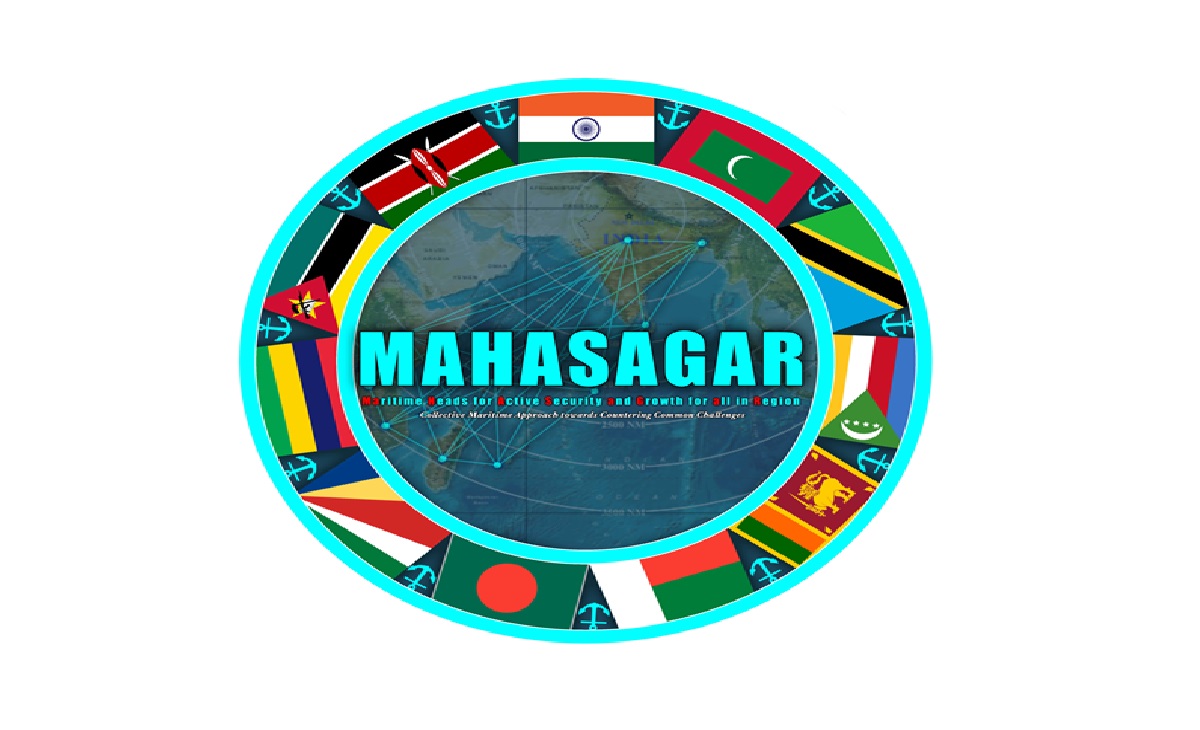
The Indian Ocean has evolved beyond its traditional role as a mere trade route; it is now emerging as a highly contested battleground, characterised by heightened tensions and competition among various powers. The waters are becoming increasingly congested, particularly due to the recent spillover of conflicts from West Asia, which have started to impact maritime security. The situation is further complicated by the alarming use of drones and anti-ship missiles by non-state actors operating in the Red Sea, demonstrating a new dimension of maritime threat. All these have tested the resilience and responsibility of its central resident, India, time and again, as India has attempted to navigate its relationship with its maritime neighbours. India has responded to many of these challenges with grit and determination, but the monsoonal winds that once united the ecosystem of the Indian Ocean seem to be undergoing a profound change, with the dynamics of the region being re-written and re-built through connectivity projects, institutional milestones, diplomatic initiatives, and strategic choices of both regional and distant powers. In this context, it is imperative to examine India’s revamped Indian Ocean outlook, Mutual and Holistic Advancement for Security and Growth Across Regions (MAHASAGAR), with special reference to the island countries and extended island territories, as it completes one year on March 12, 2026.

The fact that MAHASAGAR was launched by Prime Minister Narendra Modi from Mauritius in 2025 is a testament to India’s angular focus on the island countries of the Indian Ocean as it assumes a greater role. While India’s diplomatic, institutional, security, and economic initiatives in the region have seen an upward trajectory, the existing asymmetry, especially in capacity relative to other extra-regional countries, is now revealing its true colours above the water and filling the space where India has been a traditional power.

MAHASAGAR in Action

In the past year, Prime Minister Modi has visited three island countries: Mauritius, the Maldives, and Sri Lanka. Similarly, the Heads of State of Sri Lanka, Mauritius, and Seychelles, after being elected, chose New Delhi for their first foreign visit — a political storytelling of their priorities and trust in India. The relationship with Port Louis has also been elevated to an ‘Enhanced Strategic Partnership’. What stands out in India’s MAHASAGAR approach is its focus on institutional linkages, sustainability goals, and integration of technology into the socio-economic goals of the island countries.

The recent launch of the Joint Vision for Sustainability, Economic Growth, and Security through Enhanced Linkages (SESEL) between India and Seychelles, during President Patrick Herminie’s visit, marks a watershed in establishing an institutional framework to strengthen ties. The horizon of cooperation has also been broadened to include areas ranging from the creation of the digital public infrastructure in the Maldives, support for Sri Lanka’s unique digital identity project, utilising AI for development in Mauritius, to other projects focusing on sustainability. India leads the way as a top responder, consistently offering compassionate humanitarian assistance wherever it is needed most.

India deployed its ships, army, and air force together to save the lives of vulnerable community members, and later restore connectivity, by launching Operation Sagar Bandhu in Sri Lanka within 24 hours of Cyclone Ditwah in November-December 2025. Humanitarian aid, including ready-to-eat meals, water storage tanks, and medicines, was sent to Madagascar in March 2026, after it was hit by back-to-back cyclones, Gezani and Fytia, in February this year. Membership of the Colombo Security Conclave (CSC) — an India-led initiative to address non-military challenges — has been expanded, with Seychelles becoming a new member. Continuing with the role of preferred security provider for the first time in April 2025, New Delhi attempted to bring all four island nations of the Western Indian Ocean (Comoros, Madagascar, Mauritius, and Seychelles) to learn to deal with the maritime challenges by conducting the first edition of the Africa India Key Maritime Engagement (AIKETME) exercise. For the first time in March 2026, the LAMITIYE exercise between India and Seychelles was expanded to the tri-services, focusing on countering terrorism, conducting sub-conventional operations, and addressing maritime security in a semi-urban environment.

In the past year, serious initiatives have been undertaken to develop India’s own island territories, Lakshadweep and the Andaman and Nicobar Islands, along the Western and Eastern seaboard, respectively. For instance, the Indian Air Force is expanding its facility in Agatti and building an airstrip in Minicoy, while the Indian Navy’s Bitra detachment in Lakshadweep will be ready soon. Vice Admiral Sameer Saxena, the Flag Officer, Commanding-in-Chief of the Southern Naval Command, posited that weapons systems will be deployed and infrastructure will be developed in the Lakshadweep islands, factoring in the ecosystem. This will enable an expanded reach of its shore-based air power, while also conducting the active intelligence, surveillance, and reconnaissance (ISR) needed to address various military and non-military challenges in the Indian Ocean Region (IOR). In the Bay of Bengal region, too, India has aligned its strategic ambitions with the political actions by undertaking the Great Nicobar Island Project.

India’s Dip in the MAHASAGAR: Challenges

However, as India swims deep in the Indian Ocean, ocean currents will test its resilience and responsibility on both the developmental and defence front, and sometimes on moral grounds as well, as seen in the IRIS Dena incident. The island countries, in particular, are small in size and population, but their disproportionately large Exclusive Economic Zones (EEZs) and a weak resource base compel them to rely on external actors to support their domestic growth. While island countries seek to maximise this leverage with each of the foreign countries that are closely linked to their national socio-economic development. On the other hand, the development partners would unanimously want this contest of leverage to be at its minimum, so that they may have a higher say. The trails of such complex behaviour are now being noticed in the Indian Ocean, as the region gains immense significance and consequently becomes congested. At this stage, it is difficult to relate how balancing, hedging, and bandwagoning are playing out. Yet the emerging pattern of interaction and complex behaviour between the island countries and middle and great powers on one hand, and among the island countries themselves, is worth discussing.

The Maldives, in the central Indian Ocean, has emerged as a classic example of this trend, diversifying away from traditional partners of cooperation and enhancing engagement with other countries. On the one hand, it did not renew the hydrography agreement with India; instead, it signed a similar agreement with the South China Institute of Oceanology, allowing China to deploy ocean-based devices and gather data. India has already raised concerns about China’s ballooning presence and its impact on the balance of power in the IOR in the Parliamentary Committee on External Affairs’ recent report. Likewise, the choices smaller countries make are also transforming the inter-island ties, and can put the security of the larger Indian Ocean at stake. The recent withdrawal of the letter by the Maldives from Mauritius, wherein it had acknowledged the sovereign rights of the latter over the Chagos archipelago, at a time when the United Kingdom is considering transferring the sovereignty back to Mauritius, is concerning. Mauritius has also suspended all diplomatic relations with the Maldives. Meanwhile, Malé has stated that if the current agreement is finalised, it will pursue all possible avenues within international law to acquire the Chagos Islands, as indicated by President Mohamed Muizzu.

India has played an active role in surveying the EEZ of many island countries in the Indian Ocean, including Seychelles and the Maldives. However, other players with advanced technology and equipment are emerging as partners for the small island states, such as Türkiye, which is providing its Bayraktar TB2 tactical drones to the Maldives. The emergence of new partners, especially in the military domain, with whom India’s interests converge minimally, is something to watch for. These new partners, who may have been traditional partners of India, may now become competitors of India in the Indian Ocean Region. While smaller countries do need to diversify, to the same extent, such developments also signal a loss of trust in the traditional players.

As the Indian Ocean becomes more congested and contested in the times to come, India’s traditional space of action could potentially shrink. Additionally, the use of leverage by smaller countries, in particular island countries, will rise exponentially. To this end, how New Delhi will leverage its historical, cultural, developmental, and security ties remains to be seen with MAHASAGAR in place. It necessitates that India now adopts a reformed diplomatic, developmental and defence-oriented approach in the Indian Ocean that will allow it to retain its influence and the space to manoeuvre amongst multiple players.

CLICK TO VIEW THE PDF