
Author: Ms Neha Mishra, Visiting Associate Fellow, Centre for Aerospace Power and Strategic Studies
Keywords: Supply Chain Resilience, Mine-to-Magnet, Rare Earth Separation, Critical Minerals Security, REPM Scheme
Introduction
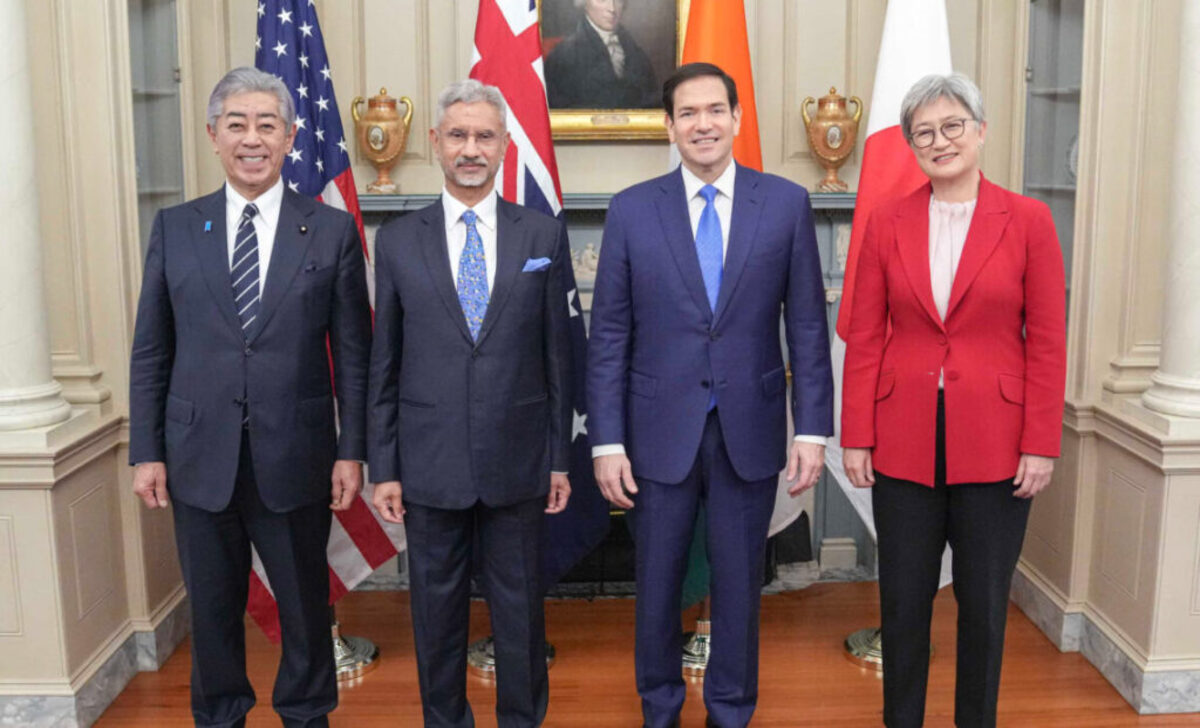
When the Quad foreign ministers convened in New Delhi on May 26, 2026, the Quad Critical Minerals Initiative (QCMI) was among the agenda items they cited as evidence that the Quad continues to deliver substantive cooperation despite the diplomatic strains of the past year. The four governments have reason to make this case, as since the QCMI’s launch in July 2025, the United States (US), Japan, India, and Australia have collectively committed over USD 3 billion in new public investment to critical minerals supply chain projects.[1] The US-Australia Critical Minerals Compact, the Tokyo Critical Minerals Framework, and India’s INR7,280 crore Rare Earth Permanent Magnet (REPM) scheme all bear the imprint of the QCMI logic. The QCMI’s framing of these commitments, however, points the four governments at the wrong part of the supply chain. The most consequential dependency that the grouping is trying to address is not at the mine but in the middle, in separation chemistry, metal-making, alloying, and magnet sintering. China holds approximately 70 per cent of global rare earth mining, approximately 85 to 90 per cent of refining capacity, and over 90 per cent of permanent magnet manufacturing. The gap is widest, and the Western disadvantage most entrenched, precisely where the QCMI has invested the least focused attention.[2] [3]
The diversification effort underway across Quad members has been largely upstream. Australia’s Mt Weld operation and the Lynas processing operations in Malaysia and Western Australia, the only commercial-scale source of separated rare earth oxides outside China, supply neodymium-praseodymium oxide to JARE (Japan Australia Rare Earths), a Japan-government-backed procurement vehicle, under a long-term offtake agreement extended through 2038.[4] Australia’s October 2025 Critical Minerals Compact with the United States committed each government to mobilise at least USD 1 billion in critical-minerals financing by mid-2026, anchored by streamlined permitting and price-support mechanisms.[5] MP Materials at Mountain Pass returned the United States to second place in global mining output in 2024, producing approximately 45,000 tonnes of rare earth oxide concentrate.[6] India’s Khanij Bidesh India Ltd (KABIL) has secured lithium agreements in Argentina and is pursuing similar arrangements across Latin America, Central Asia, and Africa.[7]
These commitments are real and concentrated in the part of the value chain where the Quad members were never the binding constraint. The United States produced rare earths at an industrial scale through the late twentieth century; the technical capacity for mining was not what was affected. Australia also mines well, and India has the third-largest reserves globally (as per the USGS 2025 report), pursuing upstream cooperation[8] under the Australia-India Critical Minerals Investment Partnership since 2022.[9] What the four Quad members lost during the period of Chinese consolidation between 1995 and 2015 was the midstream stage of the value chain, which involves the chemical processing capacity to convert mixed rare-earth concentrate into the individual oxides that magnet manufacturers actually require.
The midstream loss was neither accidental nor entirely market-driven. In 1995, General Motors in the US sold its Magnequench subsidiary, which then supplied approximately 85 per cent of the world’s neodymium-iron-boron magnet output, to a consortium that included two Chinese state-owned enterprises, San Huan New Materials and the China National Nonferrous Metals Import and Export Corporation.[10] The American facilities in Anderson, Indiana and Valparaiso were progressively closed between 2003 and 2006, and the production lines and tooling were relocated to Tianjin. The United States lost not only the production capacity but also the operational know-how that the production engineers carried with them. Japan responded to its own midstream vulnerability after the 2010 Senkaku/Diaoyu Islands episode by reducing its Chinese rare-earth dependency from approximately 90 per cent to 58 per cent over 15 years through coordinated state-industry action, the most successful Western diversification effort of any major economy. By 2023, however, Japanese dependency had risen back to approximately 63 per cent.[11] Even Japan, with the strongest non-Chinese midstream capacity of any Quad member, has demonstrated that diversification requires continuous reinforcement rather than one-time correction. The reason, again, is the midstream capability, which is expensive and slow to rebuild. China’s April 2025 export-licensing measures on seven heavy and medium rare earth elements, samarium, gadolinium, terbium, dysprosium, lutetium, scandium, and yttrium, and the October 2025 extension to five additional elements with extraterritorial provisions, subsequently suspended until November 2026 under the Busan summit agreement, exposed the midstream gap with particular clarity. Chinese rare earth magnet exports to the United States plunged by over 90 per cent in the weeks following the April measures, though global exports partially recovered by mid-2025 following bilateral agreements. The disruption was disproportionately felt at the magnet-manufacturing stage of the supply chain, where Chinese dominance is greatest.[12]
The Quad members’ immediate response was to accelerate upstream commitments and to fund new processing facilities at the early stages of construction. Some midstream-level initiatives involved the allocation of USD 288 million in Department of Defense (DoD) funding to Lynas for a planned heavy rare earth separation facility in Seadrift, Texas, intended to produce 2,500–3,000 tonnes of heavy rare earth products annually. However, the facility’s future remains uncertain as Lynas flagged that construction may not proceed, citing insufficient funding and unresolved offtake negotiations with the DoD.[13] India’s REPM scheme, approved by the Union Cabinet in November 2025, is the most ambitious single response: a 6,000 metric-tonne integrated value chain covering oxides, metals, alloys, and finished sintered magnets.[14] Aclara Resources, processing Brazilian heavy-rare-earth feedstock, is constructing a separation facility in the United States.[15] These initiatives represent the first serious midstream commitments by Quad-aligned operators since the early 1990s. But they are individually small relative to the scale of the gap. Lynas’s total output of approximately 10,970 tonnes of rare earth oxides in fiscal 2025 represents less than 3 per cent of the estimated global supply.[16] India’s REPM scheme targets 6,000 tonnes per year of integrated magnet manufacturing capacity by approximately 2030, which is a big number, but a fraction of the 300,000-plus tonnes of NdFeB (Neodymium) magnet manufacturing capacity that China currently controls.[17]
What The QCMI Should Do Differently
Three implications follow for the Quad foreign ministers’ meeting and for the QCMI’s evolution over the next two years. First, the multilateral architecture should be re-weighted toward the midstream. Australia is well-placed upstream and Japan downstream, with India offering a large consumer market and the United States providing capital and defence demand.[18] What none of these four members possesses individually is integrated separation and magnet manufacturing capability at a globally competitive scale. The QCMI is the appropriate forum for coordinating midstream investment and jointly qualifying magnet specifications to meet the defence and clean-energy requirements across the four countries.
Second, India’s REPM scheme deserves Quad-level attention as the most integrated midstream initiative among members.[19] India’s June 2025 suspension of its 13-year rare earth export agreement with Japan has been seen as friction within the Quad framework, but it could be more usefully understood as a signal that India is prioritising the development of domestic midstream capacity over the export of unprocessed material, a direction that the QCMI should be reinforcing.[20] The challenge for the Quad foreign ministers’ meeting should have been to develop a framework in which India’s midstream ambition complements rather than competes with Japanese refining capacity. The Lynas-JARE supply agreement, with its guaranteed volumes and floor pricing through 2038, demonstrates one workable model.
Third, the QCMI’s geographic scope is too narrow for the midstream challenge. Of the four members, there is only one significant non-Chinese rare earth producer (Australia) and one country with substantial midstream capacity (Japan, with Australian and Malaysian operational anchors). Brazil holds 21 million tonnes of reserves, second globally after China, and its Serra Verde mine became the first operation outside Asia to produce all four critical magnet rare earth elements at scale in 2024.[21] Prime Minister Narendra Modi and President Luiz Inácio Lula da Silva’s Memorandum of Understanding (MoU) on critical minerals, signed in February 2026, establishes a framework for India-Brazil cooperation that the QCMI should formally integrate. Extending the QCMI’s working architecture to include credible Global South suppliers, without expanding formal membership, is the practical step that this Quad meeting could also endorse.
It is very evident that QCMI was launched at a moment of unusual political alignment among its four members. That alignment has frayed under pressures such as the US tariff measures of April 2025, the AUKUS (Australia, United Kingdom, United States) review, and broader uncertainty about the Trump administration’s commitment to the grouping. The harder question is whether the QCMI can be sustained as an operational framework, with measurable midstream commitments and verifiable progress against benchmarks, in a political environment that no longer guarantees the policy continuity that midstream investment requires. China’s contemporary supply chain position is the result of forty years of sustained state-led industrial investment. Rebuilding even a fraction of an alternative midstream requires comparable continuity from the Quad members. The QCMI’s value, if it is to have one beyond its declarative function, will be measured not by the volume of upstream agreements signed but by whether the four governments can coordinate the patient, institutional, sometimes unglamorous work of building the chemical-processing infrastructure that their economies allowed to wither during the decades when the cooperation was needed, but the political vocabulary did not yet exist to authorise it.
*****
CLICK TO VIEW THE PDF
Notes:-
[1] United States Department of State, United States of America, “Joint Statement from the Quad Foreign Ministers’ Meeting in Washington,” July 2025, https://www.state.gov/releases/office-of-the-spokesperson/2025/07/joint-statement-from-the-quad-foreign-ministers-meeting-in-washington/. Accessed on May 10, 2026.
[2] Gracelin Baskaran and Meredith Schwartz, “The Consequences of China’s New Rare Earths Export Restrictions,” Center for Strategic and International Studies (CSIS), April 14, 2025, https://www.csis.org/analysis/consequences-chinas-new-rare-earths-export-restrictions. Accessed June 13, 2026.
[3] United States Geological Survey, Mineral Commodity Summaries 2026, USGS, Reston, VA, 2026. https://pubs.usgs.gov/periodicals/mcs2026/mcs2026.pdf. Accessed June 13, 2026.
[4]Blair McBride, “Lynas-Japan Deal Offers ‘Insulation’ from China Rare Earth Pricing,” Mining.com, March 11, 2026, https://www.mining.com/lynas-japan-deal-offers-insulation-from-china-rare-earth-pricing/. Accessed on May 12, 2026.
[5] The White House, United States of America “United States-Australia Framework for Securing of Supply in the Mining and Processing of Critical Minerals and Rare Earths,” October 20, 2025, https://www.whitehouse.gov/briefings-statements/2025/10/united-states-australia-framework-for-securing-of-supply-in-the-mining-and-processing-of-critical-minerals-and-rare-earths/. Accessed on May 13, 2026.
[6] “MP Materials Restores U.S. Rare Earth Magnet Production,” MP Materials, January 22, 2025, https://investors.mpmaterials.com/investor-news/news-details/2025/MP-Materials-Restores-U.S.-Rare-Earth-Magnet-Production/default.aspx. Accessed on May 13, 2026.
[7] Press Information Bureau, Ministry of Mines, Government of India, “India Signs Agreement for Lithium Exploration & Mining Project in Argentina,” January 15, 2025. https://www.pib.gov.in/PressReleaseIframePage.aspx?PRID=1996380®=48&lang=2. Accessed on May 13, 2026.
[8] U.S. Geological Survey, United States of America, “Mineral Commodity Summaries 2025: Rare Earths,” January 2025, https://pubs.usgs.gov/periodicals/mcs2025/mcs2025-rare-earths.pdf. Accessed on May 14, 2026.
[9] “Australia eyes deeper India ties through critical minerals cooperation,” The Economic Times, December 05, 2025, https://energy.economictimes.indiatimes.com/news/coal/vedanta-says-biomass-facility-of-talwandi-sabo-power-helps-in-reducing-stubble-burning-in-punjab/125781767. Accessed on May 15, 2026.
[10] John Tkacik, “Magnequench: CFIUS and China’s Thirst for U.S. Defense Technology,” The Heritage Foundation, May 02, 2008, https://www.heritage.org/asia/report/magnequench-cfius-and-chinas-thirst-us-defense-technology. Accessed on May 15, 2026.
[11] Eyal Ariel, “Japan’s Critical Minerals Resilience Didn’t Start in 2010 – or 2026,” The Diplomat, February 07, 2026, https://thediplomat.com/2026/02/japans-critical-minerals-resilience-didnt-start-in-2010-or-2026/. Accessed on May 15, 2026.
[12] Gracelin Baskaran and Meredith Schwartz, “Rare Earth Export Restrictions One Year Later,” Center for Strategic and International Studies (CSIS), April 27, 2026, https://www.csis.org/analysis/rare-earth-export-restrictions-one-year-later. Accessed on May 16, 2026.
[13] Daniel, “Lynas Texas Project in Limbo Amid U.S. ‘America First’ Shift,” Rare Earth Exchanges, November 27, 2025, https://rareearthexchanges.com/news/lynas-texas-project-in-limbo-amid-u-s-america-first-shift/. Accessed on May 16, 2026.
[14] Prime Minister’s Office, Government of India, “Cabinet Approves Rs. 7,280 Crore Scheme to Promote Manufacturing of Sintered Rare Earth Permanent Magnets (REPM),” November 26, 2025, https://www.pmindia.gov.in/en/news_updates/cabinet-approves-rs-7280-crore-scheme-to-promote-manufacturing-of-sintered-rare-earth-permanent-magnets-repm/. Accessed on May 24, 2026.
[15] Daniel, “Aclara to Build First U.S. Heavy Rare Earths Separation Plant-Feed Secured by Mid-2028,” Rare Earth Exchanges, October 25, 2025, https://rareearthexchanges.com/news/aclara-to-build-first-u-s-heavy-rare-earths-separation-plant-feed-secured-by-mid-2028/. Accessed on May 24, 2026.
[16] “Lynas Rare Earth Output Rises in 3Q,” Argus Media, October 30, 2025, https://www.argusmedia.com/en/news-and-insights/latest-market-news/2748095-lynas-rare-earth-output-rises-in-3q. Accessed on May 24, 2026.
[17] “MP Materials Produces Rare Earth Metal in Texas,” Mining.com, January 22, 2025, https://www.mining.com/mp-materials-produces-rare-earth-metal-in-texas/. Accessed on May 25, 2026.
[18] Sayantan Haldar, “Why the Quad Must Overcome its Diplomatic Nadir,” Observer Research Foundation, May 22 2026, https://www.orfonline.org/expert-speak/why-the-quad-must-overcome-its-diplomatic-nadir. Accessed on May 24, 2026.
[19] Ibid.
[20] Neha Arora and Aditi Shah, “India Moves to Conserve its Rare Earths, Seeks Halt to Japan Exports,” Reuters, June 16, 2025, https://www.reuters.com/world/india/india-moves-conserve-its-rare-earths-seeks-halt-japan-exports-sources-say-2025-06-13/. Accessed on May 28, 2026.
[21] Elizabeth Roche, “India-Brazil Bond Deepens with Critical Minerals Pact,” The Diplomat, February 24, 2026, https://thediplomat.com/2026/02/india-brazil-bond-deepens-with-critical-minerals-pact/. Accessed on May 28, 2026.