



Author: Gp Capt (Dr) PK Mulay VM (Retd),Test Pilot, Commanded an Attack Helicopter Sqn
Keywords: OP Sindoor, IPKF, Mission Creep
“He will win who knows when to fight and when not to fight.”
Sun Tzu
Scholars and veterans meticulously analyse wars or campaigns, revealing their profound and lasting effects on the nations involved. Such analysis, viewed in hindsight, uncover events and outcomes that deserve closer examination. Op Sindoor, the adrenaline-pumping skirmish, has also been analysed, revealing some presumed oversights and shortcomings. Criticism has focused mainly on two aspects. The first is the premature acceptance of the ceasefire, especially when, as the Air Chief noted, “the India Air Force was on song.” This criticism has gained traction even in internal political discussions. The second aspect addresses the perceived political constraints imposed on the operations. Such doubts call into question the success of the operation and obscure the euphoria that followed. Persistent uncertainties of this nature must be resolved, as they relate to fundamental aspects of warfare.
These doubts raise numerous questions. How do we define success in war? What are the criteria for determining success? When should military operations end? Is it standard to impose political constraints on military operations, or should the military have total freedom to execute its plans?
The two perspectives that question the conduct of Operation Sindoor reflect a simplistic view of war. The assumption is that once the political objectives are identified, it is the military’s prerogative to decide how to achieve them and when to conclude operations. In essence, the political and military aspects of war are seen as sequential but unrelated. This assumption, particularly prevalent among military personnel, may stem from earlier times when monarchs held absolute authority over issues of war and peace. Later on, the political and military leadership resided with the sovereign, and there was no distinction between the political and military perspectives. However, in a democratic setup, there is a clear separation between the two functions.
A nation goes to war when other options fail to achieve its goals. Before embarking on armed action, it is essential to have a clear understanding of what is to be accomplished and the means to achieve it. The first part involves political considerations, while the second pertains to military strategies. The military enters the picture only when a political decision has been made to employ force.
War is inherently political. As Carl von Clausewitz stated, “War is the continuation of policy by other means.” This perspective on the political nature of war is not a modern concept; it can be traced back to figures like Cicero and ancient Chinese philosophers. Politics provides the raison d’être for the war as well as its logic. The type of military force used, the level of engagement, and the conditions under which it occurs all emerge from the political context. Is there an existential threat that requires the mobilisation of a nation’s entire resources for total war? Or will the war be limited to its geographical scope, the level of force employed, and its objectives? The political context shapes the broad contours of military operations. The military serves as a tool to achieve specific goals under stipulated conditions. Therefore, if war is fundamentally political, then, as the eminent scholar Colin Gray noted, “politics is the master.”
Politics and the military operate simultaneously in war, influencing each other in significant ways. Their impact cannot be segregated. In the Ukraine-Russia war, the initial goal of Russia was to force Ukrainian capitulation by threatening the capital, Kyiv, with airborne troops landing on the nearby airfield alongside an armoured ground offensive. When this plan failed, the Russians realised that achieving this political goal was impossible. The strategic objectives then shifted to occupying Donetsk and Luhansk, regions with a large Russian-speaking population. Consequently, the entire military, including the Air Force, focused on achieving the revised objective. In this case, politics dictated the course of the war, taking into account the military capabilities.
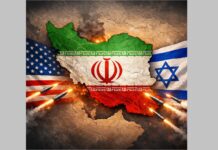
In the ongoing conflict in Gaza, Israel’s objectives have expanded as the war progressed, especially in response to perceived threats from Hezbollah, the Houthis, and the key actor, Iran. The initial plan of eliminating Hamas expanded to include neutralising Hezbollah as a threat, and eventually, confronting Iran directly. Politics played its role, with both Israel and the United States of America (USA) colluding to attack Iran’s nuclear facilities. The military adapted these expanding objectives. Numerous differences between military and political leadership have been reported in the media. However, ultimately, political decisions prevailed, and the Israeli Army is now pursuing the objective of complete control of Gaza.
The Korean War provided a clear example of the supremacy of political authority in wartime. Operations beyond the Yalu River were not authorised to preclude a confrontation with China. Logistics and some operating bases were located on the far side of the river, preventing the military from interdicting supplies or attacking those bases. This situation created conflict between the military commander, General MacArthur, and the political leadership. The disagreements ultimately led to the US President Harry Truman firing General MacArthur. This well-publicised incident reinforces the principle that politics is the master during war, and the military is the means.
Wars are often pursued for political interests, which means that political leaders may impose restrictions on military operations to hedge against undesirable consequences, similar to those experienced during the Korean War. For instance, during the Kargil War, a restriction was imposed on crossing the Line of Control (LoC). This limitation likely contributed to the high casualties sustained by the Indian Army and created challenges during air attacks. The political leadership imposed this restriction to prevent a nuclear escalation. Similarly, the use of heavy artillery was prohibited during the Indian Peace Keeping Force (IPKF) operations. Although this constraint complicated combat efforts, it was implemented without resistance. Political constraints are not unusual and are generally imposed to preclude escalation to a broader conflict. Since political decisions take precedence, the military must plan its operations while considering these imposed limitations.
Coming to the issue of defining success in war. Two terms are used interchangeably in this context: victory and success. Victory usually refers to military objectives, such as defeating enemy forces and capturing territory. In contrast, success is about achieving political goals. War is fundamentally a political endeavour; politics defines the purpose of the war, while the military serves as the means to accomplish that purpose. Success follows when the military achieves the political objective of the war. Clausewitz emphasises this distinction, stating, “The political object is the goal, war is the means of reaching it, and means can never be considered in isolation from their purpose.” Ultimately, wars are fought primarily for political objectives.
Success in war involves achieving defined strategic and political goals that enhance a nation’s position vis-à-vis the adversary. In this context, was Op Sindoor a success? Although the political goals were not disclosed before the operation commenced for obvious reasons, they were articulated by the Prime Minister in his address to the nation after the ceasefire was declared. He clearly outlined the political goals: India would retaliate against terrorist attacks on its own terms, there would be no distinction between terrorists and their state sponsors, and India would not tolerate nuclear blackmail. All three political goals were accomplished. Terrorist dens within Pakistan’s Punjab heartland were severely impacted, military targets associated with the state sponsor of terrorism were attacked, and the threat of nuclear escalation was effectively disregarded.
Once the political objective of Op Sindoor was achieved, there was no reason for further attacks, despite India being in a dominant position. Continuing such operations would have been aimless and would not have served any political purpose. In response, Pakistan might have escalated the situation, leading to unintended consequences. This tendency to continue with military operations after achieving political goals is referred to as “Victory Disease.” Such action hinders long-term success, and as Colin Gray noted, they represent “the extreme, almost euphoric, condition of overconfidence.”
The term “Mission Creep” refers to the tendency to continue operations after achieving initial goals. This term was first used by The Washington Post in relation to the USA’s intervention in Somalia. Initially, the US intervention aimed to provide humanitarian aid, but it eventually expanded to include nation-building efforts, culminating in the catastrophic incident known as “Black Hawk Down.” A similar scenario unfolded during the Libyan Civil War of 2011, where a multi-state coalition intervened with humanitarian objectives that progressively transformed into a regime change effort. This shift led to chaos, and Libya continues to face civil unrest even today. Another case was about the Korean War. It began as a defence of South Korea against a North Korean invasion. After the initial success, the scope of the conflict expanded to include attempts to reunify the Korean Peninsula. However, this goal proved unattainable as the Chinese intervened, resulting in a costly war, followed by the allies retreat through North Korea back to the 38th Parallel.
“Mission Creep” or “Victory Disease” refers to the continuation of hostilities after initial objectives have been met, often driven by overconfidence and resulting in unexpected and unpleasant consequences. In the case of Op Sindoor, continuing operations after the ceasefire could have led to unforeseen and unpleasant consequences. In hindsight, better judgment prevailed, and the operation was appropriately paused at the right time.
War is fundamentally a political event, with the military serving as a means to achieve political ends. It is the political context that dictates certain restrictions on military operations. Consequently, military planners need to consider these restrictions or constraints when planning operations. The primary purpose of war is to achieve political objectives; therefore, it is reasonable to expect that fighting will cease once these goals are met. In light of these conclusions, it can be confidently stated that Op Sindoor was a success, as it accomplished its political goals. Furthermore, the decision to accept the ceasefire was both timely and appropriate; continuing operations beyond that point would likely have been futile and could have led to unpleasant consequences.