Author: Gp Capt VP Naik VM, Senior Fellow, Centre for Aerospace Power and Strategic Studies
Keywords: Matsya Nyaya, Modern War Fighting, Realpolitik, Air Power, Operation Absolute Resolve
Matsya Nyaya: The Big Fish Will Swallow the Small Fish
The concept of ‘Matsya Nyaya’, translated as the ‘Law of the Fish’, where the big fish devours small fish, was articulated in the Arthashastra by Chanakya (Kautilya) during the Mauryan period around the 4th to 2nd Century BCE. It remains one of the most profound contributions to Indian political thought and understanding of great power politics, world order and anarchy. Matsya Nyaya describes a condition of anarchy, in which hard power alone determines survival. In such situations, the powerful will prey on the weak unless they are restrained by a capable and legitimate authority. During the Cold War, the balance of power ensured order; however, post the breakup of the USSR in 1991, hegemony and unipolarity have resulted in an absence of control mechanisms, later giving rise to anarchy. What Chanakya wrote back then still resonates strongly with modern geopolitics, where idealism and realism have given way to hard-hitting ‘Realpolitik’, a pragmatic and interest-driven approach to world affairs.
In today’s world, power has become diffused, interests have become transactional, and behaviour has become opportunistic. While classical Realism has always theorised power, Realpolitik practices it unabashedly without any concern for stability and moral legitimacy. It is only concerned with outcomes, advantages, and available leverages. Another interesting feature of Realpolitik is selective morality, where norms are applied when convenient and ignored when considered to be costly. The transition to Realpolitik has been hastened because of the arrival of China and the resurgence of Russia, along with the USA, on the global stage. All three have displayed similar patterns of behaviour whenever core interests have been involved. This further emphasises the fact that while a bipolar world is inherently stable, a unipolar world is transitory in nature, and a multi-polar world creates a state of anarchy where Realpolitik, hard power and pragmatic, interest-driven competitions rule the roost.
In such a world, the rise of middle powers further complicates the issue because they tend to practice strategic pragmatism, joining the Realpolitik bandwagon when convenient. The world is a canvas visible to all, and each player wants their own colour to be splattered on it. Modern Realpolitik extends way beyond pure hard power, where supply chains, energy security, data, and finance have now become instruments of coercion. Sanctions, tariffs, technological denial, and export controls have become means to achieve ends. In such a world, nations may confuse rhetoric for reality, thereby risking strategic irrelevance and, therefore, as Chanakya had said, in an anarchical world, the big fish will swallow the small fish.
Calipso Venezolano
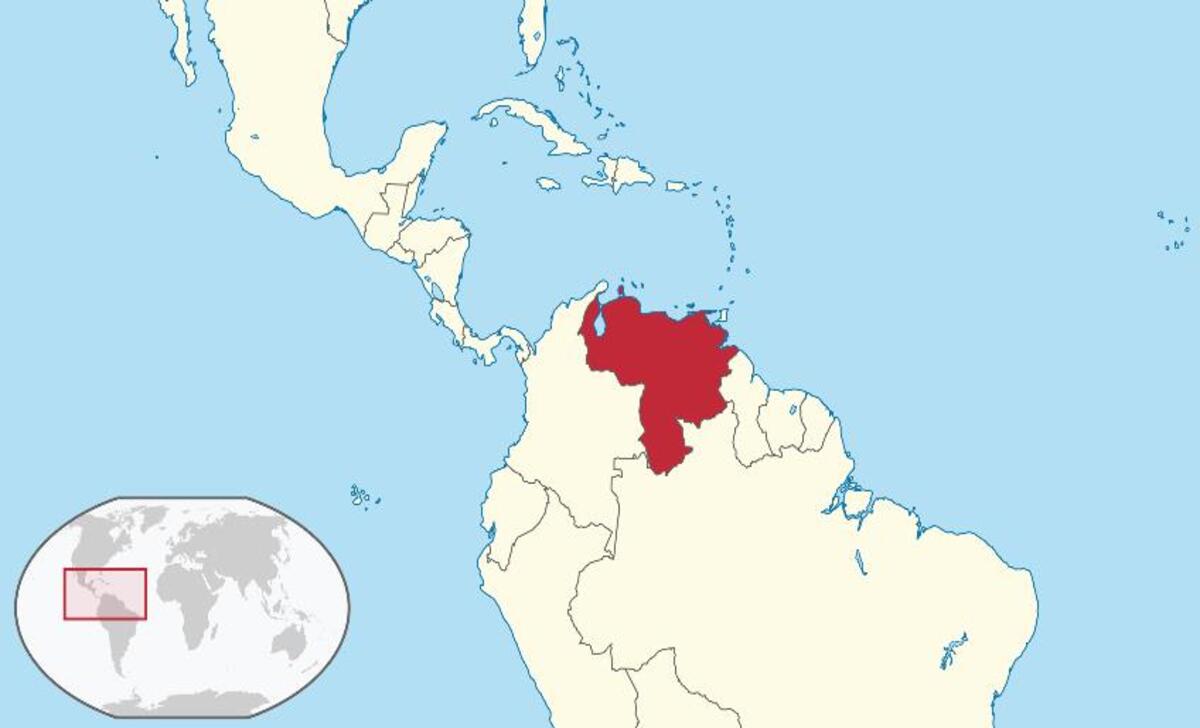
On February 20, 2025, the Trump administration formally designated eight Latin American crime organisations as foreign terrorist organisations, a label normally reserved for hardline terror outfits like Al-Qaeda that use violence for political ends and not for profit-focused crime rings.[1] On August 19, 2025, the US Military deployed three guided-missile destroyers off Venezuela and added another three amphibious assault ships, including other support vessels carrying about 6,000 soldiers.[2] In September, the USA sent F-35 fighters to Puerto Rico, and a submarine equipped with cruise missiles was deployed. On September 2, 2025, the USA carried out its first strike against a drug-carrying vessel that departed Venezuela, killing all 11 people on board, and a short video clip was also posted on social media.[3] This was followed by another strike on an alleged drug boat, killing three people. Both the strikes were carried out without justification, and Senator Jack Reed of Rhode Island, a top Democrat on the Senate Armed Services Committee, said that the US Military was not “empowered to hunt down suspected criminals and kill them without trial.”[4] On September 19, 2025, a third strike on another alleged drug-laden vessel was carried out by the US military, drawing criticism from various factions and individuals. From October to December 2025, in excess of 25 strikes on boats were carried out by the US military, drawing ire from all factions, including the US Congress. On December 10, 2025, the US seized an oil tanker off the Venezuelan coast carrying about two million barrels of heavy crude, and the Venezuelan government called it “a blatant theft and an act of international piracy.”[5] On December 16, President Trump ordered a blockade of all sanctioned oil tankers going into and out of Venezuela and pledged that the military buildup would continue till Venezuela returned to the US oil, land, and assets, the legitimacy of the claim being questioned by all. The President also alleged that Venezuela had been using its oil to sponsor and fund terrorism and drug trafficking. On December 30, 2025, the CIA carried out a drone strike at a docking area believed to have been used by Venezuelan drug cartels.[6] The strike was the first to be carried out on mainland Venezuela. The USA thereafter imposed sanctions on four Venezuelan oil companies and designated another four additional tankers as ‘blocked property’ which were trying to evade US sanctions. On January 01, 2026, during an interview on television, President Nicolas Maduro said that Venezuela was open to negotiating an agreement with the USA to combat drug trafficking. He also distinctly mentioned that the USA was trying to force regime change in Venezuela and also gain access to Venezuela’s vast oil reserves.
On January 03, 2026, the USA launched Operation Absolute Resolve with air strikes across Caracas, the capital of Venezuela. This was followed by the insertion of Special Forces using helicopters with an aim to capture the President of Venezuela. President Maduro and his wife, Flores Maduro, were captured by this crack force and flown out of the country and eventually to New York. President Maduro was accused of leading “a corrupt and illegitimate government which, for decades, had leveraged government power to protect and promote illegal activity, including drug trafficking.”[7] President Maduro and Flores Maduro have meanwhile pleaded not guilty.
Democracy, Drugs, and Air Power: Operation Absolute Resolve
The capture of a sitting President of a sovereign state has never been seen before in recent history. The only probable exception could be the surrender of Manuel Noriega, the de facto leader of Panama, to the US Armed Forces in January 1990. In a rules-based world order, this operation has been able to bring to the fore the stark reality of Realpolitik where self-interest and a pragmatic outlook ‘trumps’ global law and order. The operation also put all caution to the wind with blatant disregard for sovereignty and international order. Leaving legality and ethics aside, the operation has demonstrated the importance of hard power and brought out the effectiveness of joint planning and integrated application of Comprehensive National Power (CNP) in the planning and conduct of Multi Domain Operations (MDO). Ranging from precision strikes on fast-moving boats, conduct of a dedicated Suppression of Enemy Air Defence (SEAD)/Destruction of Enemy Air Defence (DEAD) missions to the insertion of special forces to capture President Maduro from a densely populated urban terrain, the primacy of air power has also been amply demonstrated. The operation was preceded by months of cyber operations, signals intelligence, pattern-of-life analysis and the unprecedented integration of US Cyber Command and Space Command into kinetic military action.[8] From intelligence gathering by the CIA (August 2025 onwards), the multi-domain pressure campaign between September and December 2025, culminating in the final assault and extraction of the President, the operation is a classic example of how modern combat is likely to take shape.[9] Increasingly, Air Power is being extensively used for the conduct of operations across the entire spectrum of war. From shaping the battlefield, establishing control of air, conducting kinetic and non-kinetic action, achieving the laid down end state and finally restoration of peace, air power has been seen to be an instrument of choice. Characteristics of air power like flexibility, mobility, concentration of forces, offensive action, responsiveness and the resultant shock effect are facets that are essential for the conduct of modern wars and have been seen to be decisive.
The Indian Conundrum
Op-Sindoor conducted by the Indian Armed Forces brought out certain important lessons in the Indian context, and Operation Absolute Resolve has only highlighted them.[10] An important takeaway from such operations and the two major conflicts going on in the world (Russia-Ukraine and Israel-Hamas) is that the entire force structure of a nation cannot be equipped and trained to carry out MDO due to financial and technological constraints. Operation Absolute Resolve did not exercise any specific Combatant Command/Theatre Command. It was an amalgamation of forces from various individual commands, equipped and trained for specialised application in multi-domain scenarios. The forces employed were from the US Cyber Command, US Space Command, CIA, Delta Force, and Special Operations Aviation Regiment, US Army, US Navy, US Marine Corps and US Air Force. India must learn relevant lessons from such conflicts, especially when it is looking at modernising its own force structures. Neither does India have very deep pockets for creating huge and ambling Theatre Commands, nor does it have the luxury of decades of procrastination and debate to embark on paradigm changes in war fighting. What India does have is tactically sound armed forces capable of delivering effective firepower where it counts. The problem is integration and joint planning. The creation of an apex, all-encompassing Joint Forces Headquarters (JFHQ) should be the starting point for all reforms in the Higher Defence Organisation (HDO) of India.[11]
Organising a Joint Task Force (JTF), similar to Operation Absolute Resolve, drawn from all relevant arms, support services and ancillaries would essentially be the responsibility of the JFHQ. A classical Theatre Command will never have the wherewithal to independently undertake such missions. The need of the hour is to develop a flexible force structure designed to be highly ‘intelligentised and informatised’ and act as force multipliers, augmenting conventional forces.[12] In an increasingly volatile, uncertain, complex and ambiguous world, flexible options to the national leadership must be available in order to successfully prosecute conventional, asymmetric, hybrid or multi-domain operations. Unless all elements of CNP sit together and strategise, the desired outcomes will not be met, and therefore, it is time that India also adopts a more pragmatic and Realpolitik outlook to how future wars would be fought.
Parting Shots
The 21st Century has seen air power emerge as a uniquely compatible instrument because it is flexible, coercive and adaptive. Realpolitik demands shaping outcomes and simultaneously minimising exposure. Op-Sindoor has also demonstrated the large space available for the conduct of full-spectrum operations under a nuclear overhang. Future wars are likely to be aerospace-centric, with cyber playing a key role. Modern forces will need to coerce without conquering, signal without committing and more importantly, punish without occupying. As the world transforms from a unipolar to a multi-polar world, air power will not just support Realpolitik but increasingly redefine grand strategy because soft power can never replace hard power, and the world recognises and respects it. Matsya Nyaya remains the silent grammar of geopolitics. Norms may attempt to soften its expression, but power determines its outcome and the big fish will always swallow the small fish!
*****
CLICK TO VIEW THE PDF
Notes:
[1] Ben Finley, Konstantin Toropin, Regina Garcia Cano, “A timeline of U.S. military escalation against Venezuela leading to Maduro’s capture,” PBS News, January 03, 2026, https://www.pbs.org/newshour/world/a-timeline-of-u-s-military-escalation-against-venezuela-leading-to-maduros-capture. Accessed on January 06, 2026.
[2] Ibid. Accessed on January 06, 2026.
[3] Ibid. Accessed on January 06, 2026.
[4] Ibid. Accessed on January 06, 2026.
[5] Ibid. Accessed on January 06, 2026.
[6] Ibid. Accessed on January0 6, 2026.
[7] Ibid. Accessed on January 06, 2026.
[8] “Operation Absolute Resolve: A Deep Dive into the Cyber, OSINT, and Intelligence Operations Behind Maduro’s Capture,” Breached Company, January 06, 2026, https://breached.company/operation-absolute-resolve-a-deep-dive-into-the-cyber-osint-and-intelligence-operations-behind-maduros-capture/. Accessed on January 06, 2026.
[9] Ibid. Accessed on January 06, 2026.
[10] VP Naik, “India’s Higher Defence Reforms: Tactical Brilliance or Strategic Coherence, Para on Problem Statement,” Centre for Aerospace Power and Strategic Studies, November 29, 2025, https://capssindia.org/indias-higher-defence-reforms-tactical-brilliance-or-strategic-coherence/. Accessed on January 06, 2026.
[11] VP Naik, “Air Power Musings: Theatre Commands-Redux,” Centre for Aerospace Power and Strategic Studies, September 27, 2025, https://capssindia.org/air-power-musings-theatre-commands-redux/. Accessed on January 06, 2026.
[12] VP Naik, n. 10.