
Author: Mr Arjun Prakash Iyer and Mr Shwetabh Singh, Research Scholars, Unni Kartha Chair of Excellence
Keywords: HF-24 Marut, 1971 Indo-Pak War, No.10 Squadron ‘Winged Daggers’, No.220 Squadron ‘Desert Tigers’, Uttarlai Air Force Base
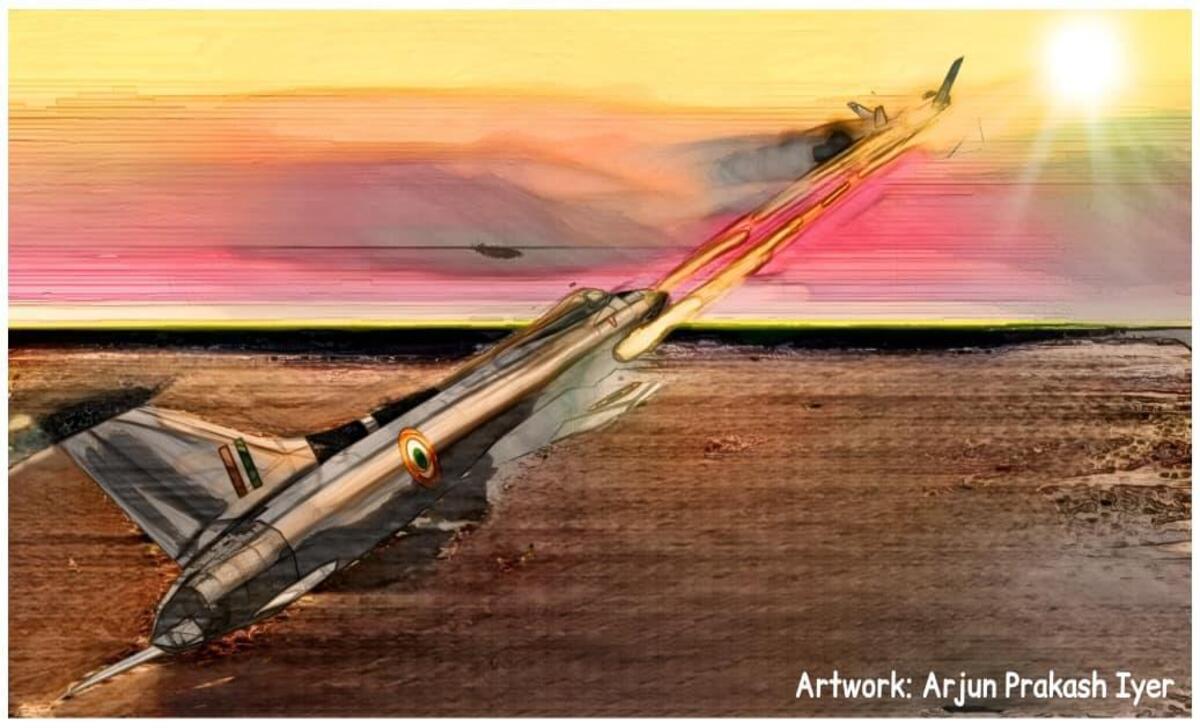
The 1971 war is considered the Indian Air Force’s (IAF) golden hour, as it saw the utilisation of air power to its fullest. The conflict served as a trial by fire for India’s first homegrown fighter, the HAL HF-24 Marut. The article aims to provide a day-by-day breakdown of operations conducted during the 1971 war, offering an in-depth understanding of the IAF’s role and contributions to the war-fighting efforts.
Marut’s Pre-War Service
The Hindustan Aeronautics Limited (HAL) HF-24 Marut, India’s first indigenous jet fighter-bomber, was inducted into the IAF in 1967. By the time the war broke out, the Marut aircraft equipped two squadrons of the IAF, namely, the No.10 Squadron ‘Winged Daggers’ and the No.220 Squadron ‘Desert Tigers’, both based out of Jodhpur. The two squadrons were under the command of Wing Commander Keshev Chandra Aggarwal and Wing Commander Ranjit Dhawan, respectively.[1] [2]
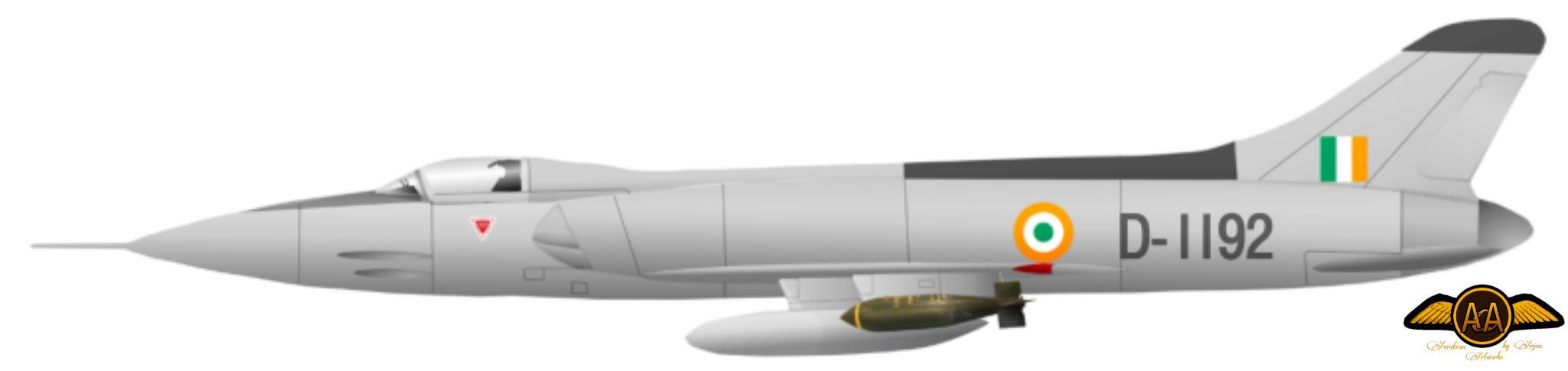
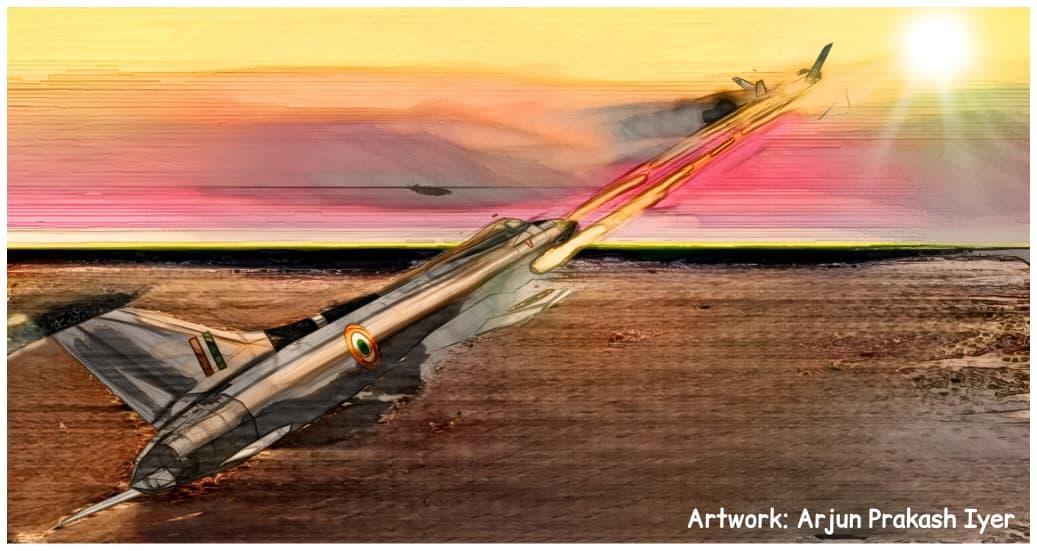
Image Credits: Arjun Prakash Iyer (Co-Author of the article. Originally published in the book 1971 – Strategy Campaign Valor).
No.10 and No.220 had been equipped with Maruts in the years leading up to the 1971 war, No.10 in April 1967 and No.220 in April 1969. Both squadrons were co-based at Pune until they were relocated to Jodhpur in December 1970.[3] [4] Although Jodhpur has been an active airbase of the IAF since the 1950s, it was only on January 1, 1971, that it was upgraded to the status of 32 Wing.[5] [6] Both squadrons operated regular detachments from Uttarlai.[7]
Armament aboard the HF-24
The Marut was capable of carrying a mix of guns, bombs and unguided rockets. Its primary internal weapons were 4 x 30 mm British ADEN cannons, each with 120 rounds. Apart from the guns, the Marut also had the interesting feature of a retractable rocket pack that fired 50 x 2.68 in (68mm) French Matra rockets in a single salvo. This pack was located behind the cockpit. The Marut could also carry up to 4,000 lb. of external stores across four hardpoints. These included 100 gal. drop tanks, up to two Napalm canisters or two SNEB Type-23 rocket pods (36 rockets total), or up to four 500 lb. or 1,000 lb. unguided bombs.[8]
About two weeks before the war started, limitations were imposed on the firing of forward guns after an accident occurred in Jamnagar, during which Squadron Leader Arun Keshav Sapre was killed.[9] The mishap resulted from critical design deficiencies, inducing severe structural resonance when all four cannons were fired concurrently.[10] [11]
The War Begins
While the primary objective of the 1971 war was the eventual liberation of the state of Bangladesh in the shortest possible time, on the Western Front, the war was maintaining a ‘defensive-offensive’ posture. Owing to this, the Indian Army adopted a strategy to react to West Pakistan’s escalation, starting the evening of December 3, 1971. In this Western context, the IAF’s operations were directed towards three main objectives: To ensure continuous and strong air defence of the area along the Western Front and to prevent the PAF in the west from interfering with Indian land and air operations.[12]
No. 10 and No. 220 squadrons primarily focused on Close Air Support (CAS), interdiction, and Tactical Reconnaissance (TAC/R) in the Naya Chor sector, executing 140 ground support sorties. Key operations included striking heavily defended positions like Gazi Camp and Parbat Ali in direct support of the 11 Division’s push, while systematically targeting logistics hubs, railway lines (notably Mirpur Khas), and enemy armour concentrations.[13]
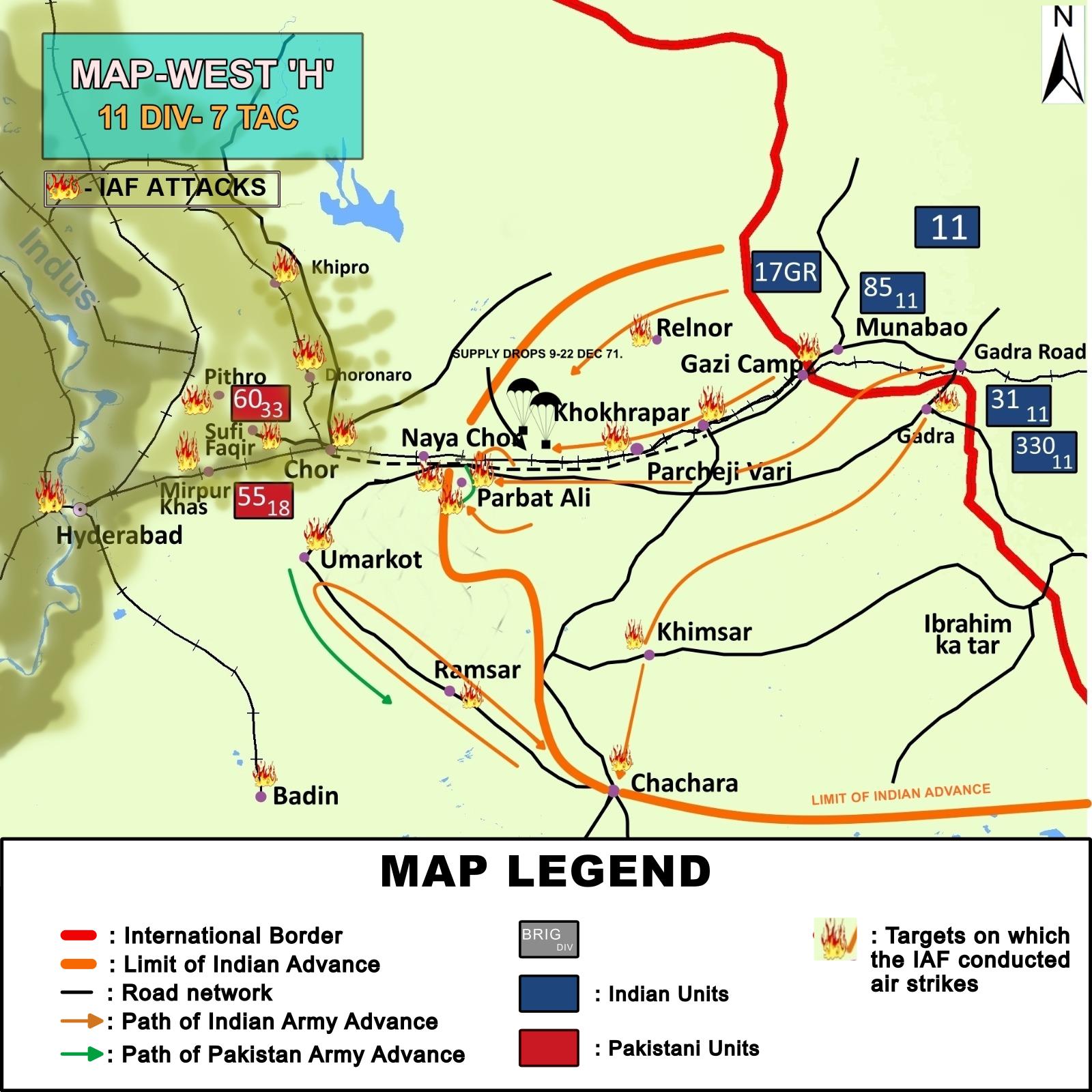
Image Credits: Vikram Singh, Because of This: A History of the Indo-Pak Air War of December 1971 (New Delhi: Manohar Publishers & Distributors, 2025), p.176.
December 4, 1971
Uttarlai airbase was attacked in four separate bombing raids by Pakistani Air Force (PAF) B-57 bombers operating from Mianwali and Masroor.[14] [15] At the time, both the Marut squadrons were operating detachments from Uttarlai in anticipation of war. The raids caused significant damage to the runway, with six bombs rendering it temporarily unserviceable. Operations resumed only from the parallel taxi track from dawn on December 4.[16]
The Marut flew its first combat missions on December 4, against the PAF airfields at Hyderabad (Sindh) and Nawabshah. The strikes were carried out by four-aircraft formations led by the COs of Nos. 10 and 220 Squadrons respectively. [17] [18] However, only six of the eight designated aircraft took off due to technical issues. Flying at low level, the Maruts found both airfields largely deserted and, owing to range limitations, carried only their internal guns. Despite poor visibility and the absence of enemy aircraft, the attacks damaged infrastructure, including the flying control and administrative buildings.[19].
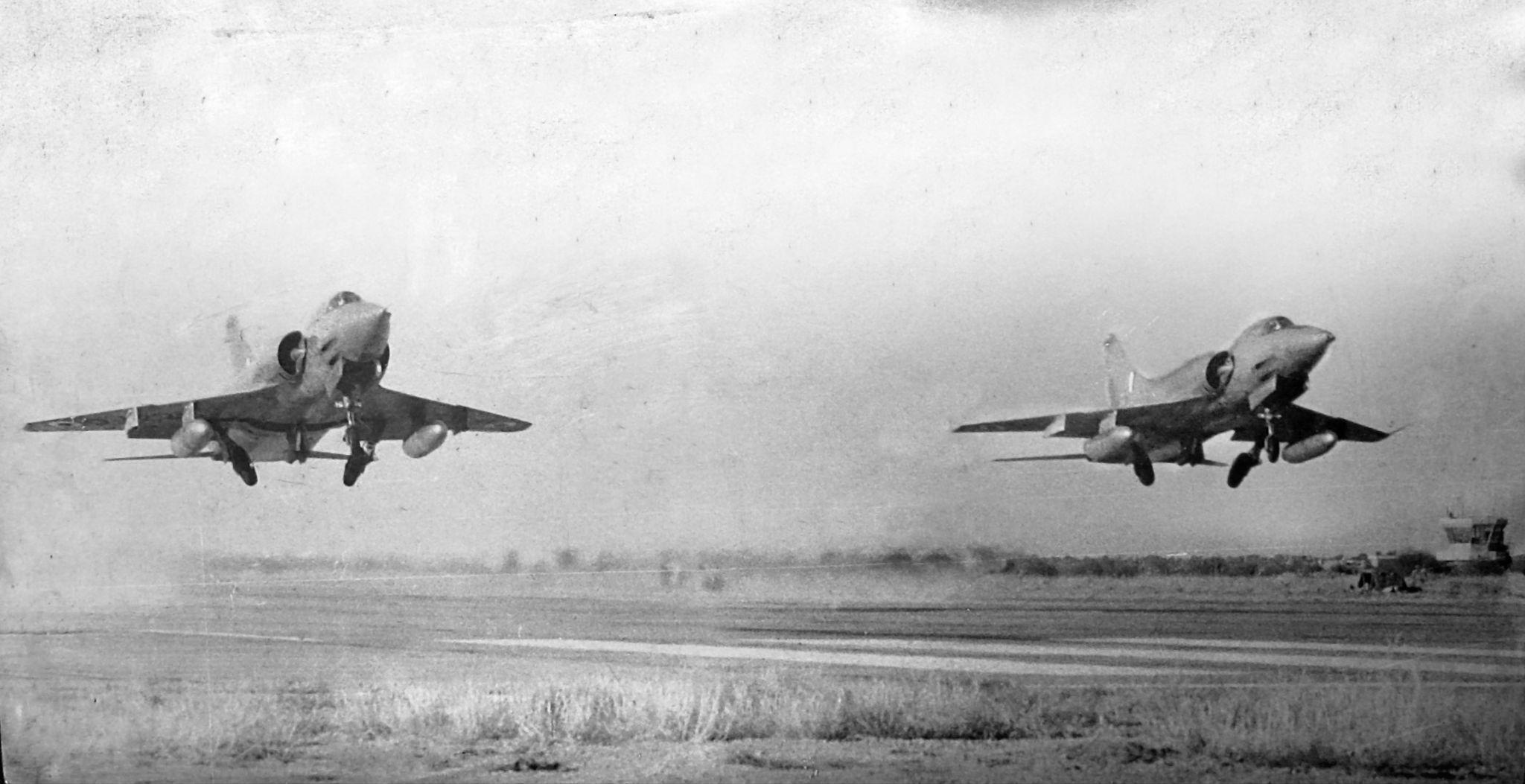
Image Credits: Late Wing Commander Prakash Sarvotham Sanadi, via Air Marshal Vikram Singh (Retd)/
Later that day, both squadrons flew further strike and battlefield interdiction missions in the Naya Chor sector and against Gazi Camp in support of the Indian Army’s offensive. During one such mission near Dhoronaro railway station, the Marut suffered its first combat loss. Flight Lieutenant P. V. Apte of No. 220 Squadron was hit by anti-aircraft fire and ejected safely, but was killed by Pakistani troops while attempting to evade capture. He was posthumously awarded the Vir Chakra.[20] [21]
Back in Jodhpur, pilots who were not on the Uttarlai detachment cursed vehemently at missing the first day of action and were further frustrated by being ordered to fly defensive Combat Air Patrol (CAP) over the base.[22] Both squadrons flew a total of eight missions on December 4th.
December 5, 1971
On the morning of December 5, No. 10 Squadron launched another four-aircraft strike mission against Hyderabad airfield. Finding no worthwhile targets, the Maruts strafed nearby buildings instead. During take-off, Flight Lieutenant J. S. “Jug Jug” Kapoor suffered a tyre burst, forcing him to jettison his drop tanks and divert to Jodhpur. Around the same time, Marut pilots also carried out glide-bombing attacks on Naya Chor, a strategically important area housing Pakistani signals and navigational facilities that remained a recurring target throughout the war.[23]
Later that morning, No. 220 Squadron suffered its second combat loss to enemy Anti-Aircraft fire. Sqn Ldr Krishen Kumar Bakshi and Flt Lt Jawaharlal Bhargava were attacking ground targets near Naya Chor when Bhargava’s aircraft was hit during a dive attack.[24] [25] Although he briefly regained control and attempted to return towards India, the aircraft became uncontrollable near the international border. Bhargava ejected safely but was captured by Pakistani forces.[26]
That evening, No. 220 Squadron flew armed reconnaissance missions near Longewala to locate Pakistani armour formations. None were found, confirming the withdrawal of enemy armour following earlier IAF Hunter strikes.[27] During these missions, the Maruts also attacked railway and transport targets around Dhoronaro, damaging rolling stock and destroying a jeep near the canal junction west of Chor.[28]
December 6, 1971
On December 6, the Maruts continued operations in the Naya Chor sector, with tactics shifting from unguided rockets to heavier ordnance such as 1,000 lb High-Explosive bombs and napalm canisters. Several missions were flown against suspected Pakistani armour concentrations around Khipro and Dhoronaro.
During one such sortie, Squadron Leader Krishen Kumar Bakshi and Flight Lieutenant Sreekanth of No. 220 Squadron carried out a napalm strike near Dhoronaro when they encountered four PAF F-86 Sabres. Bakshi attempted to engage one of the fighters, but the Sabres quickly disengaged before a decisive combat could develop. Although Sreekanth later reported seeing smoke trailing from one of the enemy aircraft, Pakistani records do not acknowledge any loss in that sector.[29] [30] Bakshi was subsequently awarded the Vir Chakra for his actions.[31]
The same day, No. 220 Squadron also mounted repeated strikes against Nawabshah airfield despite persistent technical problems that forced two mission aborts.[32] One two-aircraft formation, flown by Wg Cdr Dhawan and Flt Lt Kasbekar, succeeded in damaging a hangar before further planned strikes had to be cancelled due to aircraft unserviceability.[33] That day, Maruts destroyed a total of six Type 59 Main Battle Tanks (MBT) of 10 Guides Cavalry (attached to 33 Infantry Division).[34]
December 7, 1971
On December 7, the Maruts flew eight close air support sorties, particularly around the village of Sufi Faqir, west of Naya Chor.[35] During one tactical reconnaissance mission, a pair of Maruts piloted by Wg Cdr K. C. “Boss” Aggarwal and “Pinky” sighted a formation of PAF F-86 Sabres strafing Indian Army positions near Parcheji Veri. Outnumbered and at a tactical disadvantage, the Marut pilots chose not to engage.[36] Marut’s strike that day also accounted for the destruction of three Pakistani Type 59 tanks belonging to 10 Guides Cavalry.[37] Later that evening, Uttarlai was subjected to another Pakistani B-57 bombing raid. Although bombs struck a taxi-track connecting the runway to the parallel taxiway, the airbase suffered no significant operational disruption.[38]
December 8, 1971
On December 7, the Maruts flew eight close air support sorties, particularly around the village of Sufi Faqir, west of Naya Chor.[39] During one tactical reconnaissance mission, a pair of Maruts piloted by Wg Cdr K. C. “Boss” Aggarwal and “Pinky” sighted a formation of PAF F-86 Sabres strafing Indian Army positions near Parcheji Veri. Outnumbered and at a tactical disadvantage, the Marut pilots chose not to engage.[40] Marut’s strike that day also accounted for the destruction of three Pakistani Type 59 tanks belonging to 10 Guides Cavalry.[41] Later that evening, Uttarlai was subjected to another Pakistani B-57 bombing raid. Although bombs struck a taxi-track connecting the runway to the parallel taxiway, the airbase suffered no significant operational disruption.[42]
December 9, 1971
No. 220 maintained a high tempo with four missions. Wg Cdr Dhawan and Sqn Ldr D S Jatar executed a Counter Air Offensive over Nawabshah, destroying two hangarettes, though Sqn Ldr D S Jatar had to land with very low fuel due to a fuel transfer issue. Sqn Ldr Bakshi and Flt Lt Kasbekar flew a TAC/R (Tactical Reconnaissance) strike in Umarkot and Dhoronaro, destroying 5 vehicles and 1 tank.[43] [44] Flt Lt Batra flew as part of a No. 10 Squadron formation; they were chased by four Sabres but returned safely. A final Counter Air Offensive over Nawabshah by Wg Cdr Dhawan and Flt Lt Kasbekar saw Wg Cdr Dhawan experience a total hydraulic failure, though he managed a safe return.
December 11, 1971
On the morning of December 11, two Maruts of No. 10 Squadron were preparing for take-off from Uttarlai when the airbase came under a sudden low-level attack by PAF F-104 Starfighters. The attacking aircraft strafed the taxi track just short of the runway, as the Maruts were about to line up for take-off. One Marut, piloted by Sqn Ldr M.S. “Micky” Jatar (D-1204), was destroyed after its fuel tank was hit and the aircraft caught fire. Struggling with a jammed canopy, Jatar managed to force it open and escape through the burning fuel, sustaining first-degree burns in the process.[45] Another Marut, flown by Flt Lt J.S. Sidhu, was also hit, though the pilot escaped safely. Ground crew personnel subsequently towed the damaged aircraft to safety despite the continuing threat of attack.[46]
Pakistani accounts claim two Maruts destroyed during the strike, though Indian sources credit the loss of only one aircraft.[47] [48] The attacking formation was led by Wg Cdr Arif Iqbal of No. 9 Squadron PAF, with Sqn Ldr Amanullah as his wingman.[49]
Later that night, an unidentified enemy aircraft approached Uttarlai and dropped illumination or pyrotechnic devices over a decoy camp established by Indian forces. A second aircraft appeared roughly half an hour later but did not attack, suggesting a possible photo-reconnaissance mission over the area.[50]
December 12-17, 1971
From December 12 onwards, the Maruts continued to fly CAS and strike missions in the Naya Chor sector. During one mission on that day, a two-aircraft formation of No. 220 Squadron (flown by Sqn Ldr Brian DeMagrey and Flt Lt KP Srikant) was intercepted by a pair of PAF F-86 Sabres. In the brief engagement that followed, Srikant attempted to drive off a Sabre pursuing his leader, only to be chased in turn by the second fighter. Both Maruts disengaged safely.
On the dawn of December 13, the Indian Army launched an assault on the Parbat Ali feature, which was captured after fierce fighting and repeated Pakistani counter-attacks supported by armour and Sabre jets. Maruts flew 12 CAS sorties during the battle. That evening, No. 29 Squadron’s MiG-21FLs replaced the Gnats of No. 21 Squadron in the escort role for Marut strike formations.[51] [52]
By the final day of the war, the Maruts were flying an average of eight sorties daily. Even on December 16, as news arrived of the surrender of Pakistani forces in Dacca, both squadrons continued offensive operations. Missions flown that day targeted gun positions, transport vehicles, railway assets and concealed Pakistani army positions around Chor, Dhoronaro, Pithoro and Sufi Faqir under forward air controller guidance.
No.220 Squadron conducted three missions on that day. Wg Cdr Dhawan and Flt Lt Kasbekar flew a TAC/R Strike over Dhoronaro-Pithoro-Sufi-Faqir-Mirpurkhas, destroying a wagon at Pithoro railway station and two vehicles. Sqn Ldr DeMagry and Flt Lt Sreekanth hit and damaged a camouflaged army position west of Naya Chor under FAC’s direction. The final mission, a TAC/R Strike over Sufi-Faqir and Pithoro by Squadron Leader D S Jatar and Flt Lt Batra, successfully destroyed several vehicles.
Maintenance and Readiness
Prior to the outbreak of the conflict, the average serviceability of the HF-24 Marut for the year 1971 was as follows:
Quarter Ending |
Serviceability Rate |
|
No.10 Squadron |
No.220 Squadron |
|
March 31, 1971 |
17.5% |
31.83% (Jan: 43.47%, Feb: 26.85%, Mar: 24.20% |
June 30, 1971 |
28.67% |
28.54% (April: 43.34%, May: 25.61%, Jun: 16.66%) |
September 30, 1971 |
N/A |
25.11% (Jul: 25.13%, Aug: 30.41%, Sep: 19.76%) |
December 3-16, 1971 |
100% |
50.26% (Rate for the month of December. The Q4 overall average was 42.77%) |
Source: Form 1500 (Operational Record Book) of No.10 Squadron and No.220 Squadron.
Table 1: Serviceability rate of Nos. 10 and 220 Squadrons for the annual year 1970-71.
The average serviceability of the Maruts was maintained through constant ferries to Jodhpur and back. Whenever an aircraft needed any major rectifications or repairs, or for servicing that was beyond the scope of Uttarlai, they were ferried to Jodhpur, where said repairs were conducted and ferried back to Uttarlai. These ferries were conducted by a group of young pilots. Sometimes, several sorties were flown in a single day to ensure an average of 12-15 Maruts were available through the 14 days. This idea was devised by the Chief Technical Officer of Uttarlai, Wing Commander (later Air Marshal) Shashikumar Samuel Ramdas.[53] No.10 saw exceptional maintenance with 100 per cent serviceability at Uttarlai, and not one mission had to wait for aircraft to be made ready.
Conclusion
Over the 14 days of the Indo-Pak War, the HF-24 Marut proved a lynchpin of the IAF’s operations in the Naya Chor sector. Operating from Uttarlai Air Base between December 14 and 16, Marut squadrons executed sustained Close Air Support, interdiction, Tactical Reconnaissance (TAC-R), Recce & Strike and Offensive Counter Air missions, striking targets such as Hyderabad and Nawabshah airfields, the Naya Chor–Dhoronaro–Umarkot axis, and the Mirpur Khas railway yard where rolling stock was systematically destroyed.
These operations were carried out successfully despite several challenges, ranging from serviceability to partially inoperable runways due to several PAF air raids and heavy AAA fire. The campaign came at a high human cost, with Flt Lt Apte killed in action and Flt Lt Bhargava captured. Forward Air Controllers (FAC) played a crucial part in aiding successful missions, as they effectively were the eyes and ears of the prowling Maruts, by guiding them accurately towards their targets.
Equally critical was the exceptional effort of the ground crew: through an innovative system of ferrying aircraft to Jodhpur for major repairs, No. 10 Squadron maintained a high degree of serviceability. Despite initial issues caused by equipment failures, both squadrons managed to deliver a good performance. Both squadrons managed to fly a total of 140 sorties (No.10 and No.220 Squadron flying 72 and 68 sorties respectively). Three aircraft were lost, all due to combat, with two being destroyed due to AAA and one due to PAF OCA on December 11, 1971; two losses were of No.220 Sqn. The average attrition rate was 0.021 for the entire Marut fleet, with individual attrition rates of 1.39 and 2.94 for No.10 and 220 squadrons, respectively. [54] [55]
The Marut’s performance during these fourteen days was marked by operational persistence, pilot courage, and remarkable maintenance ingenuity and stands as a defining chapter in the aircraft’s combat legacy and the IAF’s conduct in the 1971 war.
ANNEXURE 1: List of Marut pilots deployed at Uttarlai during the 1971 India-Pakistan War
No.10 Squadron
-
-
Wing Commander K.C. Aggarwal (“Boss”)
-
Squadron Leader P.E. Gaynor (“Pete”)
-
Squadron Leader A.V. Kamat (“Kamy”)
-
Squadron Leader M.S. Jatar (“Micky/Mickey”)
-
Flight Lieutenant Y. Chauhan (“Chou”)
-
Flight Lieutenant G.S. Sarao (“Sarao”)
-
Flight Lieutenant J.S. Kapoor (“Jug Jug”)
-
Flight Lieutenant J.S. Sisodia (“Sis)
-
Flight Lieutenant J.S Sidhu (“Panchi”)
-
Flying Officer D.N.G.P. Rao (“Pinky”)
-
No. 220 Squadron
-
-
Wing Commander R. Dhawan (“Jit”)
-
Squadron Leader D.S. Jatar (“Dinky Jatar”)
-
Squadron Leader K.K. Bakshi (“Joe”)
-
Squadron Leader B.S. DeMagry
-
Flight Lieutenant P.V. Apte
-
Flight Lieutenant J.L. Bhargava (“Brother”)
-
Flight Lieutenant M.Y. Kasbekar (“Bobby”)
-
Flight Lieutenant K.P. Sreekanth
-
Flight Lieutenant S.C. Batra (“Bats Batra”)
-
Forward Air Controllers (FACs)
-
-
Flight Lieutenant W.R.S. Rao (“Robs”)
-
Flying Officer H.N.D. Mullaferoze (“Mulla” / “Feroze”)
-
*****
CLICK TO VIEW PDF
Notes:
[1]“IAF Database Record 4434,” Bharat-Rakshak, https://www.bharat-rakshak.com/indianairforce/database/4434. Accessed on March 05, 2026.
[2]“IAF Database Record 4572,” Bharat-Rakshak, https://www.bharat-rakshak.com/indianairforce/database/4572. Accessed on March 05, 2026.
[3] HushKit, “I Flew the HAL HF-24 Marut Fighter,” Hush-Kit, https://hushkit.substack.com/p/i-flew-the-hal-hf-24-marut-fighter. Accessed on March 05, 2026.
[4]Indian Air Force, n. 2.
[5] “The Indian Air Force in the 1965 War,” Web Archives, https://web.archive.org/web/20111117222535/http://bharat-rakshak.com/IAF/History/1965War/Chapter8.html. Accessed on March 05, 2026.
[6] “32 Wing,” Bharat-Rakshak, https://www.bharat-rakshak.com/indianairforce/database/units/32+Wing. Accessed on March 05, 2026.
[7] “Runway Nomads: The Story of IAF’s Mobile Echelons,” Indian Air Force History, https://iafhistory.in/2025/07/17/runway-nomads-the-story-of-iafs-mobile-echelons/. Accessed on March 05, 2026.
[8] Satyajit Lall, 1971 Strategy, Campaign, Valour (India: Sabre & Quill Publishers, 2024), p. 97.
[9] “Service Record of Squadron Leader Arun Keshav Sapre,” Bharat Rakshak, https://www.bharat-rakshak.com/indianairforce/database/4981. Accessed on March 05, 2026.
[10] Pushpindar Singh, Spirits of the Wind: The HAL HF-24 Marut (New Delhi: Society for Aerospace Studies, 2011), pp.56-57.
[11] Vikram Singh (Retd. Air Marshal), in discussion with Arjun Prakash Iyer, Bengaluru, February 19, 2026.
[12] Air Marshal Vikram Singh (Retd.), Personal interview by Arjun Prakash Iyer, Bengaluru, February 19, 2026, transcript (in-person), Accessed on February 22, 2026.
[13] Vikram Singh, Because of This: A History of the Indo-Pak Air War of December 1971 (New Delhi: Manohar Publishers & Distributors, 2025), pp. 168–191.
[14] Vikram Singh, Because of This: A History of Indo-Pak Air War of December 1971 (New Delhi: Manohar Publishers and USI of India, 2025), pp. 168–191.
[15]Yawar Mazhar and Usman Shabbir, Eagles of Destiny: Volume 2—Growth and Wars of the Pakistani Air Force 1956–1971 (Solihull: Helion & Company, 2023), p. 67.
[16] Singh, n. 14, pp. 168–191.
[17]Indian Air Force, ORB, No. 10 Squadron, quarter ending December 31, 1971.
[18] Singh, n. 14, pp. 168–191.
[19] Indian Air Force, ORB, No. 220 Squadron, quarter ending December 31, 1971.
[20] “IAF Database Record 10456,” Bharat-Rakshak, https://www.bharat-rakshak.com/indianairforce/database/10456. Accessed on March 05, 2026.
[21] Kaiser Tufail, “Air War in the Thar,” Kaiser-Aeronaut Blog, October 2009, https://kaiser-aeronaut.blogspot.com/2009/10/air-war-in-thar.html. Accessed on March 05, 2026.
[22]Indian Air Force, n.17.
[23]Indian Air Force, n. 17.
[24] Indian Air Force, n. 19.
[25] Singh, n.14, pp. 168–191.
[26] “IAF Database Record 7209,” Bharat-Rakshak, https://www.bharat-rakshak.com/indianairforce/database/7209. Accessed on March 5, 2026.
[27] Singh, n. 14, pp. 168–191.
[28] Indian Air Force, n. 19.
[29] Vikram Singh, n. 14, pp. 168–191.
[30] Lall, n. 11, p. 612.
[31]“IAF Database Record 5012,” Bharat-Rakshak, https://www.bharat-rakshak.com/indianairforce/database/5012, Accessed on March 05, 2026.
[32] Singh, n. 14, pp. 168–191.
[33] Ibid., pp. 168–191.
[34] Lall, n. 11, p. 585
[35] Singh, n. 14, pp. 168–191.
[36] Indian Air Force, n.17.
[37]Lall, n. 11, p. 585.
[38] Singh, n. 14, pp. 168–191.
[39] Singh, n. 14, pp. 168–191.
[40] Indian Air Force, n.17.
[41]Lall, n. 11, p. 585.
[42] Singh, n. 14, pp. 168–191.
[43] Indian Air Force, n. 19.
[44] Lall, n. 11, p. 585.
[45] “HAL HF-24 Marut D-1204,” Bharat-Rakshak, https://www.bharat-rakshak.com/indianairforce/database/aircraft/D-1204. Accessed on March 05, 2026.
[46] Indian Air Force, n. 19.
[47] Lall, n. 11, p.628.
[48] Singh, n. 14, pp. 168–191.
[49]Mazhar and Shabbir, n. 15, p. 68.
[50] Singh, n. 14, pp. 168–191.
[51] Ibid., pp. 168–191.
[52] Indian Air Force, n. 19.
[53] “IAF Database Record 4930,” Bharat-Rakshak, https://www.bharat-rakshak.com/indianairforce/database/4930. Accessed on March 05, 2026.
[54]Lall, n. 11, p. 604.
[55] Singh, n. 14, pp. 168–191.