
Author: Sqn Ldr Mona Arora, Met Officer
Keywords: Weather Modification, Cloud Seeding, Weather Warfare, Weather Security, Climate Engineering, Civil-Military Synergy, Indian Climate Policy
Introduction: Weather as a Strategic Domain
In the early 21st century, the environment increasingly matters not only as context but also as a strategic influence. Global climate change, growing reliance on GNSS and satellite systems, and advances in atmospheric science have transformed the atmosphere into a domain where human actions can significantly impact operational outcomes. Activities once confined to research now have practical effects: inducing precipitation, clearing fog for airports, or improving local visibility. The same technologies, if misused, could be used to restrict mobility, disrupt logistics, or inflict asymmetric effects on populations and infrastructure.[1]
The idea of “weather warfare” is no longer purely rhetorical. Historical precedents and technological trajectories indicate that influence over local atmospheric conditions could be a force multiplier in conflict or coercion. For India, a country with diverse meteorological regimes and high dependence on air and space systems, ignoring this dimension is not an option. The goal of policy must thus be twofold: enable legitimate, scientifically robust weather operations for national resilience while building the capability to deter, detect and attribute hostile or irresponsible interventions. Central to both goals is a structured civil-military partnership that leverages scientific authority (IMD, ISRO, academic institutions) and disciplined air capability (IAF).[2]
From Cloud Seeding to Climate Engineering: The Strategic Arc
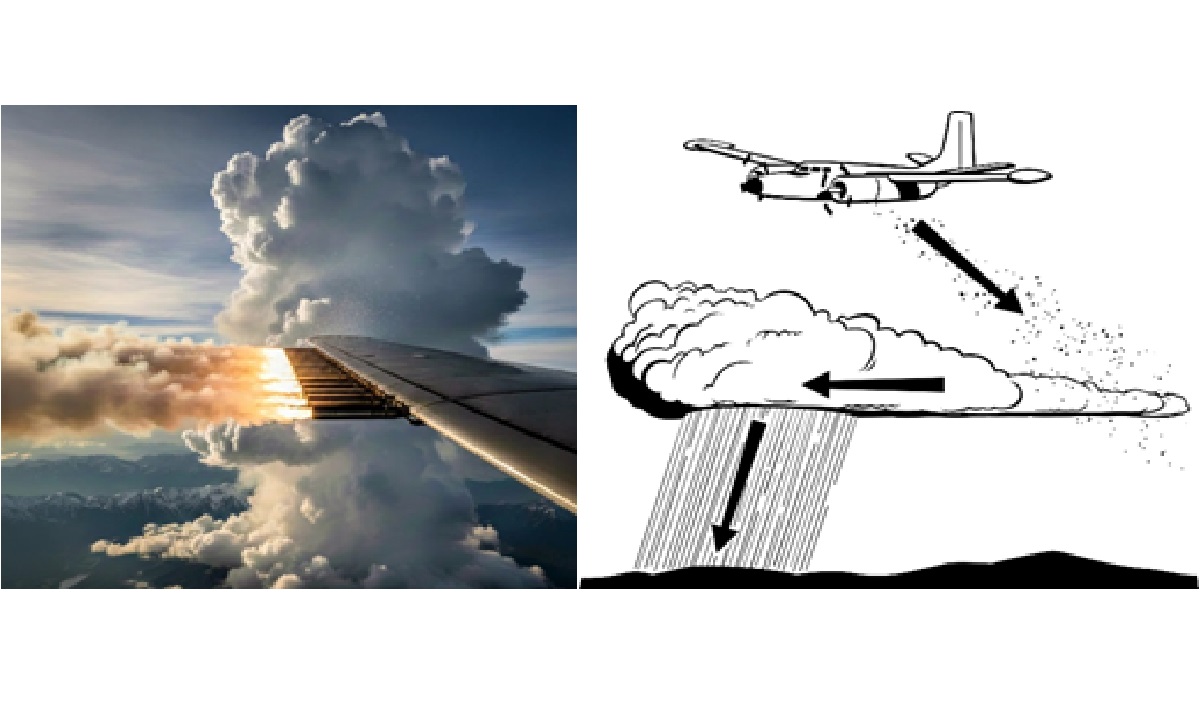
Weather modification began as local, experimental efforts (cloud seeding for rain enhancement, hail suppression, fog dispersal) and evolved into state programs with substantial scale.[3] Parallel to civil uses, militaries historically explored weather as a tactical instrument (notably Project Popeye during the Vietnam era).[4] More recently, geoengineering proposals to mitigate global warming (stratospheric aerosol injection, marine cloud brightening) have elevated debates about transboundary externalities and unilateral deployments.[5]
Two features are strategically salient. First, technologies are increasingly dual-use: techniques and delivery systems developed for humanitarian tasks can be adapted for coercive ends.[6] Second, the cost and access barriers are changing: improved remote sensing, small-UAV delivery, and modular airborne dispensers reduce entry thresholds and make localized interventions plausible for state or non-state actors. These trends underline the urgency of building national policies, technical capability for lawful interventions, and credible detection and attribution mechanisms.
The Indian Context: Imperatives and Capacity
India’s climatic complexity – monsoon dynamics, western disturbances, Himalayan orographic effects, coastal sea breezes and dust storm systems creates both vulnerability and opportunity. Agricultural productivity, urban air quality, water security and aviation safety are all weather-sensitive. India’s scientific base is strong: the India Meteorological Department (IMD), the Indian Institute of Tropical Meteorology (IITM), national satellite capabilities (ISRO’s INSAT and Aditya-class missions), and academic centers provide the research infrastructure and observational backbone.[7] [8] [9]
Yet present practice remains fragmented. Civil experiments in cloud seeding have been episodic and state-led; there is no unified national policy or registry, and ad hoc commercial hires for aircraft and equipment have driven up costs. The lack of an integrated civil–military architecture also limits India’s ability to scale responsible operations, to validate results rigorously, and to mount timely detection and attribution in the face of suspected misuse. The Delhi cloud seeding episode where projected costs ran into crores illustrates how ad hoc procurement and the absence of an indigenous, multi-role capability can be expensive and operationally inefficient.[10]
Why the IAF Should be a Principal Operational Partner
The Indian Air Force brings three categories of advantage to national weather security:
(a) Operational Reach and Mobility. Aircraft provide rapid, flexible access across India’s varied terrains essential for time-sensitive seeding windows and atmospheric sampling.
(b) Platform Discipline and Safety Regime. Military aviation adheres to exacting safety, maintenance and procedural standards that suit sensitive missions involving airborne releases or pyrotechnic devices.
(c) Integration with Mission Planning. The IAF’s operational planning apparatus can integrate sanctioned weather operations with broader mission sets (humanitarian relief, airlift, ISR), maximizing utility and cost-effectiveness.
The recommended posture is partnership, not militarization: science-led authorization and transparency, combined with IAF execution and logistical support. This model preserves civilian primacy while building national capacity.
Dedicated Regional Air Capability: A Proportionate Force Design
To be prepared and cost-efficient, India should consider establishing small regional detachments under a civilian authorization framework:
(a) Regionality. One detachment per major meteorological region (e.g., North, West, Central, East, South, Northeast, Coastal).
(b) Size and Composition. 2–4 multi-role aircraft (manned and unmanned mix), meteorology officers embedded, maintenance and logistics team. Aircraft should be modularly configurable for atmospheric missions and dual-task capable for other roles.
(c) Mission Set. Sanctioned seeding (science-validated), fog mitigation, atmospheric sampling for model validation, emergency support (reservoir replenishment), detection/ attribution sorties.[11]
(d) Command & Control. Civilian mission approval (National Weather Security Board), IAF execution under joint SOPs.
(e) Training. Joint qualifications for aircrew, met officers and mission planners; simulations and field trials to build competency.
This “few-aircraft” model is deliberately restrained. It is designed to provide sovereign capability, rapid response and credible detection without creating a large, specialized force that could be misperceived as weaponizing weather.
Cost Dynamics: Why Delhi Cost Crores and How IAF Use Lowers Expense
Delhi’s cloud-seeding cost estimates running into crores stem from several interrelated drivers: chartered aircraft rates, stand-by logistics, rapid procurement of specialized dispensers, insurance, multi-agency clearances, and intensive monitoring requirements. Commercial charters demand high per-hour fees, and the narrow windows for “seedable” cloud conditions often increase wasted standby hours. Using IAF assets materially reduces several line items:
(a) Eliminates Charter Premiums. Military platforms avoid commercial leasing fees.
(b) Leverages Existing Logistics. Fuel, ground handling and maintenance infrastructure already exist.
(c) Reduces Abort/Standby Waste. Military operational discipline and readiness lower aborted sortie costs.
(d) Enables Modularity. Re-usable modular dispensers reduce per-mission hardware cost.
Nonetheless, savings are not absolute. There are one-off and recurring expenses: aircraft modification and certification, training and qualification costs, consumables, opportunity cost of platform employment, and environmental and legal compliance. A conservative estimate suggests IAF-based operations reduce direct hire costs significantly (often 30–60% on flight hour components), and over repeated campaigns the model becomes clearly more economical. For one-off pilots, the advantage is modest but still meaningful when factoring in sovereign control and data quality.
Pilot Project: Design to Validate Capability and Cost
A carefully structured pilot project will prove technical efficacy, environmental safety, interagency workflows and cost-effectiveness. Pilot project parameters:
(a) Duration. 12–24 months.
(b) Location. One region with demonstrable operational need (e.g., a drought-prone agricultural belt or an airfield subject to recurrent fog).
(c) Platform. One IAF detachment with 2 multi-role aircraft + supporting ISR/ UAV for sampling.
(d) Scope. Limited, science-justified seeding trials; atmospheric sampling sorties; model validation; transparency reporting.
(e) Metrics. Cost per sortie, marginal cost savings relative to commercial hire, efficacy indicators (validated rainfall enhancement metrics), environmental monitoring results, SOP compliance and public reporting.
(f) Deliverables. A full cost-benefit analysis (including opportunity costs), SOP templates, Environmental Impact Assessment (EIA) findings, a public registry entry format and a plan for scale out if successful.[12]
Governance, Law and International Norms
Legal and normative guardrails are essential to legitimate weather operations. Domestic architecture:
(a) National Weather Security Board (NWSB). Multi-agency authorization body (MoD, MoES/ IMD, ISRO, MEA, Environment Ministry, legal experts) to approve, monitor and report activities.[13]
(b) Regulatory Acts. Clear statutory framework defining permissible technologies, authorization thresholds, liability, data sharing and public reporting.
(c) Environmental Oversight. Mandatory EIA and independent review panels for operations with potential ecological impact.
Detection, Attribution and Deterrence
Deterrence requires credible detection and the capacity to attribute. India must invest in:
(a) Sensing Networks.
(i) Satellite remote sensing (ISRO earth observation constellations) focused on aerosol optical depth, plume signatures and tropospheric perturbations.[14]
(ii) Ground stations & radars for localized monitoring and model verification.
(iii) Airborne sampling capability (IAF detachments) for prompt in-situ forensic analysis.
(b) Modeling and Analytics.
(i) Data assimilation and AI utilities to run counterfactual simulations and identify anomalies inconsistent with natural variability.[15]
(c) Legal/ Forensic Protocols.
(i) Chain-of-custody standards, laboratory accreditation and rapid reporting to support domestic or diplomatic actions.
Civil-Military Operational Mechanisms
Operational success depends on operationalized cooperation:
(a) Joint SOPs. Clear, pre-agreed procedures for mission authorization, execution, monitoring and reporting.
(b) Shared Data Pipelines. Secure, role-based IMD/ISRO data access for mission planning and IAF telemetry for research assimilation.
(c) Joint Training. Cross-certified courses for pilots, meteorologists and mission planners; routine exercises and simulations.
(d) Research Partnerships. Academic and DRDO involvement to examine ecological impacts, refine materials, and develop detection tools.
Integration preserves scientific independence while enabling efficient execution.
Environmental, Ethical and Socio-Political Safeguards
Respect for environmental limits and public interest is central. Policies must ensure:
(a) Precautionary principle in the face of uncertainty; restraint where ecological risk is non-trivial.
(b) Local stakeholder engagement and state government consent for operations affecting agriculture or water resources.
(c) Independent oversight and periodic audits.
(d) Public reporting of authorized operations and their rationales to build trust.
Costs, Phasing and Force Design
A prudent, phased investment path balances readiness and fiscal prudence:
(a) Phase I (0–24 Months). Pilot detachment, joint training, SOP development, and detection capability build.
(b) Phase II (24–60 Months). Regional roll-out (3–6 detachments), mature data sharing, and EIA frameworks.
(c) Phase III. Institutionalization, doctrine codification, and international norm leadership.
Budget should prioritize multi-use platforms and shared funding (MoES, MoD, state governments) to distribute costs and demonstrate civil benefit.
Risks and Counterarguments
Policy must confront objections, such as:
(a) Weaponization Fears Response. Transparent civilian authorization, public registry, and independent oversight minimize risk of misuse.
(b) Environmental Uncertainty Response. Strict EIA requirements, pilot caution and independent science oversight.
(c) Diplomatic Friction Response. Regional notification and multilateral engagement reduce misperception.
(d) Resource prioritization Response. Phased, multi-purpose investments yield broader civil and defence dividends (research, ISR, disaster response).
Recommendations
(a) Establish an NWSB to create policy, authorize pilots and manage transparency.
(b) Pilot one regional IAF detachment with IMD/ ISRO scientific leadership (12–24 months).
(c) Develop joint SOPs and training including simulator-based rehearsals and environmental protocols.
(d) Invest in detection & attribution (satellite, ground, airborne sampling, AI modeling).
(e) Adopt a public registry of authorized activities to build domestic and international confidence.
(f) Lead an international initiative to modernize ENMOD and establish transparency norms for weather-affecting activities.
Conclusion
Weather-affecting capabilities are not hypothetical future threats: they are emerging policy and operational realities. India can respond responsibly by building a measured, transparent and science-led capability that pairs scientific authority with disciplined air capability. Dedicating modest, regionally deployed aircraft detachments under civilian authorization supported by robust detection, legal safeguards and international engagement would yield practical resilience, credible deterrence and the institutional foundation for responsible stewardship of the atmosphere. In the coming era, weather security will matter as much as cyber or space security; India should act now to shape it.
*****
CLICK TO VIEW THE PDF
Notes:
[1] Intergovernmental Panel on Climate Change (IPCC), Sixth Assessment Report (AR6), https://www.ipcc.ch/assessment-report/ar6/. Accessed on February 17, 2026.
[2] Civil-Military Protocols, https://csep.org/wp-content/uploads/2025/12/How-Do-Indian-Security-Institutions-Engage-with-Strategic-Climate-Risks-.pdf. Accessed on February 17, 2026.
[3] World Meteorological Organization, “Guidelines on Weather Modification Research and Operations,” https://wmo.int/content/wmo-statement-weather-modification. Accessed on February 17, 2026.
[4] U.S. Department of State, Foreign Relations of the United States, 1964–1968, Volume XXVIII (Project Popeye), https://history.state.gov/historicaldocuments/frus1964-68v28/d274. Accessed on February 17, 2026.
[5] National Academies of Sciences, Engineering, and Medicine, Reflecting Sunlight: Recommendations for Solar Geoengineering Research and Research Governance (Washington, DC: National Academies Press, 2021), https://nap.nationalacademies.org/catalog/25762/reflecting-sunlight-recommendations-for-solar-geoengineering-research-and-research. Accessed on February 17, 2026.
[6] Stockholm International Peace Research Institute (SIPRI), “Emerging and Dual-Use Technologies”, https://www.sipri.org/research/armament-and-disarmament/emerging-technologies. Accessed on February 17, 2026.
[7] India Meteorological Department, “About IMD,” Government of India, https://mausam.imd.gov.in/responsive/history.php. Accessed on February 17, 2026.
[8] Indian Institute of Tropical Meteorology (IITM), https://www.tropmet.res.in/. Accessed on February 17, 2026.
[9] ISRO, “Aditya-L1 Mission Brief,” https://www.isro.gov.in/Aditya_L1.html. Accessed on February 17, 2026.
[10] Government of NCT Delhi, Environment Department briefings on proposed cloud seeding operations (2023–2024).
[11] World Weather Attribution Initiative, https://www.worldweatherattribution.org/. Accessed on February 17, 2026.
[12] Environmental Impact Assessment, https://iere.org/what-is-environmental-impact-assessment-eia/. Accessed on February 17, 2026.
[13] Environmental Modification Convention (ENMOD), United Nations, 1977, http://www.un-documents.net/enmod.htm. Accessed on February 17, 2026.
[14]Indian Space Research Organisation (ISRO), “Earth Observation Satellites,” https://www.isro.gov.in/EarthObservation.html. Accessed on February 17, 2026.
[15] European Centre for Medium-Range Weather Forecasts (ECMWF), “Data Assimilation,” https://www.ecmwf.int/en/research/data-assimilation. Accessed on February 17, 2026.