

Author: Air Vice Marshal Prashant Mohan VM (Retd), Additional Director General, CAPSS
Keywords: Operation Safer Sagar, Operation Sindoor, Operation Bandar, Kargil War, Indian Air Force
The character of aerial bombing has changed more in the past decade than in the preceding three, and precision has been the constant thread running through that change. The United States of America (USA) and Israel remain at the frontier of this evolution, increasingly fusing space-based cueing, cyber disruption, electronic warfare (EW), and artificial intelligence (AI) into the targeting cycle itself rather than treating them as separate enablers of a strike, a fusion visible in how quickly recent Israeli campaigns have moved from decision to precision effect against dispersed, defended target sets. India’s own tryst with precision bombing began considerably more modestly, in the high Himalayas in the summer of 1999, and has advanced in fits and starts ever since, shaped as much by sanctions and improvisation as by deliberate long-term planning. Tracing that arc from Operation Safed Sagar to Operation Sindoor offers a useful lens on both how far the Indian Air Force (IAF) has come and how much distance remains to the frontier that Washington and Tel Aviv currently occupy.
Operation Safed Sagar: Precision Born of Necessity
Operation Safed Sagar was the Indian Air Force’s codename for its air operations in support of Operation Vijay during the 1999 Kargil War, the first large-scale employment of air power in the Kashmir theatre since the 1971 India-Pakistan War.[1] Its standout feature was not that precision bombing was planned for, but that it was improvised under fire. The IAF crews found themselves fighting at altitudes of 16,000 to 18,000 feet, where thinner air meant that bombs released using sea-level ballistic tables consistently overshot their targets, and where Pakistani infiltrators, dug in on the high ground, could bring man-portable Stinger missiles to bear on aircraft that were, unusually, flying below the enemy’s firing positions rather than above them.[2] This can reasonably be called the genuine start of precision bombing in Indian military aviation, rather than merely accurate bombing, because it was here that the IAF first integrated laser designation and satellite-aided targeting into a live campaign. India had purchased Paveway-series laser-guided bomb kits and Litening targeting pods, but the US sanctions following India’s 1998 nuclear tests had left the integration with the Mirage 2000’s 1985-vintage mission software incomplete; the IAF, with Israeli technical assistance, completed the integration in a reported twelve days once the war began.[3]
The operational payoff came at Muntho Dhalo and Tiger Hill. A single strike by four Mirage 2000s, each dropping six 250-kilogram bombs, destroyed a major supply dump and is credited with breaking the momentum of the Pakistani defence far more decisively than the more widely publicised Tiger Hill footage.[4] By early June the IAF had flown over 1,200 strike sorties, and the campaign is judged to have shortened the war by roughly three weeks.[5] The psychological effect was equally significant: an Indian Army message to the Air Headquarters at the time credited the Mirage strikes with breaking enemy command and control so thoroughly that troops “literally walked over the entire Tiger Hills area,”[6] a rare instance of an army field formation crediting air power directly for an infantry advance.
From Muntho Dhalo to Muridke: The Growth Chart
Precision bombing did not resurface as a headline capability for two decades, but it did not stand still either. The next major milestone came on February 26, 2019, when twelve IAF Mirage 2000s struck a Jaish-e-Mohammed (JeM) training camp at Balakot in Khyber Pakhtunkhwa, in retaliation for the Pulwama attack, under the codename Operation Bandar.[7] While Op Safed Sagar relied on hastily integrated laser-guided bombs, Balakot employed Israeli-made SPICE-2000 precision munitions, pre-fed with Global Positioning System (GPS) coordinates and using electro-optical terminal guidance, reportedly achieving an error margin of under three metres against targets fifty to sixty kilometres from the release point.[8] It also marked the first time since 1971 that the IAF had struck a target inside Pakistan’s mainland rather than Pakistan-occupied Kashmir (PoK), [9] a qualitative escalation in both reach and political signalling that Op Safed Sagar had not attempted.[10]
Operation Sindoor in May 2025 represents the next, and by far the largest, leap. Where Op Bandar was a single-target strike by one aircraft type, Op Sindoor saw the IAF strike nine locations, including the Jaish-e-Mohammed (JeM) and Lashkar-e-Taiba (LeT) headquarters at Bahawalpur and Muridke, using a coordinated mix of BrahMos supersonic cruise missiles fired from Su-30MKIs, French-origin SCALP-EG cruise missiles and HAMMER precision-guided bombs delivered by Rafale fighters.[11] Nineteen BrahMos and nineteen SCALP missiles were reportedly employed in a single coordinated stand-off strike, marking BrahMos’s first use in actual combat after two decades in service and SCALP-EG’s combat debut in a state-on-state engagement.[12] The growth from Muntho Dhalo to Muridke, in these terms, is a growth from manually retrofitted gravity bombs to imported precision-guided munitions on a single platform, to a networked, multi-platform, multi-missile stand-off strike package capable of hitting targets roughly 150 kilometres inside Pakistan’s territory with, by the IAF’s own account, negligible collateral damage.[13]
The Platforms Behind the Progress
Each leap in precision has ridden on a corresponding leap in aerial platforms. The Mirage 2000 carried Indian precision bombing through both Op Safed Sagar and Op Bandar, and remains in many respects the IAF’s most combat-proven precision strike aircraft. Op Sindoor, by contrast, showcased the Su-30MKI as a heavy stand-off missile carrier and the Rafale, inducted from 2021, as a genuinely multi-role precision platform integrating French-origin munitions unavailable to earlier IAF fighters.[14] The shift also reflects a broader doctrinal change: where Op Safed Sagar and even the operation in Balakot required aircraft to approach relatively close to their targets, Op Sindoor’s cruise missiles allowed strike aircraft to remain within Indian airspace throughout, trading platform risk for munition sophistication.
Building an Indigenous Precision Arsenal
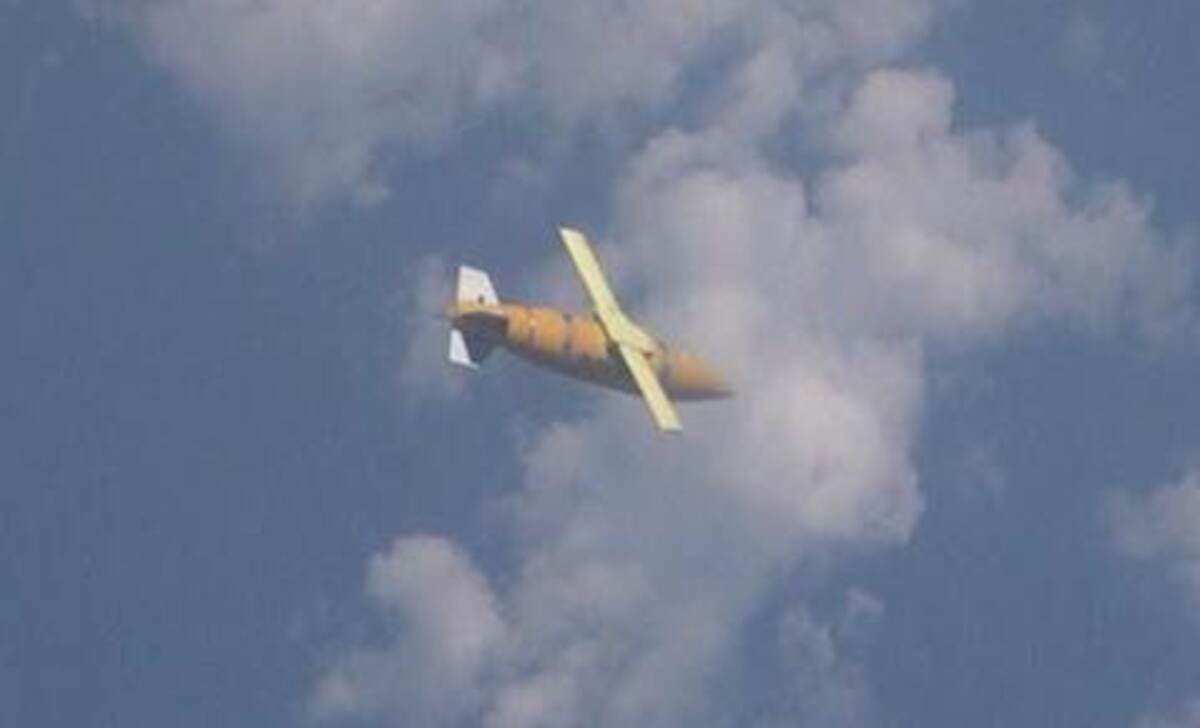
India’s growing awareness of its continued reliance on imported precision munitions- SPICE-2000, SCALP-EG and HAMMER- all of foreign origin, has driven a parallel indigenous effort. The Defence Research and Development Organisation (DRDO)’s Smart Anti-Airfield Weapon, a 125-kilogram precision glide bomb with a range of roughly 100 kilometres, was employed operationally for the first time during Operation Sindoor against Pakistani airfields, and a satellite-guided variant is now being processed for wider fleet integration.[15] In April 2025, DRDO also completed release trials of the 1,000-kilogram-class Gaurav long-range glide bomb from a Su-30MKI, achieving close to 100 kilometres of range with reported pinpoint accuracy.[16] A jet-powered variant of the Smart Anti-Airfield Weapon (SAAW), under development since 2025, is intended to extend its range beyond 200 kilometres by converting it from a gravity-assisted glide munition into a self-propelled weapon, positioning it as an affordable complement to BrahMos rather than a replacement for it.[17] These programmes, alongside the Rudram family of anti-radiation missiles, mark a deliberate move from assembling imported precision kits toward owning the underlying guidance and propulsion technology. However, the gap between a successful trial and full squadron-level integration has historically stretched over several years for comparable Indian systems, a lag the IAF is now trying to compress.
The Distance That Remains
Set against the American and Israeli frontier, where precision strike is now routinely fused with pre-positioned intelligence assets, satellite cueing, cyber disruption of enemy command networks, and AI-assisted sensor fusion to compress the time between decision and impact to a matter of hours across an entire enemy air defence network, India’s progress from Muntho Dhalo to Muridke, though genuine, remains an evolution in munitions and platforms rather than in the full targeting ecosystem around them. Indigenous glide bombs and cruise missiles address the hardware gap; closing the gap in space-based cueing, offensive cyber integration, and AI-driven target prioritisation is the harder, and still largely unfinished, task ahead.
*****
CLICK TO VIEW THE PDF
(Disclaimer: The views and opinions expressed in this article are those of the author and do not necessarily reflect the position of the Centre for Aerospace Power and Strategic Studies [CAPSS])
Notes:-
[1]“Remembering Operation Safed Sagar: When Indian Air Force Helped Indian Army to End Pakistan’s Kargil Ambitions,” The Week, May 26, 2025, https://www.theweek.in/news/defence/2025/05/26/remembering-operation-safed-sagar-when-indian-air-force-helped-indian-army-to-end-pakistans-kargil-ambitions.html. Accessed on July 25, 2026.
[2]Connor Kerr, “The Air War Fought at 18,000 Feet,” MigFlug, July 20, 2026, https://migflug.com/jetflights/kargil-1999-operation-safed-sagar-mirage-2000-high-altitude-air-war/. Accessed on July 25, 2026.
[3]Ajay Banerjee, “Hurriedly Configured Bombs Changed Course of Kargil War,” The Tribune, June 24, 2019, https://www.tribuneindia.com/news/archive/nation/hurriedly-configured-bombs-changed-course-of-kargil-war-792484. Accessed on July 25, 2026.
[4]Vishal Thapar, “The Man Who Bombed Tiger Hill Tells Us How the War Was Won from the Air,” SP’s Aviation, July 2019, https://www.sps-aviation.com/story/?id=2586&h=The-Man-Who-Bombed-Tiger-Hill-Tells-Us-How-the-War-Was-Won-from-the-Air. Accessed on July 25, 2026.
[5]Anshika Saxsena, “Operation Safed Sagar: The Untold Story of the Sky Warriors of Kargil,” The Unknown India, February 24, 2026, https://theunknownindia.com/operation-safed-sagar/. Accessed on July 25, 2026.
[6]The Week, n. 1.
[7]“Operation Bandar: IAF’s Code Name for Balakot Airstrike,” GK Today, November 2020, https://www.gktoday.in/operation-bandar-iafs-code-balakot-airstrike/. Accessed on July 25, 2026.
[8]“India Reportedly Used Israeli GPS-Guided Bombs in Air Raid on Jaish-e-Mohammed,” GlobalSecurity.org, March 03, 2019, https://www.globalsecurity.org/wmd/library/news/india/2019/india-190303-sputnik01.htm. Accessed on July 25, 2026.
[9]“Planning of Operation Bandar and Executing the Balakot Strike,” Defence Direct Education, February 26, 2021, https://defencedirecteducation.com/2021/02/26/planning-of-operation-bandar-and-executing-the-balakot-strike/. Accessed on July 25, 2026.
[10] Rustam, “IAF’s Balakot Airstrikes: How ‘Operation Bandar’ Surprised Pakistan,” WION, February 26, 2021, https://www.wionews.com/photos/iafs-balakot-airstrikes-how-operation-bandar-surprised-pakistan-366360. Accessed on July 25, 2026.
[11]“Operation Sindoor: IAF Fired BrahMos from Sukhoi-30s and Scalp Missiles from Rafale Jets at Pak Targets,” The Week, December 24, 2025, https://www.theweek.in/news/defence/2025/12/24/operation-sindoor-iaf-fired-brah-mos-from-sukhoi-30s-and-scalp-missiles-from-rafale-jets-at-pak-targets.html. Accessed on July 25, 2026.
[12]“Debris from Indian Missile and Drone Strikes in Operation Sindoor Sparks Interest Among China and Global Partners,” Indian Defence Research Wing, June 20, 2025, https://idrw.org/debris-from-indian-missile-and-drone-strikes-in-operation-sindoor-sparks-interest-among-china-and-global-partners-us-defence-analyst/. Accessed on July 25, 2026.
[13]Vijay Mohan, “Operation Sindoor: How India Used SCALP and HAMMER Weapons to Pound Pakistani Terror Camps,” The Tribune, May 07, 2025, https://www.tribuneindia.com/news/defence/operation-sindoor-how-india-used-scalp-and-hammer-weapons-to-pound-pakistani-terror-camps. Accessed on July 25, 2026.
[14]The Week, n. 11.
[15] Press Information Bureau, Government of India, “DRDO Conducts Successful Release Trials of Long-Range Glide Bomb ‘Gaurav’ from Su-30 MKI Aircraft,” April 11, 2025, https://www.pib.gov.in/PressReleaseIframePage.aspx?PRID=2120989®=48&lang=2. Accessed on July 25, 2026.
[16]“India’s New Gaurav Glide Bomb Dropped from a Su-30MKI Fighter Confirms Long-Range Strike Capabilities,” Army Recognition, April 14, 2025, https://www.armyrecognition.com/news/aerospace-news/2025/indias-new-gaurav-glide-bomb-dropped-from-a-su-30mki-fighter-confirms-long-range-strike-capabilities. Accessed on July 25, 2026.
[17] Raunak Kunde, “DRDO’s Jet Powered SAAW set to double range to 200+km, enhancing IAF’s precision strike capability,” Indian Defence Research Wing,) July 30, 2025, https://idrw.org/drdos-jet-powered-saaw-set-to-double-range-to-200-km-enhancing-iafs-precision-strike-capability/. Accessed on July 25, 2026.