Author: Dr Shalini Chawla, Distinguished Fellow, Centre for Aerospace Power and Strategic Studies
Keywords: Pakistan, Iran Crisis, Ayatollah Ali Khamenei, Strait of Hormuz, US-Israel, Energy Crisis
The ongoing Iran crisis and the escalation of hostilities have spilt over the wider Gulf region, which has largely been seen as a bastion of stability and peace. The current conflict has affected oil and gas supplies in the region (and beyond) and has created an atmosphere of uncertainty. Pakistan is feeling the ripples of the conflict and is facing the dilemma of complex strategic choices. The conflict and intensifying tensions in the region have been disturbing for Pakistan. Instability in Iran would invariably have repercussions for Pakistan.
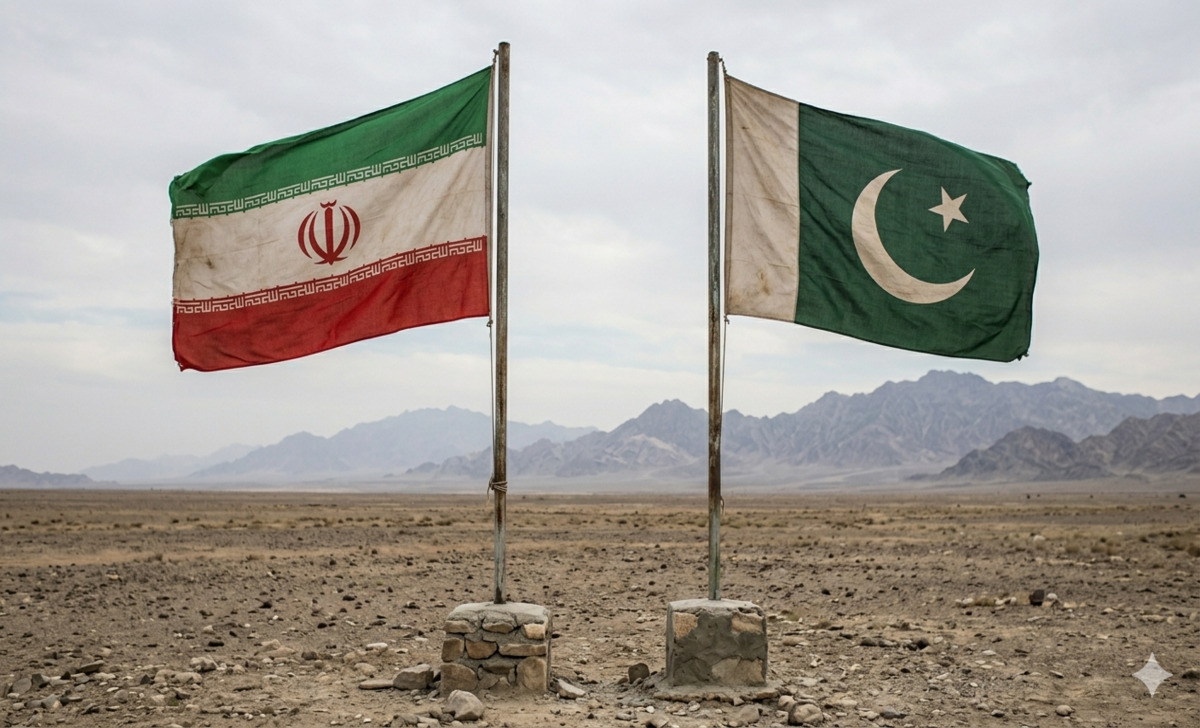
Pakistan and Iran continue to have a strained relationship, and past initiatives to stabilise this relationship have not yielded results. Approximately 15 to 20 per cent of Pakistan’s population is Shiite Muslims, and news of Iran’s Supreme Leader, Ayatollah Ali Khamenei’s death, led to violent protests in Pakistan. Thousands of people gathered to condemn Israel and the United States (US) strikes on Iran. On March 19, 2026, Pakistan’s Chief of Defence Forces, Asim Munir, issued warnings against pro-Iran demonstrations, which sparked outrage.[1] Pakistan would not risk sectarian tensions at this point in time, when the country is under massive pressure with ongoing conflict on the border with Afghanistan.
Tensions have escalated between Islamabad and Kabul, and Pakistan continues to blame the Taliban for patronising and sheltering the militant group Tehrik-i-Taliban Pakistan (TTP). The deadly terror organisation has been emboldened post August 2021, mounting relentless attacks against the security personnel in Pakistan. The military leadership, despite their efforts, has been unable to deter the group. In response to this escalating threat, Pakistan has tried to pressure Kabul by implementing a series of punitive measures. These include closure of the border check posts, which restrict movement and trade, and repatriation of Afghan refugees living for decades in Pakistan to Afghanistan. In recent months, tensions between Pakistan and Afghanistan have escalated, marked by a series of cross-border strikes. The latest and most concerning incident was Pakistan executing a devastating air strike on a drug rehabilitation centre in the heart of Kabul in mid-March. This tragic attack killed hundreds of civilians, further deepening the rift between the two nations.
Pakistan’s economy is heavily dependent on remittances for its sustenance. The economy is barely managing to stabilise, and the growth figures are projecting a positive trend. Pakistan managed to avert the risk of economic default in 2022 and 2023 with assistance from its friends and traditional donors. China, Saudi Arabia, and the United Arab Emirates (UAE) extended approximately USD 5 billion in assistance through debt rollover, which helped Pakistan stabilise its foreign reserves. Remittances play a significant role in Pakistan’s economy and amounted to 9.4 per cent of the GDP in 2024. [2] The government has been trying to encourage the inflow, and the State Bank of Pakistan (SBP) has reported a significant increase in remittances in 2024. The inflow grew by 31 per cent, rising from USD 26.4 billion in 2023 to USD 34.6 billion in 2024. [3] Interestingly, around USD 20 billion of remittances come from the Gulf, and instability in the region will dissuade Pakistani nationals from going to the Gulf for work.
On the diplomatic front, Pakistan is in a challenging spot and is juggling complex choices. In an attempt to foster peace and stability, Pakistan attempted to be a mediator between Iran and the US prior to the outbreak of the conflict. Additionally, Pakistan has been striving to rebuild its relationship with the US, which was strained during Imran Khan’s tenure. For Islamabad, its relationship with the US is extremely crucial given the strategic and economic dimensions of the relationship. Pakistan credited US President Donald Trump for the ceasefire between India and Pakistan during the four-day conflict in May 2025 and also nominated President Trump for the Nobel Peace Prize later in the year. Pakistan’s decision to participate in the controversial US-led Board of Peace, to address the Palestine issue, has faced criticism domestically. Given its desperation to manage its goodwill with the White House, Pakistan is not in a position to oppose the US and Israel strikes in Iran, even though it doesn’t want the conflict to continue in its neighbourhood.
Pakistan has tried to maintain a neutral stance in the Iran crisis till now, but certainly its relationship with the Gulf has become complicated at this point in time. In September 2025, Pakistan and Saudi Arabia signed a Strategic Mutual Defence Agreement, which includes a clause on a collective defence framework. One of the critical dimensions of the agreement is that an attack/strike against either of the partners (Saudi Arabia and Pakistan) would imply an attack on both. Pakistan rejoiced in the signing of the agreement post-May 2025 conflict in the wake of heightened tensions vis-à-vis New Delhi. Now, with Iran’s strikes against Saudi Arabia, Pakistan’s commitment comes under scrutiny.
Pakistan has been facing strategic complexities and security challenges from all sides of its borders. The likelihood of a Kabul-Islamabad truce is extremely bleak, looking at the Taliban’s reluctance to contain the TTP and the Pakistan military’s continued conviction to opt for kinetic measures against Afghanistan. Continuation of the crisis in Iran will have serious strategic, financial and sectarian repercussions for Pakistan. There are reports of Islamabad trying to mediate peace talks between the US, Iran, and Israel. The record of Pakistan’s mediation efforts has not shown any success. Pakistan-India tensions continue, and Pakistan’s projected threat perceptions seem to have intensified with the growing vulnerabilities within the state and strategic challenges it encounters. In the current crisis, Pakistan seems to be exploring multiple options of being a peacemaker and also issuing occasional immature statements targeting India to balance its domestic pressures, strategic ambitions, and threat perceptions.
*****
CLICK TO VIEW PDF
Notes:-
[1] Sibghaullah Saber, “Pakistan Signals Shift Away from Iran towards Stronger Support for Saudi Arabia,” The New Arab, March 23, 2026, https://www.newarab.com/news/pakistan-signals-shift-away-iran-towards-saudi-arabia. Accessed on March 25, 2026.
[2] “Personal Remittances- Received (% of GDP-Pakistan),” World Bank Group, https://data.worldbank.org/indicator/BX.TRF.PWKR.DT.GD.ZS?locations=PK. Accessed on March 25, 2026.
[3] “Snapshot: Remittance Inflows to Pakistan, Jan 2020 – May 2025,” International Organisation for Migration United Nations (IOM UN), https://dtm.iom.int/sites/g/files/tmzbdl1461/files/reports/Remittance%20Inflows%20to%20Pakistan_2025.pdf?iframe=true. Accessed on March 25, 2026.
(Disclaimer: The views and opinions expressed in this article are those of the author and do not necessarily reflect the position of the Centre for Aerospace Power and Strategic Studies [CAPSS])