Author: Priyanka Yadav, Research Associate, Centre for Aerospace Power and Strategic Studies
Keywords: Indo-Pacific, USPACOM, INDOPACOM, US-India Relations, Quad
Introduction
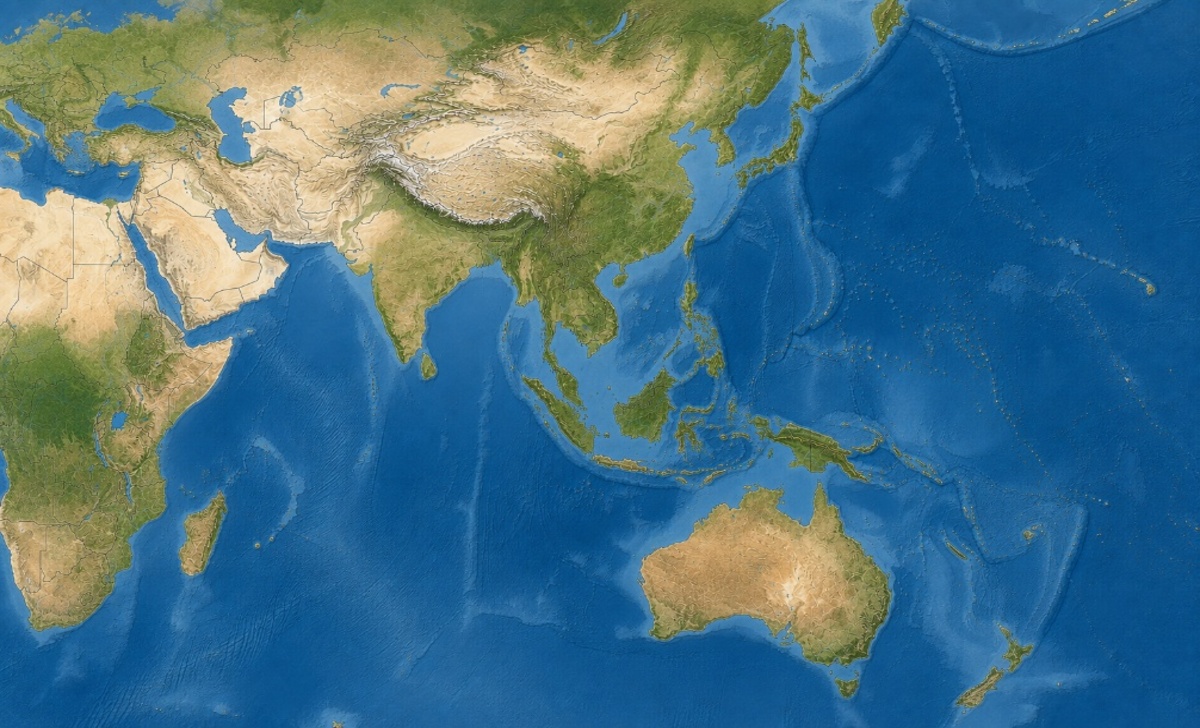
On June 16, 2026, the United States (US) Department of War (formerly known as the Department of Defense) made a quiet but significant gesture by renaming US Indo-Pacific Command (INDOPACOM) to the United States Pacific Command (USPACOM).[1] The US has maintained a dedicated Indo-Pacific posture since President Trump’s first administration, built around treating the Indian and Pacific Oceans as a single strategic space.[2] Thus, the renaming raises a simple but important question: whether it is only an administrative change or does it signal that the US is stepping back from its Indo-Pacific framing? The move also comes at a critical juncture, when the India-US relationship is already at a crossroads due to high-tariff onslaughts since President Trump’s second presidency. While the renaming does not change US military operations, missions, or troop deployments in the region, it is a symbolic signal worth noticing.
Some officials in the US believe that referring to the command’s historical identity signifies its military heritage.[3] However, as per the US official position, its priority areas in the Indo-Pacific, including areas of operations, missions, and troop deployments, remain unchanged.[4]
India in the US’s Indo-Pacific Strategy
With the US Indo-Pacific strategy introduced during the first Trump administration and continued under subsequent President Biden’s administration, India’s position in US regional planning grew significantly, with increasing relevance to the region. It focused on the approach to countering China’s assertive presence in the Indo-Pacific and strengthening cooperation with nations, including India, Japan, and Australia, which grew more[5] in the backdrop of increasing Chinese naval activity beyond the Western Pacific, that is, in the Indian Ocean.
Under US Secretary James M. Mattis in 2018, the renaming of the command from USPACOM to INDOPACOM also signalled the intent of ‘connecting the two oceans’.[6] It explicitly highlighted the importance of the Indian Ocean and its centrality, as well as deepening Indo-US relations in the Indo-Pacific. Reflecting India’s central role in the US Indo-Pacific strategy, the US called the Indo-Pacific Region (IPR) ‘Asia-Pacific Plus India’.[7] The first Trump administration also increasingly treated the Pacific and Indian Oceans as a single military and economic theatre.
The current unease in the Washington-New Delhi relationship, however, suggests that the US may no longer be considering India central to its Indo-Pacific strategy,[8] even as the US continues to prioritise its rivalry with China in the wider Pacific. There is also a broader consensus in US strategic circles that, in the event of a Taiwan contingency, India will pursue independent foreign policy decisions. India will not change its commitment to the ‘One China Policy’, and thus will not come to the US’s aid against China.[9] India considers the South China Sea as a ‘secondary area of interest’ and prefers to avoid confrontation with China in this region.[10] Thus cumulatively, while the operational domain of USPACOM remains intact, it could hint at a silent, gradual distancing from deepening its equation with India to deal with China.
Inferences for India
Taken together, this suggests the practical footprint of US Indo-Pacific policy has not shifted, but symbolism matters in diplomacy, especially when the US relations with India are already under strain. This is why the renaming also needs to be viewed from the Indian perspective. Against this backdrop and amid rapidly evolving dynamics in the Indo-Pacific, India should build on its capabilities and engage with more trusted partners. The recent visits from the Indo-Pacific nations, such as Japanese PM Taikichi’s visit to India, and then Indian PM Modi’s recent travels to Indonesia, Australia, and New Zealand, suggest that India sees the Indo-Pacific region, from its western to eastern maritime edges, as central to its strategic and economic future, and wants to deepen ties with all the key countries in this region.[11] This likely means deeper ties with these nations, as well as with other important regional Indo-Pacific players such as South Korea and ASEAN member states. All of these states share India’s concern about Chinese expansionism amid increasing instability in this maritime geography.
Thus, it calls for New Delhi to form more like-minded, collaborative partnerships and issue-based coalitions in the Indo-Pacific. It requires steady investment in India’s defence capabilities, its island territories, its surveillance networks, more coordinated military exercises, and its partnerships across the Indian Ocean Region, from Mauritius to the Seychelles to Southeast Asia. Since the renaming of INDOPACOM to USPACOM changes little in practice: American forces, missions, and deployments remain where they were, it points to a Washington that is distracted by the war in West Asia and less inclined to court India than it once was. India should neither treat this as a crisis nor dismiss it as meaningless. The Indo-Pacific remains a region in which India, the US, and other regional powers all have real stakes, and securing it will matter regardless of how the region is reframed to suit their respective interests. India’s clearest path forward is the one it has already been taking: building its own capability and deepening practical partnerships across the region, so that its strategic position does not depend on how Washington names its commands.
*****
CLICK TO VIEW THE PDF
Notes:-
[1]U.S. Pacific Command, United States of America, “Department of War Restores U.S. Pacific Command Designation,” June 16, 2026, https://www.pacom.mil/Media/Press-Releases-and-Readouts/Article/4519249/department-of-war-restores-us-pacific-command-designation/. Accessed on June 18, 2026.
[2] Alyssa Ayres, “The U.S. Indo-Pacific Strategy Needs More Indian Ocean,” Council on Foreign Relations, January 22, 2018, https://www.cfr.org/articles/us-indo-pacific-strategy-needs-more-indian-ocean. Accessed on June 18, 2026.
[3] “Why the U.S. Restored Pacific Command Name, Ending the Indo-Pacific Designation After Eight Years,” The Defence News, June 17, 2026, https://www.thedefensenews.com/Why-the-US-Restored-Pacific-Command-Name-Ending-the-Indo-Pacific-Designation-After-Eight-Years/. Accessed on June 18, 2026.
[4] U.S. Pacific Command, n. 1.
[5] Rear Admiral Sudarshan Shrikhande, “Another Turbulent Year in the Indian Ocean” Proceedings 151, no. 5 (2025), https://www.usni.org/magazines/proceedings/2025/may/another-turbulent-year-indian-ocean. Accessed on June 22, 2026.
[6]Tara Copp, “INDOPACOM, It Is: US Pacific Command Gets Renamed,” Military Times, May 30, 2018, https://www.militarytimes.com/news/your-military/2018/05/30/indo-pacom-it-is-pacific-command-gets-renamed/. Accessed on June 24, 2026.
[7] Rajiv Bhatia, “The Relevance of the Indo-Pacific,” Gateway House, June 18, 2026, https://www.gatewayhouse.in/the-relevance-of-the-indo-pacific/. Accessed on June 20, 2026.
[8] Aparna Pande, “How India’s Role in US Indo-Pacific Strategy Diminished,” Hudson Institute, December 18, 2025, https://www.hudson.org/foreign-policy/how-indias-role-us-indo-pacific-strategy-diminished-aparna-pande. Accessed on 23 June, 2026.
[9]Lyle Goldstein, “Target Taiwan: Limits of Allied Support,” Defense Priorities, October 16, 2025, https://www.defensepriorities.org/explainers/target-taiwan-limits-of-allied-support/. Accessed on June 22, 2026.
[10] Pooja Bhatt, “Indian Presence in the South China Sea: Strategic Compulsions,” Institute for Security and Development Policy, June 26, 2023, https://www.isdp.eu/indian-presence-in-the-south-china-sea-strategic-compulsions/. Accessed on June 24, 2026.
[11] Ajai Malhotra, “What PM Modi’s Three-Nation Tour Tells About India’s Changing Indo-Pacific Policy,” The Print, July 6, 2026, https://theprint.in/opinion/pm-modis-three-nation-tour-indias-indo-pacific-policy/2978275/. Accessed on July 6, 2026.