Author: Gp Capt Ajay Ahlawat (Retd), Visiting Senior Fellow, CAPSS
Keywords: Kaveri, GEF404, Tejas, Journalism, Accountability
Recent commentary by a retired senior Indian Navy (IN) officer, Vice Admiral Raman Puri, on Chakranewz’s The Sandeep Unnithan Show created an unnecessary kerfuffle in the Indian strategic community. The podcast was released under a provocative title— ‘Who Killed the Kaveri Jet Engine’—and went on to suggest that it was an Indian Air Force (IAF)-led committee headed by an Air Marshal. The podcast has revived debate over historical choices in India’s Light Combat Aircraft (LCA) Tejas programme, with the outrageous allegation causing justified consternation in the air force community.
While Admiral Puri’s broader concerns about sustained funding for indigenous engine development deserve serious attention, specific claims attributing the selection of the General Electric (GE) F404 over the Eurojet EJ200, and the effective sidelining of Kaveri, to an IAF-led committee headed by an Air Marshal require scrutiny against the public record. These assertions lack supporting evidence and risk misrepresenting institutional roles, organisational responsibilities and attendant timelines.
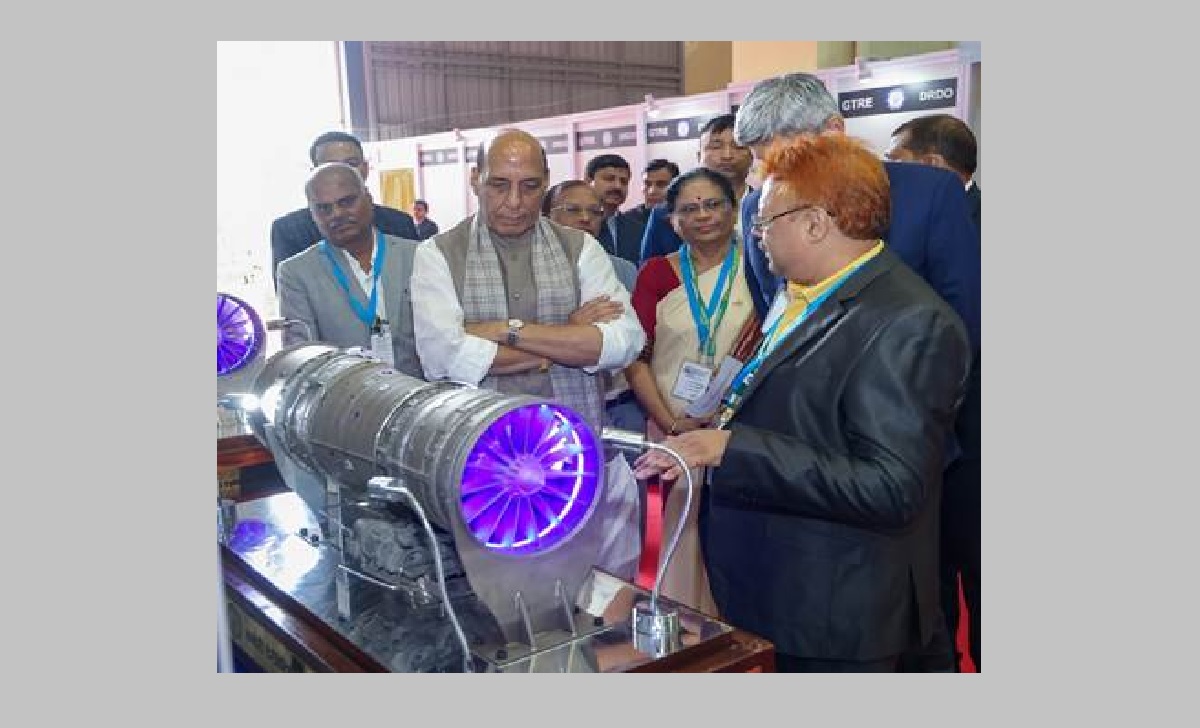
The decision to employ the General Electric F404 family for Tejas was neither sudden nor the product of a late-stage committee intervention. Collaboration between the Aeronautical Development Agency (ADA) and GE on the F404 dates to the 1980s, when the engine was chosen as the interim powerplant for technology demonstrators and prototypes while the indigenous Kaveri programme (sanctioned by the Cabinet Committee on Security in 1989) proceeded in parallel. Ten F404-F2J3 engines powered the early aircraft. By 2003–2004, with Kaveri still facing technical challenges, including turbine blade issues, which led to unsuccessful high-altitude trials in Russia in mid-2004, ADA awarded GE a contract for 17 uprated F404-GE-IN20 engines for Limited Series Production (LSP) aircraft and naval prototypes. The Ministry of Defence subsequently ordered additional units in 2005 for the first production aircraft. These decisions were made by the leadership in ADA, in consultation with the Defence Research and Development Organisation (DRDO). These steps were driven by programme timelines and the need for sustained progress of the project. The IAF was consulted as a stakeholder and not a veto-holding partner. Official accounts from GE Aerospace and programme histories confirm the 2004 selection of the IN20 variant specifically for Tejas requirements.
The formal delinking of Kaveri from the Tejas production programme occurred in September 2008. The primary reasons were a shortfall in weight and thrust targets. By then, the engine had not achieved the minimum required thrust of 80 kN (wet). The announcement made clear that an in-production powerplant would be used for Tejas while the Gas Turbine Research Establishment (GTRE) would continue Kaveri development for other applications. This was a government-level programme decision involving DRDO, ADA, and the Ministry of Defence, consistent with earlier assessments (including a 2004 Cabinet Committee on Security judgement that Kaveri would not be available for LCA before 2012). It was not a sudden “pulling of the plug” by any single service. Subsequent statements by successive Defence Ministers and DRDO leadership have reiterated the technical shortfalls and the reorientation toward derivative applications such as the Unmanned Combat Aerial Vehicle (UCAV), Ghatak.
Importantly, there appears to be no publicly available official record: press releases, parliamentary replies, the Comptroller and Auditor General (CAG) reports, or Ministry of Defence documentation, indicating an IAF Air Marshal-headed committee that selected the GE F404 as the sole powerplant and terminated Kaveri funding. Defence procurement and indigenous development programmes operate under the Ministry of Defence, with ADA (under DRDO) as the design agency and Hindustan Aeronautics Limited (HAL) as the production agency. The IAF, as the user service, defines operational requirements, participates in evaluations, and provides feedback, but it does not possess unilateral authority to terminate or reconfigure major DRDO-led technology programmes. Claims that an IAF-led body made such a decisive choice therefore place an institutional responsibility on the Air Force that the established decision-making architecture does not support. In the absence of primary evidence or contemporaneous official statements, these assertions remain unsubstantiated. Responsible public discourse on national security matters benefits from claims supported by evidence rather than retrospective attribution.
The framing of the discussion itself warrants comment. Headlines such as “Who Killed the Kaveri Jet Engine” are effective at generating attention. Yet, they risk simplifying a multi-decade technical and organisational challenge into a narrative of deliberate sabotage or institutional obstruction. Journalistic standards ordinarily include seeking contemporaneous records and offering the institutions or individuals implicated an opportunity to respond before publication. When complex programme histories are reduced to dramatic attributions without accompanying primary sources, the public conversation suffers. A more measured approach-anchored in the documented sequence of contracts, test results, and government decisions would better serve the shared interest in strengthening India’s aerospace capabilities.
Finally, the suggestion that the Indian Air Force has been anything less than invested in the success of Tejas and related indigenous efforts does not align with the operational reality. It is IAF aircrew who will fly these aircraft into harm’s way, under some of the most demanding conditions. Success of the mission and the safety of the crew reside at the heart of the air force. Successive Air Chiefs have pressed for timely delivery and performance while engaging constructively with ADA, HAL, and DRDO. Historical records note IAF engineers working alongside GTRE and ADA on integration challenges. More recently, the Service has supported testing infrastructure and provided operational feedback as Kaveri derivatives advance and as Tejas Mk1A induction proceeds despite engine supply constraints. This engagement is not political theatre; it reflects the fundamental responsibility of ensuring that the men and women who operate these platforms have the most capable, reliable, and sustainable systems possible. Indigenous capability remains the long-term objective precisely because operational sovereignty matters to those who fly the missions.
India’s aero-engine journey has been marked by genuine technical hurdles, funding constraints relative to global peers, and the inevitable tensions between programme schedules and self-reliance goals. Acknowledging those realities honestly, while insisting on evidence for specific institutional claims, is the most constructive path forward. The Kaveri programme continues in derivative form, high-thrust efforts are under discussion, and Tejas itself remains a hard-won achievement. Progress will be best served by rigorous documentation, sustained investment, and collaborative focus rather than slanderous attribution of motive or authority.
*****
CLICK TO VIEW THE PDF
(Disclaimer: The views and opinions expressed in this article are those of the author and do not necessarily reflect the position of the Centre for Aerospace Power and Strategic Studies [CAPSS])