
Author: Wg Cdr Dhruv Shukla, Indian Air Force
Keywords: Air Defence, Fratricide, IFF, Operation Rough Rider.
“When you train, you’re taught to react so quickly because the Air Battles that we train on, in my opinion, are unrealistic. There are too many things going on at one time, so all it trains you to do is just react. And that is just fine, but out here it is more complicated than that.”
– PAC-3 SAM Platoon Leader, US Army
Introduction
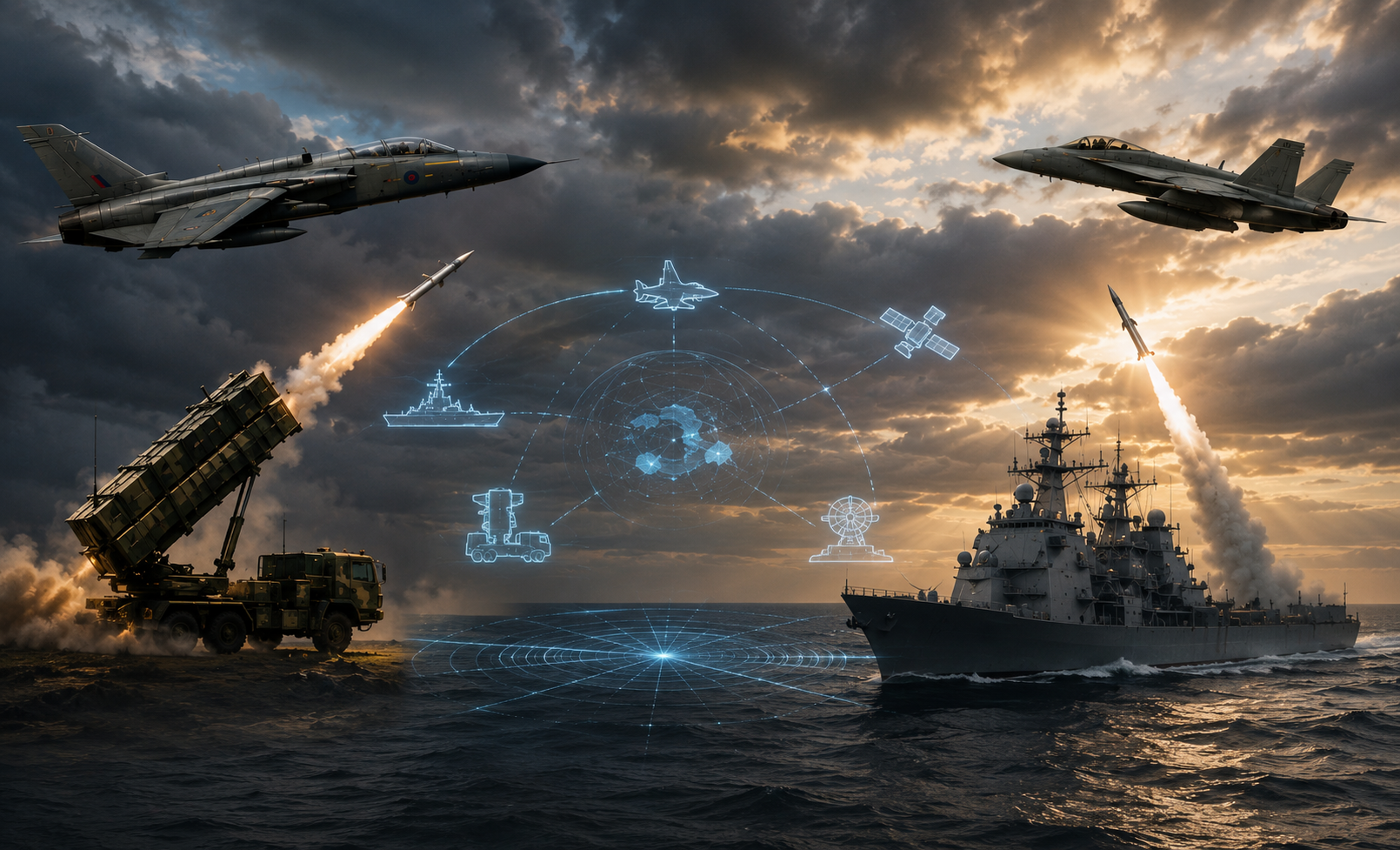
On the night of March 22, 2003, two Royal Air Force (RAF), United Kingdom (UK) Tornados were returning to the Ali Al Salem Air Base in Kuwait after a mission in Iraq. The lead aircraft, callsign Yahoo 75, made it back safely. The trailing aircraft, callsign Yahoo 76, was shot down by a US Army PAC-3 Patriot missile system guarding the airbase. Both crew members onboard the Tornado were killed instantly. US investigation board concluded that the Patriot battery detected the Tornados as Anti-Radiation Missiles (ARM) and fired in self-defence, while also stating that the IFF system on the aircraft was probably not working. The RAF also carried out an independent assessment and flagged Patriot Rules of Engagement (RsOE), ARM classification criteria and Identification Friend or Foe (IFF issues). The investigation also highlighted shortfalls in training certifications and an unrealistic training environment that contributed to the accident. Operating in a region where no ARM threat was construed, a deliberate pause by the Surface-to-Air Missile (SAM) operators could have resulted in correct classification by the system, or further track correlation by other means. The RAF board also concluded that the lack of communications equipment meant that the Patriot crew did not have access to the widest possible ‘picture’ of the airspace around them to build situational awareness.[1]
Almost two decades later, a similar story of blue-on-blue would haunt the United States (US) military when the United States Navy’s (USN) premier vessels fought off the Houthis in the Red Sea during Operation Rough Rider. On December 21, 2024, at 2325Z, USS Gettysburg (GC-64), a Ticonderoga-class guided-missile cruiser, shot down an F/A-18F Hornet which was part of the same Carrier Strike Group (CSG) led by USS Harry S Truman (CVN-75).[2] Both pilots ejected safely and were recovered quickly. The accident occurred due to misidentification of a Hornet two-ship on their return leg to land on the carrier after having undertaken buddy-refuelling operations for other aircraft in the area. USS Gettysburg, the overall Air and Missile Defence Controller (AMDC), had in fact launched two SM-2 missiles wherein the wingman, flying in an extended trail, was able to acquire the missile in time and manoeuvred to defeat it. The accident occurred in a networked environment with all players equipped with Mode-5 IFF and Link-16, which makes it even more important for learning. A detailed but redacted report was released by the US Department of War (DoW) in April 2025 and has been the primary reference while analysing this accident.
Deployment and Operational Issues
US military, along with allies, had been actively engaged in the region under US Central Command (CENTCOM) since January 2024, providing freedom of navigation by intercepting Houthi missiles and drones. During this period, the US forces defended against a number of Houthi cruise missiles, Anti-Ship Ballistic Missiles (ASBM) and drones.[3] Till December 15, 2024, US CSG led by USS Dwight D. Eisenhower (CVN-69) included three Arleigh Burke-class destroyers and a Type-45 Guided Missile Destroyer from the Royal Navy (UK). This group was replaced by USS Harry S. Truman (CVN-75) along with USS Gettysburg, which were undertaking a routine deployment in the Mediterranean Sea under US European Command (EUCOM). Gettysburg was the senior Aegis vessel in the region and hence tasked with the role of Air Defence Commander (ADC), known as ‘Whiskey’. At the time of deployment, Gettysburg had known issues with three of its components – Identification Friend or Foe (IFF), Cooperative Engagement Capability (CEC) and Link-16. All three systems form the core of network-centric warfare capability and would play a critical role in the mishap.
These issues were magnified in the week and hours prior to the mishap, with the crew reporting numerous problems with Link-16, including short but frequent loss of Link. The Watch Officer’s logbook also has an average of eleven IFF Mode-5 casualties per day in the week prior to the mishap, which should be zero when performing as per design specifications. US Navy Tactical Reference Publication 1-03.1 states that “A casualty is defined as an equipment or software malfunction or deficiency that within the first 24 hours of discovery cannot be corrected within 48 hours and affects the ability of the unit to undertake its primary mission.” In the five hours prior to the mishap, there were five IFF failures and resets that were not reported upward. This was in direct violation of CSG standing orders wherein the Commanding Officer (CO) explicitly states that, “I expect all U.S. units to have fully operable IFF systems,” and the fact that CSG was not aware of IFF issues onboard the Gettysburg further complicated matters.
Air Defence Setup
Like in any theatre, the US Joint Force Commander (JFC) appoints a Joint Force Air Component Commander (JFACC) who is in charge of all air operations in the region. The mantle of Air Defence falls under the Area Air Defence Commander (AADC), which is normally handled by the JFACC himself, alongside the role of the Airspace Control Authority (ACA). The reason for these functions to be centralised with the JFACC will become evident as we further analyse the accident. As the AADC, the JFACC ensures that he provides the following to the theatre elements: –
-
-
Theatre Area Air Defence Plan (AADP)
-
RsOE and Weapons Control Status (WCS)
-
Airspace Control Plan (ACP)
-
Using these products, the Air Defence planners at lower echelons would have developed their own operational plans while ensuring compliance with the JFACC’s framework. However, being deployed at sea outside the Joint Operating Area (JOA), the naval task force had its own declared airspace and delegated control from the JFACC. The United States Naval Forces Central Command (NAVCENT) could thus plan its own airspace management and defence functions. Key functionaries within NAVCENT’s operational plan were as follows: –
-
-
CWC – Composite Warfare Commander onboard USS Harry S Truman
-
ADC – Air Defence Commander (Whiskey) onboard USS Gettysburg
-
AWC – Air Warfare Commander (Alpha) onboard USS Harry S Truman
-
In the above roles, the Air Battle Management functions and control of fighters on Defensive Counter Air (DCA) missions lie with the AWC, while the IAMD (Integrated Air and Missile Defence) is entirely under ADC–a small but crucial disconnect which will come into play as we go further. The entire setup operated on a ‘command-by-negation’ model, where subordinate commanders are authorised to act in accordance with the commander’s intent unless explicitly countermanded. This essentially means that effective and safe engagements would require extensive coordination between ADC and AWC, which would ride on two aspects–compliance with laid-down Standard Operating Procedures (SOP) and regular integrated training. The report states that Gettysburg was ‘aggregated with the CSG for only 23% of total fly days of their first three months of deployment’, which translates into a very unhealthy state in terms of integrated training. While this could be mitigated by exhaustive procedures and clear briefs, the exact opposite was observed in the report, which reads – ‘The strike brief included Carrier Air Wing (CVW) launch, employment and recovery procedures. DCA assets were present for this rehearsal meeting; however, CVW-1 personnel could not recall any AMDC representation.’ Considering that the Air and Missile Defence (AMD) plan was part of the composite plan developed by the CSG air wing, with Gettysburg in a support role, the AMDC had insufficient awareness of the plan. The report states that the Gettysburg crew had only a couple of printed slides from the briefing, which did not include the DCA plan, Joint Engagement Zones (JEZ), or hand-off ranges for coordination. This aspect closely mirrors the state of affairs during the 2003 incident between RAF and US Army discussed earlier.
Chronology of Events
The report states that– “HSTCSG entered the Red Sea on 14 December 2024. This incident occurred 7 days later, immediately following HSTCSG’s first defensive strike against Houthi positions. The strike was successful, and adversary reaction followed. HSTCSG air and surface units spent several hours defending the force against Houthi-launched Anti-Ship Cruise Missiles (ASCM) and One-Way Attack (OWA) drones.” The following sequence of events occurred after this: –
-
-
1649Z – DCA aircraft launched and proceeded to their station. All had working Links.
-
1711Z – E-2D Hawkeye AEW&C launched and initiated a CEC network.
-
1815Z – USS Gettysburg reported loss of Link-16.
-
1817Z – Strike package launched as per plan. All had operable Link-16.
-
1821Z – E-2 reported three tracks (possible P-351 cruise missiles) at 175nm and directed the DCA flights for intercept.
-
2003Z – Strike reported release of ordnance and commenced recovery. E-2 tracked additional 08 threats incoming. Some strikers were pooled as additional DCA aircraft along with those in tanker role.
-
2151Z – All strike aircraft recovered onboard CVN-75.
-
2109Z – Two cruisers engaged an incoming missile each with SM-2 SAMs.
-
All aircraft recovered except two DCA CAPs, buddy tankers and E-2D.
-
2323Z – Gettysburg detects two incoming tracks. Three people are involved: the Anti-Aircraft Warfare Commander (AAWC), Tactical Actions Officer (TAO), and the CO.
-
2324Z – “XW this is G, engaging track GB121 with birds, over” First SM-2 fired. Decision taken in ‘self-defence’.
-
Similar cycle followed in another 40 seconds and a second SM-2 fired on the trailing track.
-
At this time the first Hornet was at 300 kts, passing 2,000 ft and had checked in with carrier approach. Both aircraft had their systems set up for landing, meaning all Electronic Warfare (EW) equipment was turned off at this point. The first aircraft crew saw the missile launch and assumed it was targeting some cruise missiles. They realised the threat only once the missile updated its flight path towards them, by which time it was too late.
-
The second aircraft was passing 5,000 ft and trailing the lead by 5nm. The crew saw the missile impact and called out Mayday when they noticed a second missile launch which they knew was targeting them. The pilot manoeuvred the aircraft to defeat the missile, which the Weapon Systems Officer WSO tracked as the motor burned out just 5 seconds prior to the missile passing them at close range (1-2 aircraft length as per WSO).
-
At the time of the first firing, a helicopter was making an approach for Gettysburg’s deck with Night Vision Goggles (NVGs) and was not informed of the engagement. The first launch caused blooming in the NVGs, and the helicopter was waved off to the port side, but no Scram order was issued. The second missile was launched with the helicopter in close proximity, and the helicopter was placed under considerable risk during the entire engagement.
-
Take Aways
The mishap is a reminder to all combatants that operations, especially high-tempo operations like air operations, provide an extremely low margin for errors as far as decision-making is concerned. A clean air picture can turn cluttered very rapidly; a recognised air picture providing exceptional SA can quickly degrade and place commanders in a situation they have probably not trained for. The mishap, like all cases of fratricide, has much for all of us to take home.
-
-
Network Centric Warfare demands that all supporting equipment (links, IFF, etc) must be serviceable at all times for all participants in the area. A non-compliant unit will not only cause such mishaps but also degrade the Recognized Air Situation Picture (RASP) and reduce operational efficiency. Such compliance is easier to establish under a single authority where not only SOPs are common but also fallback mechanisms in cases of failure.
-
Airspace Control and Air Defence cannot be kept segregated. The US JP-3-01 ‘Countering Air and Missile Threat’ itself states that ‘The functions of the JFACC, AADC, and ACA must be integrated to ensure that joint air operations, OCA, DCA, and airspace control are fully integrated and synchronized.’ This was clearly a case where these functions were segregated to an extent that Battle Management and Air Defence were being executed in silos. This has become highly relevant for the Indian military at a time when concepts like ‘Air Littoral’ are attempting to segregate airspace without paying heed to the pitfalls of such actions.[4]
-
The Aegis-equipped vessels are known to set standards in air defence at sea with their powerful radar and highly automated Combat Information Center (CIC). However, such state-of-the-art equipment does not translate into operational results unless operators are rigorously trained in the same C2 architecture and scenarios they would face in reality. While the crew may complete all their individual training events and look good on paper, it is only integrated and realistic training that translates into combat efficiency. This means regular employment of the units and systems in Large Force Engagements (LFE) where both tactical proficiency and decision-making are stress-tested.
-
The ‘command by negation’ model for air defence is tailored for situations where battlefield transparency is high with all systems operational. With known problems in critical systems like IFF and Datalinks, tighter procedural control would need to be established, which was not done in this case. Essentially, this aspect points out that it is only through centralised control that the presence or absence of required networking standards can be established and the extent of autonomy/local-control orders be furnished to lower echelons.
-
The aftermath of this mishap caused a sharp reduction in flight operations, restrictive revisions of IAMD procedures and revaluation of equipment. Fratricide can cause a drastic loss in operational efficiency by degrading confidence and morale of operators. During active combat operations, this can be detrimental and may provide the adversary with a lucrative window to exploit.
-
Conclusion
At a time when Air Defence is the talk of the town in our country, it is essential to remain aligned to time-tested doctrinal precepts. All procedures, as far as Air Defence is concerned, are written in blood, and the two cases discussed in this paper are only a fraction of many such incidents. Since the early 1990s, when the range of both air-air and surface-to-air systems increased drastically, the fusing of airspace management, air defence and air battle management functions has remained a core doctrinal precept, and these incidents only highlight the cost of deviation. Lastly, consistency and uniformity of training are one of the key aspects to avoid fratricide. With increasing ranges, SAM systems form a core component of the overall air battle and the line between offensive operations and defensive operations is blurred. Crews need to be trained in this environment with a wider tactical-operational canvas to get exposed to complex situations, debrief them thoroughly and apply these lessons to actual operations.
*****
CLICK TO VIEW THE PDF
(Disclaimer: The views and opinions expressed in this article are those of the author and do not necessarily reflect the position of the Centre for Aerospace Power and Strategic Studies [CAPSS])
Notes:-
[1] Victoria Samson, “The Patriot/Tornado Fratricide: It Could Happen Again,” Center for Defence Information, June 14, 2004, https://peters-ada.de/fratricide.pdf. Accessed on August 10, 2026.
[2] Oren Liebermann, “Two US Navy Pilots Eject Safely over Red Sea after Fighter Jet Shot down in Apparent Friendly Fire Incident,” CNN, December 22, 2024, https://edition.cnn.com/2024/12/21/politics/us-fighter-jet-shot-down-red-sea. Accessed on August 10, 2026.
[3] Merve Berker, “US Navy Intercepts Houthi-Launched Missiles in Gulf of Aden,” Anadolu Ajansı, December 02, 2024, https://www.aa.com.tr/en/africa/us-navy-intercepts-houthi-launched-missiles-in-gulf-of-aden/3410779#. Accessed on August 10, 2026.
[4] Dushyant Singh, “Drone-Age Warfare: Why Indian Army Must Command the Air Littoral Battlespace,” Firstpost, December 10, 2025, https://www.firstpost.com/opinion/drone-age-warfare-why-indian-army-must-command-the-air-littoral-battlespace-13958553.html. Accessed on August 10, 2026.