Author: Mr Arjun Prakash Iyer and Mr Shwetabh Singh, Research Scholar, Unni Kartha Chair of Excellence
Keywords: Indian Air Force, Air Commodore Ashit Mehta, MiG-23BN, ILS Landing, PRMG Landing System
More often than not, being a ‘fighter pilot’ is associated with flying fast and agile fighter jets, engaging in high-speed, intense manoeuvres and ‘dogfighting’ against enemy aircraft. From the first air battles over Istres and Verdon during World War I, to the famous Battle of Britain and Battle of Midway, when pilots proved that the role of a fighter plane was undeniable in a war, to the infamous dogfights over the ‘MiG Alley’ and North Vietnam, Air Defence pilots and their aircraft have undoubtedly distinguished themselves for their actions.
Added to this is the media’s representation of ‘dogfighting’, making it seem like the sole purpose of combat aviation. As astonishing as it might seem, at a certain point in the late 1950s to the early 1980s, there were groups of high-ranking officials in the air forces across the globe, dubbed the “Fighter Mafia”, who advocated for the widespread manufacture of fast and sophisticated aircraft, focused solely on air superiority. Their motto was the infamous quote, “Not a pound for air to ground.” This philosophy was at its zenith when the McDonnell Douglas (now Boeing) F-15A was designed and put into production; the emphasis of the ‘Eagle’ was to be the ultimate air superiority aircraft, and the initial variants of the type had little to no ground attack capability.
However, in this article, we will be talking about an often-overlooked aspect of aerial warfare – ground attack, specifically the concepts of Counter Air (CA), Close Air Support (CAS) and Battle Air Interdiction (BAI). UKCOE Scholars Arjun Prakash Iyer and Shwetabh Singh managed to interview Air Commodore Ashit Ishwarlal Mehta (Retd.), M-in-D, a distinguished fighter pilot with extensive experience on MiG-23BN and MiG-27ML aircraft. He is an Experimental Test Pilot, a Qualified Flying Instructor and holds a master’s degree (MA) from King’s College London in Defence Studies. He is a veteran of Operation Safed Sagar (the code name for the Indian Air Force operations during the Kargil Conflict).
About the Interviewee
Air Commodore Ashit Ishwarlal Mehta was commissioned into the fighter stream of the Indian Air Force in June 1981 (127 Pilot’s Course). He initially flew MiG-21, before converting onto the MiG-23BN with No.31 Squadron ‘Lions’ in September 1985, up to July 1988. After a tenure in Training Command as a Qualifying Flying Instructor (QFI) and at ASTE (Aircraft & Systems Testing Establishment) as an Experimental Test Pilot (ETP), he was posted back to the field and served as the Senior Flight Commander with No.10 Squadron from 1994 to 1997. During this period, the Squadron converted from MiG-23 BN to MiG-27 ML.
As an ETP, he was associated with the evaluation of the Mk.10 Identification Friend or Foe (IFF), AN/ALE-44 Counter Measures Dispensing System (CMDS) and VICON-91/ (Camera Pod) on the MiG-23BN and MiG-27 aircraft. From 1997-1998, he underwent the Coveted ‘Staff College’ in the UK, and on return, he was posted to Undertake Flight Testing of AN-32s at Kanpur, after the completion of their major overhauls. Whilst at Kanpur, the hostilities with Pakistan started in the north, i.e., the Kargil Conflict. Due to the operational requirement, he was called upon to assume the command of No. 221 Squadron ‘Valiants’ at Srinagar (He had earlier undergone the revalidation on the MiG-23BN to take over another squadron). He took over the reins in the middle of the war, and through his leadership, he successfully employed the squadron pilots and the aircraft. The Valiants flew 28 per cent of all the offensive missions during Operation Safed Sagar, and for their effort, they were honoured with Battle Honours and bagged six Gallantry awards.
After his command tenure at No.221 Squadron, he was appointed the Chief Test Pilot and the leader of the Air Force Project Management Team (AFPT) for the MiG-27 Upgrade project. This project was undertaken by the Defence Research and Development Organisation (DRDO), Hindustan Aeronautics Limited (HAL) (Nashik), and Air HQ, through a tripartite contract agreement. Once again, through his expertise and leadership, this project was completed successfully within the planned schedule (which is a rare achievement for DRDO). He eventually became the Station Commander of the AFS Sirsa. Later in his career as an Air Commodore, he worked as Principal Director (Projects), at the Air HQ, and subsequently was once again appointed as Air Force Project Director for the AFPT to support CABS (Centre for Airborne Systems), a DRDO lab focussed towards development of the indigenous AWACS project ‘Netra.’[1] He opted for premature (voluntary) retirement in April 2012. Later, he collaborated with Multinational companies for over 12 more years, till he turned sixty-five.

Let us start with a very high-level view: What would you say is the difference (from a doctrine perspective) between ground attack and air defence, aside from the obvious difference of key objectives?
As ground attack pilots, our primary objective is to attack, and for that, you need to be current about the enemy‘s defences around the target and how they change, or how they upgrade themselves from time to time. Usually, every country aims to possess and deploy a very comprehensive, deep, and capable air defence capability to ensure that no enemy aircraft/UAV or missile systems can penetrate the airspace of their country. We must constantly study and develop tactics to counter the enemy’s capabilities.
The primary objective of a force on an offensive is to prevent the enemy from intruding friendly airspace, and, if possible, to deny the enemy the ability to use their own airspace for conducting missions. To achieve this objective, we undertake Counter Air Operations (CA) against enemy airfields, key infrastructures, Command & Control (C2) centres, war-making facilities, etc. Destruction of these targets would deter the enemy’s operational capability and deny/delay their offensive strategy against us. Our primary objective is to ground them (the enemy’s air forces) and not allow them to conduct any offensive operations against our own forces. By doing that, you are going to achieve a situation called a ‘Favourable Air Situation.’
Progressively, if sustained, it leads to ‘Air Superiority,’ as was achieved by US-led Coalition Forces during both the Gulf Wars. It was achieved due to the large disparity in the number of assets that NATO and the Iraqi Air Force (IrAF) had. The Iraqi Air Force (IqAF) was destroyed on the ground within the first few days. Thereafter, NATO had a kind of total freedom to operate over Iraq, i.e., ‘Total Air Superiority’ over the entire country. They could conduct any aerial operation with impunity, as Iraq’s Air Defence forces were totally destroyed or made unusable.
Table 1: Various Degrees of Airspace Control in Aerial Warfare
Level of Control of Airspace |
Meaning |
Air Supremacy |
A situation in which friendly air forces dominate both friendly and enemy airspace. The enemy air forces are technically grounded and are incapable of counter-air operations.E.g., NATO Air Supremacy over Iraq during Operation Desert Storm. |
Air Superiority |
When friendly air forces can operate with minimal/moderate resistance from enemy air forces and air defences. There could be frequent enemy Combat Air Patrols (CAPs), firing of Anti-Aircraft Artillery (AAA) or Surface-to-Air Missiles (SAMs).In the initial days of the Gulf War, this was experienced by the NATO forces. |
Favourable Air Situation |
It is an umbrella term to denote aerial warfare conditions which are in favour of friendly air forces. This could also be a temporary situation. |
Air Parity |
A situation in which both friendly and enemy air forces are equally powerful and have intact authority over their respective countries’ airspaces. This is the situation during peacetime. |
Unfavourable Air Situation |
This is a phase that varies over time or could be sectorial, depending on which side is gaining control in the war. |
Air Incapability |
When friendly air and air defence forces are unable to counter hostile air activity fully. (Directly opposite to Air Superiority) |
Air Denial |
When friendly forces are unable to counter hostile air activity whatsoever. (Direct opposite of Air Supremacy) |
We know that air defence pilots spend their days differently from ground attack pilots, considering the nature of their regular operations. What would a regular day in a ground attack squadron be like?
A regular day in a ground attack squadron is not much different from air defence/fighter squadrons. The only difference is that we do not do ORP (Operational Readiness Platform) duties. When it comes to day-to-day operations, our day starts almost half an hour before sunrise. For example, if the sunrise is at 0600 hrs, we would be at work by about 0530 hrs. We would go for the ‘MET’ briefing (Meteorological Briefing). Thereafter, we have something called an air traffic control briefing. After we finish that briefing, we come to the squadron. Flying activity is usually planned the previous day itself and is split into details. Usually, it would be three details a day, and if we have night-flying commitments, a fourth detail would also be included.
During the life/tenure of MiG-23BN and MiG-27ML, i.e. from 1981 to 2019, there were no GPS systems onboard these aircraft, so for every strike/attack mission, we had to manually prepare maps, which could take three to four hours from the previous day. Traditionally, a ground attack sortie/mission used to take about five hours of preparatory groundwork before the actual sortie was flown. This included the making of maps, the preparation of the briefing boards, and the briefing itself. After the sortie was flown, which usually would be of forty-five minutes to one hour duration, a thorough debriefing with the mistakes made and lessons learnt would also be done. So, the pilots perpetually spent the entire day at work. Normally, the first detail takes-off within half an hour after sunrise. The pilots who are flying that day would reach the squadron early enough, having prepared themselves or briefed the previous day and would just do a quick refresher briefing before the first sortie.
Our technicians work extremely hard and spend long hours preparing the aircraft for flights. For example, for a 0600 hrs take-off, the ground crew would have come to work at 0400 hrs! Their dedication, commitment and hard work are the real strength and assets of the IAF. Another factor affecting flying is bird activity. Over a period of time, it has been analysed that the bird activity is minimum from half an hour after sunrise till two hours after sunrise, effectively giving us a one-and-a-half-hour window to fly at low levels. This is called the ‘Green Period’; a similar window is also available before sunset. Ground attack aircraft prefer to fly at low levels to minimise detection by enemy radars, so every day our first detail of flying entails low flying, i.e., from 50 m to 150 m above ground level. Fighters flying at low levels are always in pairs for safety and to provide a tail cover for each other in case of an attack from any enemy interceptor/fighter.

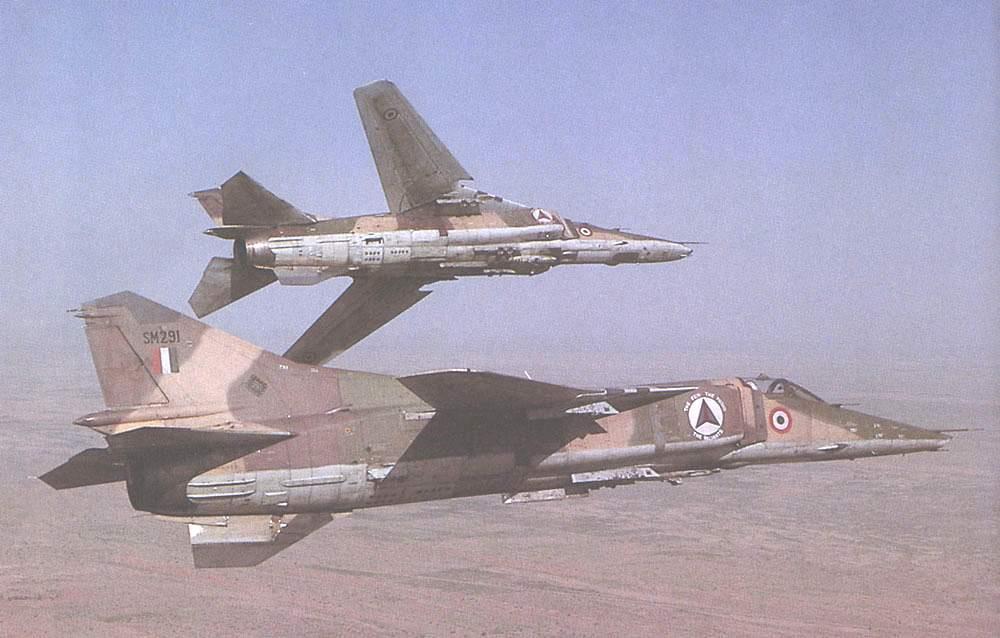
As an objective, all fighter planes try to minimise time spent on the ground, prior to take-off (to prevent exposure to enemy attack in war situations), so we aim to take-off as soon as possible. To achieve this, we take-off as a formation, we either conduct stream take-off or pair take-off. During stream take-off, there is a 10-second gap between each aircraft taking-off, and in case of pair take-off, two aircrafts take-off simultaneously, which, besides looking impressive, also serves the purpose of minimising take-off duration between aircraft. After take-off, we have a procedure to gather the formation, and then we set course for the first waypoint along the planned navigation route.
When I mean low-level flying, it refers to navigating about 100 meters (300 feet) and conducting attacks flying barely 50 meters above the ground. The altitude you fly at is dependent on your experience level – the more experienced you are, the lower you can fly. So, what we do is, we plan our strikes in such a way that the first detail every day flies at low-levels. Routines could include practising the operational training syllabus or conducting the flying syllabus for a U/T Ops pilot. U/T (Under-Training) refers to the status of a pilot who is learning how to fly in an operational environment (the next step after learning how to fly a specific type of aircraft, in this case, the MiG-23BN). So, depending on the syllabus that is required to be completed, we train ourselves and train junior pilots. A fighter pilot is always under some form of training or gaining experience as an operational pilot through continuity training.
Usually, to gain the bare minimum skills to fly in a war, the pilot would have flown for around five years as a fighter pilot and should have completed the training syllabus, which would declare them ‘Day Ops’ ready on that aircraft. Once they completed the night flying training syllabus, they would be declared ‘Fully Ops’, meaning they could participate in operations/war by day as well as by night. Pilots must also undergo a number of conversion training sorties if the aircraft type changes, from MiG-23 to MiG-27 or Jaguar or Mirage 2000, as each aircraft has different cockpit displays, different systems, flying qualities, and different operational roles/capabilities. For ground attack pilots, there are various exercises which need to be regularly flown to maintain currency and efficiency, like simulated strikes against airfields (or at an armament firing range where one can fire practice or live weapons), air combat, instrument flying, aerobatics, etc.
The term flying currency is like a license. Since fighters have a single pilot, the pilot needs to be 100 per cent physically fit and mentally alert to fly any sortie. Fighter flying is extremely demanding from both mental as well as physical perspectives. To ensure this, every pilot is allowed only a limited period of break from flying. Initially, for under-training pilots (U/T Pilots), it may be just seven days, meaning that if the gap is more than seven days, they will have to fly on a type-conversion trainer (called dual check) with an experienced instructor, who will check the pilot‘s flying skills before launching them solo in a fighter. The break period allowed is a maximum of two months for a very experienced pilot. So as a routine, we fly two to three times a day in a pattern called details. After the first detail flies at low/medium level and returns to the crew room, it will be time for debrief, followed by a little unwinding (have breakfast and rest a bit).
A fully established fighter Squadron is provided with 14 fighters (single-seat aircraft) and 2 Trainers (dual-seat aircraft). Aircraft that flew in the first detail are ‘turned around‘ (TRS – Turned Round Servicing). During the TRS, our technicians go through the complete aircraft by performing checks on it. They verify whether everything is working perfectly, and then they refuel the airplane. The aircraft is also rearmed, depending on the configuration, for the next detail. This entire process takes between one and one and a half hours (in peacetime). Say the first detail was loaded with rockets and the second detail is required to be loaded with bombs, then the TRS time will be slightly longer, naturally, because that much more effort is required to position, load and carry out relevant safety procedures specific to that weapon.
So invariably by this time, it would already be about 1030 hrs, when the next detail is ready to fly. By the time the second detail takes-off, it is the red period. That means it is a critical period (due to heightened bird activity) and every sortie that takes-off, must fly and maintain an altitude of two kilometres and above (≥ 6,500 feet). So, usually the second detail is flown at medium altitude levels. Medium-level exercises could be dual-check sorties in a trainer, such as instrument flying or a general handling sortie.
A general handling sortie is something in which you train a newly inducted pilot with basic flying characteristics of the aircraft. Teach them how to do hard turns, manoeuvring and aerobatics. Sometimes, you could also do ‘Medium Level Combat.‘ That means you simulate aircraft going for an attack. Instead of doing low-level in the morning, you are doing it at a medium-level, and there are attackers who come from above, and then you engage in basic fighter manoeuvres and how you extricate yourself. You can do one versus one, two versus one, or two versus two. You can also do a strike versus CAP (Combat Air Patrol). So, during the second detail, we execute these flying exercises.
The only time you would be below two kilometres in altitude (during a red period) is when you are taking off or landing. Since there is bird activity expected at that time, we switch on our landing lights once the landing gears are lowered. This is so that birds can see and avoid you. You cannot see the birds (due to the small size of the bird and our high speed), but they would be able to see your lights from a distance and avoid you. On average, most of the fighters take-off and land between approximately 310 and 330 kmph.
By the time we finish our second detail, it is around 1200-1230 hrs. If there is a requirement, we fly another detail at medium level or complete our paperwork, such as documentation, records, etc. We complete that before packing up around 1400 or 1430 hours in case there is night flying planned.
Not all days end the same, and sometimes we know pilots have a night detail as well. Could you tell us about the night flying and your experience on the MiG-23BN?
Night flying plays an important role for ground attack squadrons because it is required that a ground attack squadron must dedicate a minimum of 15 to 20 per cent of the total flying effort/task towards night flying. That means flying for at least 10 to 12 nights a month. That means you are perpetually in the squadron most of the time of the day, and half the night.
What if there is a detail in the night? Then we tend to pack up, and everybody is asked to go home by 1430 hrs. But the seniors, like the Flight Commander, Deputy Flight Commander, and other officers, stay back as there is a lot of other administrative and planning work they need to do – returns need to be filled, sortie analysis, and debriefs of all the missions need to be done. So, the junior pilots (especially those designated for night flying) go home, take a nap and refresh. All junior pilots have secondary duties, other than the primary duty of fighter flying. Each pilot is made in charge of various facilities in the squadron, like the computer room, navigation room, adjutant (who is like HR in civilian parlance) to look after the admin of the technicians, one officer has to be in charge of the technicians’ mess, squadron complex, garden, and even the tea club! Performance in secondary duties is also assessed in the annual appraisal.
Owing to long duty hours and the need to minimise stress from travelling, we opt to stay within five to eight km of the Air Force station. As much as possible, one tries to get official accommodation within the station or rent from what is available nearby.
I am not sure if everyone will understand, but for us fighter pilots, flying by night is a huge challenge and takes lots of skill and courage to achieve it. Initially, we learn to fly during the ‘moon phase’, which provides a gradual transition from day flying to night flying, as you can see the reflection of the ground in the moonlight. After gaining enough experience, the pilots are made to fly in the dark phase when it is pitch dark, and one can hardly make out anything outside when flying. You must totally rely on the cockpit instruments for orientation. It takes quite some time to get the “night vision” (to adapt to the darkness, like when you enter a dark movie hall from a well-lit area) and be able to see your surroundings.
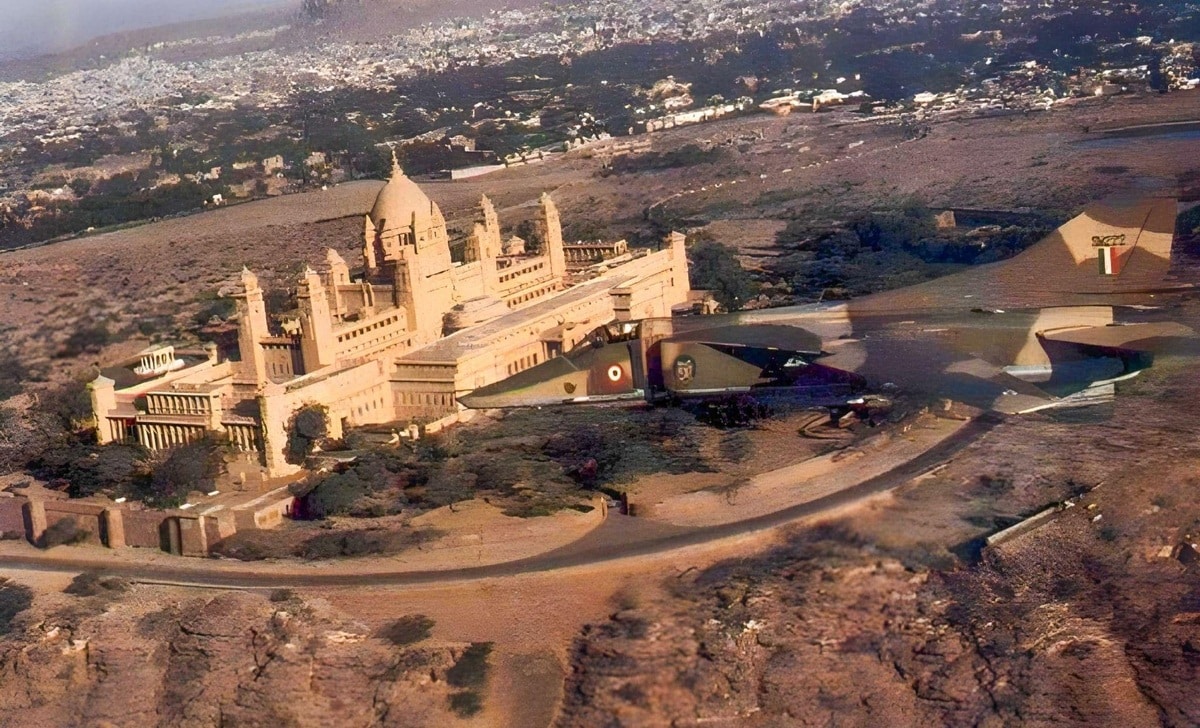
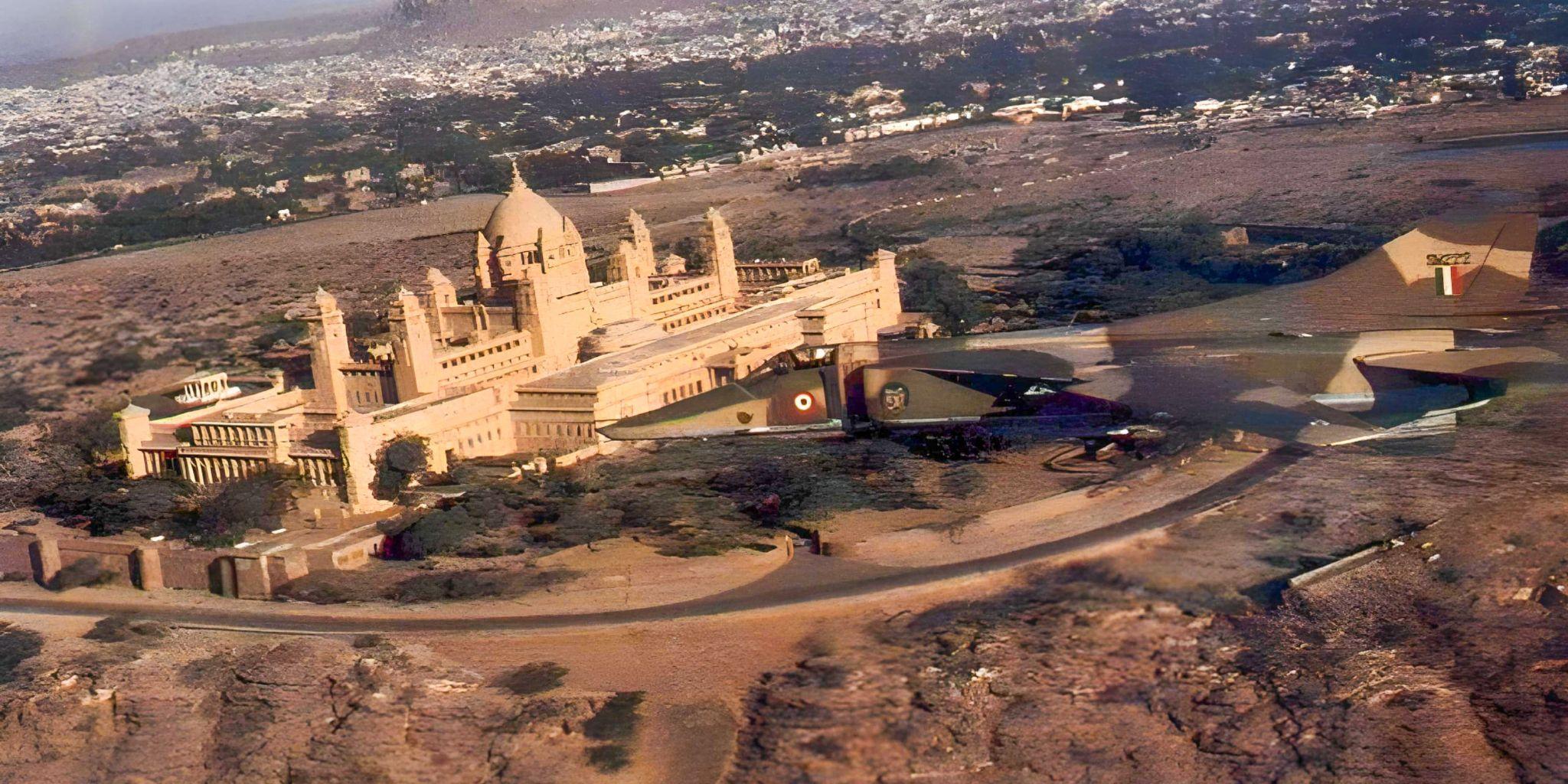
Dark phase flying in the desert areas, especially during harsh weather like haze, dust in suspension, clouds, and rain, poses immense challenges in flying as the fighter aircraft is not as well-equipped as a commercial aircraft, which has weather radar and autopilot to manage such conditions. Many times, we get disoriented, and we have lost many aircraft and pilots due to this. The MiG-23BN and MiG-27 Squadrons posted at Jodhpur and other desert areas in Rajasthan were exposed to issues at night flying due to these factors.
You mentioned Medium-Level Combat earlier. Could you tell us how practical it is during a real combat situation?
Our primary aim as a ground attack aircraft is to drop the bombs on the target and extricate ourselves. Towards that requirement, we carry bombs on all our hard points to deliver maximum blow to the enemy. Some of the ground attack aircraft also have air-to-air missiles on the wingtip for self-defence in case they are attacked by enemy interceptors. In many important or very well-defended targets, we get escorted by air defence fighters who fly with us all to the target to defend us and engage with enemy interceptors in case we are bounced.
However, as a matter of training, all strike/fighter bomber pilots also have to be proficient in air combat, and in peacetime we practice our manoeuvring tactics with air defence aircraft on a regular basis with the aim of safeguarding ourselves and extricating from the battle area to return and fly another day.
Our tactics are designed to always ensure complete utilisation of our combat capabilities. Once we are airborne, we are always alert and scanning for enemy interceptors in case they try to attack and stop us from our planned mission. Our weapon management system is designed so that we can release bombs, and we keep our switches live once we cross the International Border, so that in case of any attack on us, we can release our bombs on any targets of opportunity and get away towards our base. Our aircraft also has guns, which can be used to strafe any ground target or even fire at any airborne threat that is trying to attack us. We routinely practice these manoeuvres and tactics during our day-to-day flying.
Did you use the PRMG (Soviet Instrument Landing System) to perform landings? How did it work?
Yes, I have carried out innumerable approaches to land with Posadochnaya Radiomayachnaya Gruppa (PRMG) over my 30+ years of flying career. As mentioned to you earlier, I have flown 25 types of aircraft, including Fighters, Transport and Helicopters, with four thousand hours in the cockpit.
PRMG on the Russian fleet of fighters and transport planes is a typical Russian ILS, akin to what you have on commercial planes in the form of VOR/ILS (VHF Omnidirectional Range/Instrument Landing System). We train extremely hard and practice approach and landing in harsh environments, as that is what we experience regularly in the front-line bases in the north and northwest India.
Fighter aircraft carry limited fuel, and our engines are guzzlers as we try to extract maximum power from them. We use a reheat/afterburner for take-off, and typically, the engine uses five hundred litres/minute during its engagement when taking off. However, it is essential as the aircraft is fully loaded during take-off, and we need to get to a safe altitude as soon as possible.
Like in the case of take-off, we also aim to recover and land in an expeditious and smooth manner due to limited fuel availability and the importance of landing and launching the next mission again as soon as possible. To achieve this, we used to follow either a direct visual approach or land with the help of our fighter/air traffic controllers. We follow their instructions with blind trust as they bring us back to earth safely in the most hazardous situations, such as dense fog, heavy rains, or very dark nights with poor visibility. We land following a pattern called the PAR Approach (Precision Approach Radar); in this case, the controller talks the pilot down by guiding him till he touches down. In another case, we can follow the guidance provided by PRMG (VOR-ILS), in which case it is a pilot-interpreted approach and landing. In some cases, we follow a PLM (Precision Landing Mode) to minimise the landing time.
The experience, proficiency, skills, and capabilities of every fighter pilot are regularly evaluated by the squadron senior pilots, a designated instrument flying instructor, or an external body called AEB (Aircrew Examination Board). Our pilots are categorised into four categories, i.e. Master Green (they can take-off or land in visibility of one km and more), Green (when visibility and cloud base are in their minima of 2.0 Km), White (3.0 km) and Unrated pilot (inexperienced or new on type) 4.0 km.
These are called Instrument ratings. A pilot with a Master Green instrument rating is identifiable by a silver wing on the left pocket of the pilot’s uniform. Pilots are also awarded with Stars to represent accident-free flying.
To sum up, this part one of the interview, where we cover the flying aspect of the ground attack squadrons. In part two, we shall discuss various ground attack techniques and mission profiles (close air support, battle air interdiction and strikes) in detail, and we shall also explore how the interviewee employed these in real-life situations, during Operation Safed Sagar.
CLICK TO VIEW THE PDF
Notes:
[1] Bharat Rakshak, “Service Record: Air Commodore Ashit Ishwarlal Mehta,” https://bharat-rakshak.com/indianairforce/database/16377. Accessed on July 01, 2025.